Bus Accident TBI Claims in Texas


Every article on this site is researched by our internal team, reviewed for legal accuracy against current Texas law, and held to State Bar of Texas advertising standards before publication. We do not publish content that overstates outcomes or makes promises about results.
Learn more about our
editorial standards .
Key Takeaways
- The Glasgow Coma Scale scores a brain injury from 3-15 as mild, moderate, or severe.
- Severe TBI claims are more valuable because they cover lifetime care and lost earnings.
- Government bus claims require written notice within six months of the crash.
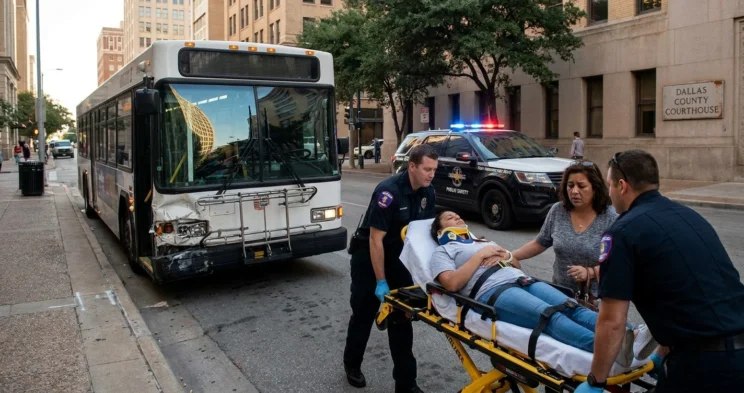
You were heading home from work down the Southeast Freeway on a Houston METRO bus, standing near the rear doors with one hand on the rail. The driver braked hard, and before you could catch yourself, your head slammed into the pole.
Now, the doctor says you have a concussion, you’re waiting on more tests, and you’re worried about what this means for your ability to work and pay your bills.
A head injury after a bus crash is not like a broken arm, and neither is the claim that follows.
How Bus Accidents Cause Traumatic Brain Injuries
Buses carry standing passengers with nothing holding them in place, so a sudden stop or crash throws your body forward with full force. With no seatbelt or shoulder restraint, your head may strike a pole, handrail, window, or seat back. A sharp turn or a swerve can throw you across the aisle. In a rollover or a high-speed collision, you may be ejected from the bus entirely.
Head injuries are a recognized risk in bus accident injury cases because standing riders simply have no way to brace for impact.
A traumatic brain injury does not always announce itself right away. You may feel fine at the scene but have a concussion or something worse that surfaces hours later. The National Institute of Neurological Disorders and Stroke explains how these symptoms can build over the days that follow a crash.
The true damage can hide at first, so it’s important to know what to do after a bus accident as a passenger to protect your claim.
Measuring TBI Severity with the Glasgow Coma Scale
Doctors measure how serious a brain injury is with the Glasgow Coma Scale. This gives you a score from 3-15 based on your eye movement, verbal responses, and motor responses. The number you get in the ER or at the scene becomes a part of the medical record that your claim will rely on later.
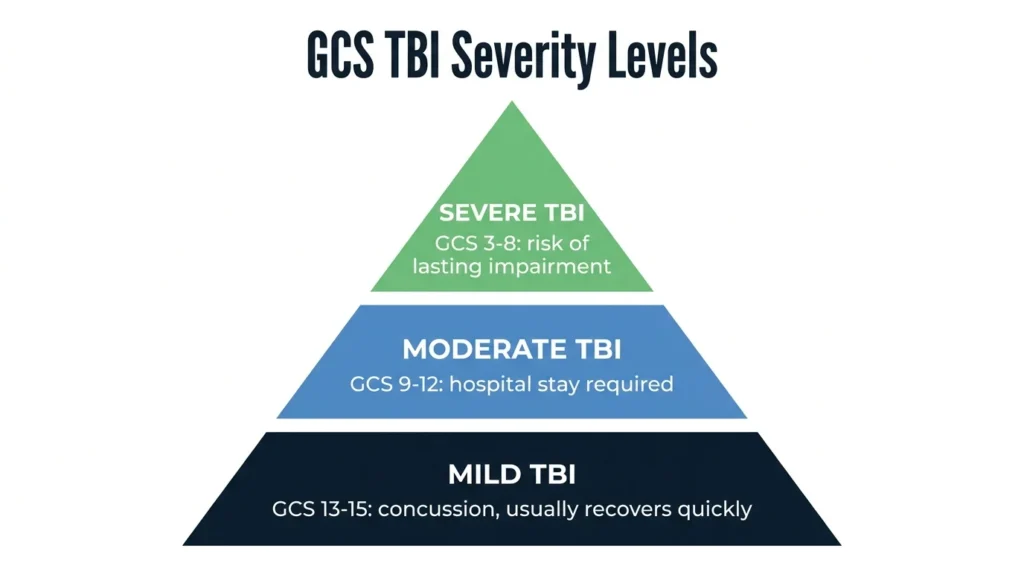
The Glasgow Coma Scale sorts brain injuries into three levels:
- Mild TBI (GCS 13-15): This is often called a “concussion.” You may have a headache, confusion, or brief memory loss, and many riders recover within weeks.
- Moderate TBI (GCS 9-12): This results in longer loss of consciousness or confusion, usually requiring a hospital stay and follow-up imaging.
- Severe TBI (GCS 3-8): This poses a real risk of lasting cognitive, physical, and/or behavioral changes. Typically, this is the most serious TBI claim.
Additionally, the Glasgow Coma Scale score is not fixed. Even if you are alert right after the crash, your cognitive abilities may decline if swelling or bleeding builds in your brain, so doctors must repeat the evaluation over the hours and days following the crash. The CDC’s guidance on moderate and severe TBI explains how long recovery can take, and what your daily life may look like afterward.
As your Glasgow Coma Scale score drops, the risks rise, so traumatic brain injury cases depend heavily on early documentation.
How TBI Severity Affects Bus Accident Settlement Value
The more severe your brain injury is, the more your claim is generally worth. The severity of the injury determines the cost of future care and the income you may lose, so a bus accident brain injury settlement climbs as your Glasgow Coma Scale score falls from mild to severe.
A mild TBI can still lead to significant compensation. If concussion symptoms like headaches, brain fog, or light sensitivity last longer than expected, your ongoing medical record can be just as important as your original diagnosis.
Severe TBI claims are often worth more because they must account for long-term or lifetime care, cognitive rehabilitation, home modifications, and lost future income. In these cases, the injury also reshapes your daily life, work, and relationships.
There is no set formula for determining the value of a TBI bus crash claim in Texas. Each case depends on the claimant’s specific, detailed medical and work records. It’s important to allow your doctors to fully document your long-term needs to protect the value of your claim. A severe case may require an additional expert to determine how much decades of care will cost.
Government vs. Private Bus Accident Claims
Who operated the bus changes almost everything about your claim, from the deadline you have to file your claim to how much you can recover.
Public and private buses operate under two different sets of rules.
Claims Against Government Transit Operators
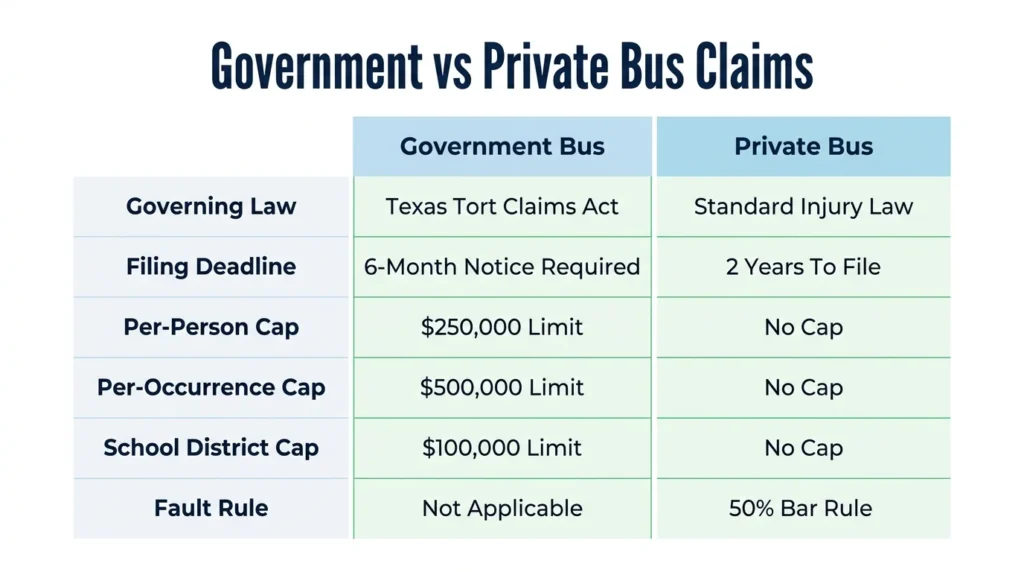
If a city transit bus or a school bus injured you, then a government unit was likely operating it, and your claim falls under the Texas Tort Claims Act. This law replaces the usual claims process with its own limits and deadlines.
The Texas Tort Claims Act limits what you can recover from most government units at $250,000 per person and $500,000 per occurrence. When the defendant is a school district, the Texas Civil Practice and Remedies Code (CPRC) § 101.023 lowers that limit to $100,000 per person.
You also face a much shorter deadline. CPRC § 101.101 generally requires written notice to the government unit within six months of the crash—long before any lawsuit begins. Miss that deadline, and your claim can be dismissed—no matter how severe your injuries are.
These limits catch most riders off guard. Our guide on how the Tort Claims Act limits bus injury claims shows when recovery may or may not be available.
A severe TBI claim can still climb past the government-set limits in total value. A third party that is not a government unit (like a maintenance contractor or parts maker) is not bound by these limits and may increase what you can recover.
Claims Against Private Bus Operators
If a private company (such as a charter, tour, or commercial carrier) was operating the bus, then you must follow the standard personal injury timeline, instead of the government notice process. This gives you two years from the date of the crash to file a lawsuit, under CPRC § 16.003.
Be aware that in these cases, the defendant may argue that you share the blame for the crash. For example, they may say that you caused your own injuries by not holding onto a rail when the bus stopped. Under CPRC Chapter 33, you can still recover compensation, as long as you are not more than 50% at fault. However, your award is reduced according to your share of fault.
Keeping your own record of what the driver did (like braking hard or not warning standing riders) can shift the fault to the driver. It helps to understand who can be held liable for a bus crash in Texas.
Work with an Attorney on Your Bus Accident Claim in Texas
A serious brain injury takes a toll on your health and your finances at the same time. You do not have to handle the legal process alone. Angel Reyes & Associates has spent more than 30 years handling serious injury and commercial vehicle claims across Texas.
We work on a contingency basis, which means you pay no fee unless we win, and your first consultation is always free. Our track record includes more than $1 billion recovered for clients.
You can learn more about our team here. We are available 24/7. Se habla español. Schedule a free consultation today.
Past results do not guarantee future outcomes.
Frequently Asked Questions
What tests besides the Glasgow Coma Scale do doctors use to diagnose a brain injury?
Doctors often order a CT scan after the crash to check for bleeding or swelling, followed by an MRI if symptoms persist or do not match the CT results. An MRI can pick up small injuries that a CT scan can miss.
If my brain injury symptoms did not show up right away, does that change my filing deadline?
Texas courts can sometimes pause the deadline under a rule called the “discovery rule” if the injury truly could not have been found sooner. Courts apply this rule sparingly, so it is safer to get checked and document new symptoms as soon as they appear, rather than rely on this exception.
Do the government damage limits apply if a private company was operating the school bus under contract?
No. A private contractor is not a government unit, so the Tort Claims Act’s limits and notice deadline do not apply to it. The school district that hired the contractor may still have separate legal protections.
What happens to a claim if a brain injury leaves someone unable to manage their own legal case?
A family member or other close relative can ask a Texas court for permission to act on the injured person’s behalf and file their claim for them. The court will then review the case—including any settlement—to protect the injured person’s interests.
How much insurance is a bus company required to carry in Texas?
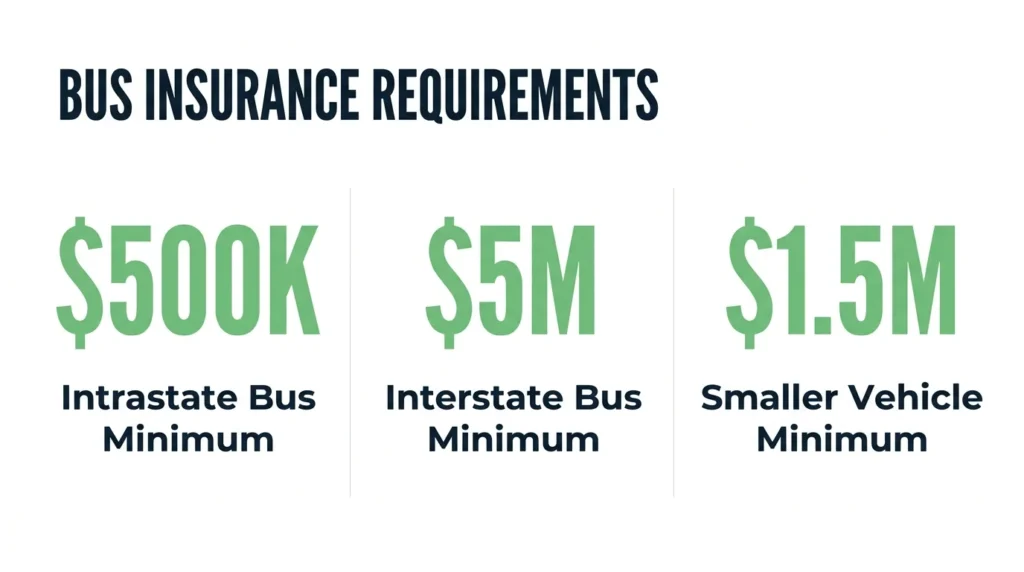
Texas requires intrastate bus operators to carry at least $500,000 in combined liability coverage. Interstate buses with 16 or more seats must carry at least $5 million. Smaller vehicles must carry at least $1.5 million.
About the Authors

Angel Reyes
Writer
Angel L. Reyes, III is the Founder and Managing Partner of Angel Reyes & Associates. A nationally recognized trial attorney and business leader, Angel has helped over 70,000 injury victims recover more than $1 billion since founding the firm in 1993. Named to the Texas Super Lawyers list annually since 2008, Angel brings Wall Street experience, Ivy League education, and a deep commitment to client advocacy. He is a frequent legal commentator and published author with extensive contributions to legal scholarship, trial strategy, and consumer protection.

Kyle Nicolas
Editor
Kyle Nicolas is the Web Content & SEO Manager at Angel Reyes & Associates. He has more than 10 years of experience as a marketing co...

Angel Reyes
Reviewer
Angel L. Reyes, III is the Founder and Managing Partner of Angel Reyes & Associates. A nationally recognized trial attorney and business...