Bus Driver DUI Accidents in Texas


Every article on this site is researched by our internal team, reviewed for legal accuracy against current Texas law, and held to State Bar of Texas advertising standards before publication. We do not publish content that overstates outcomes or makes promises about results.
Learn more about our
editorial standards .
Key Takeaways
- Bus drivers with a commercial driver's license fall under a 0.04 BAC limit, which is half the standard Texas DWI threshold.
- You may have claims against the drunk driver, the bus company, and a serving bar.
- Texas gives you two years to file, but public bus claims require six-months' notice.
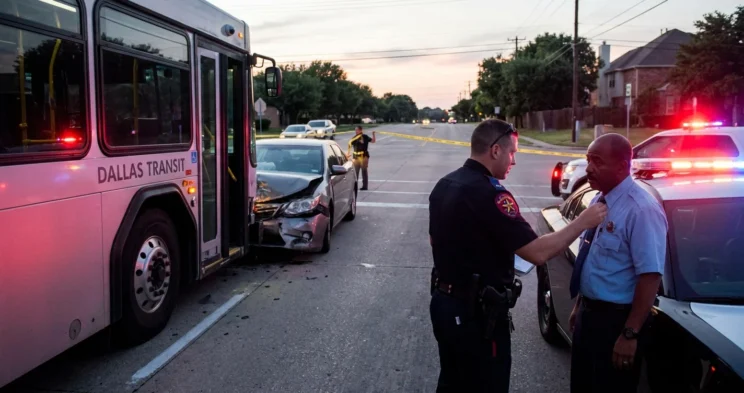
You boarded a city bus on Westheimer Road expecting a routine ride home. Instead the driver drifted across lanes and clipped another car, sending you into the seat in front. You later learned the driver was drunk. Now you have medical bills you didn’t expect, and you want to know who pays.
Bus Driver DUI Laws in Texas
A bus driver can be legally impaired at a far lower blood alcohol level than an ordinary motorist. Texas defines drunk driving under Texas Penal Code § 49.04 with a 0.08 blood alcohol content (BAC) threshold for most drivers. But a bus driver who holds a commercial license falls under the federal 0.04 limit.
This stricter limit comes from 49 CFR Part 382, the federal alcohol rules for commercial drivers.
This lower threshold gives you a real advantage. When a driver breaks a safety law, that violation can count as negligence. You no longer have to prove the driver was careless. The law does that work for you.
Commercial bus operators also carry extra duties. The Texas Transportation Code § 644 sets safety standards for these vehicles. A violation of rules adopted under this code can serve as evidence of negligence in your case.
The driver also faces criminal charges, which often run alongside your civil claim. A basic drunk driving charge is a Class B misdemeanor. If the crash caused serious injury, the driver can face intoxication assault under Texas Penal Code § 49.07, a third-degree felony. If someone died, the charge rises to intoxication manslaughter under Texas Penal Code § 49.08, a second-degree felony.
Who Is Liable After a Drunk Bus Driver Crash?
You may have more than one party to pursue. A drunk bus driver crash often creates layers of liability, reaching the driver, the bus company, and sometimes a third party. Each layer can mean another compensation source.
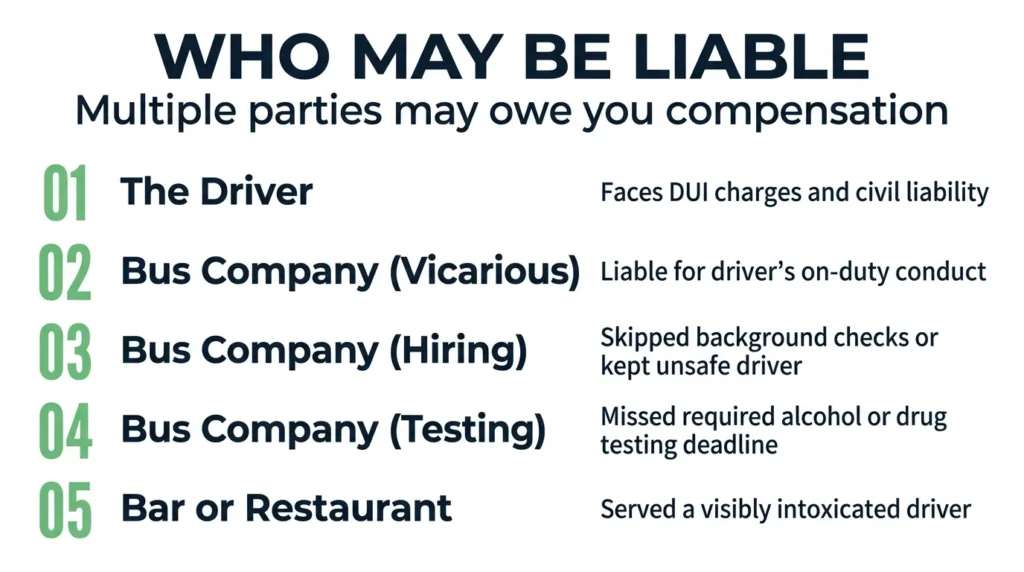
The most common company claim is vicarious liability. When the driver was on duty during the crash, the company answers for the driver’s conduct. Our breakdown of who can be held responsible for a bus crash explains how this works.
The company can also be directly at fault for its own choices. Negligent hiring applies when a bus company skipped proper background checks or hired a driver with past alcohol offenses. Negligent retention and supervision apply when the company knew about a driver’s drinking problem and kept them on the road anyway.
Federal law adds another angle. The Federal Motor Carrier Safety Administration (FMCSA) drug and alcohol testing rules require pre-employment, random, and post-crash testing for commercial drivers. A company that skipped a required test can face its own liability, separate from the driver’s. If you’re weighing whether to sue the driver, the company, or both, our guide on suing a bus driver directly explains your options.
A bar or restaurant may share blame as well. Under Texas Alcoholic Beverage Code § 2.02, you can bring a dram shop claim against a licensed business that served the driver when it was obvious the driver was intoxicated to the point of posing a clear danger to themself and others. That expands the pool of parties who may owe you money.
Facing several possible defendants is one reason to get legal guidance early, so the right claims are identified and the evidence is preserved.
Punitive Damages in Drunk Bus Driver Cases
Punitive damages can add to your recovery, but the rules depend on who operated the bus. These damages punish reckless conduct rather than repay your losses. Whether you can pursue them depends on one question: was the bus run by a private company or a public agency?
Private Bus Operators
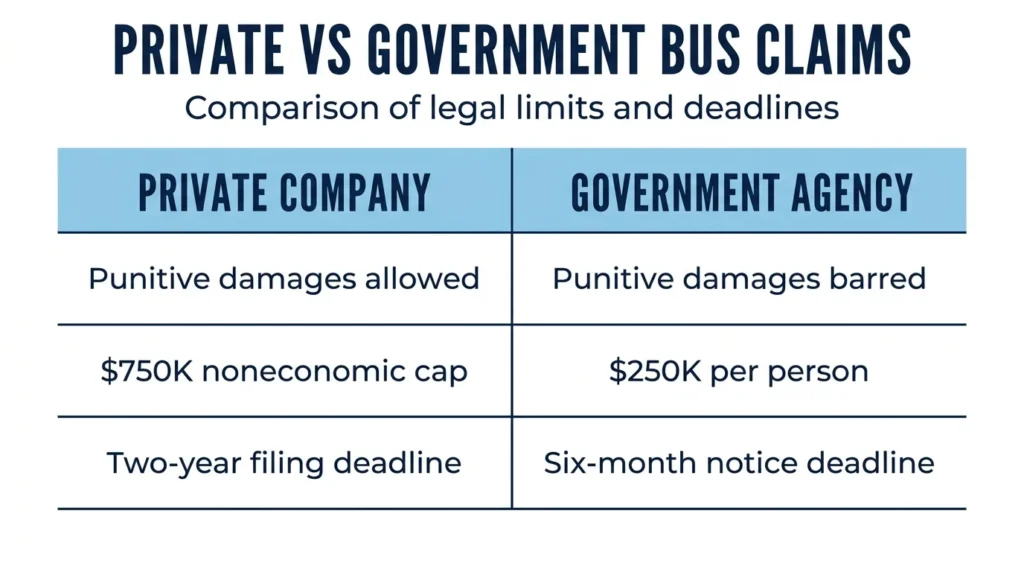
You can seek punitive damages against a private bus company or driver when you prove gross negligence or malice. The standard sits under Texas Civil Practice and Remedies Code (CPRC) § 41.003. Choosing to drive a bus while drunk usually meets this standard.
Gross negligence means an act that creates an extreme risk paired with conscious disregard for others’ safety. In most cases, driving a full bus while intoxicated fits this description.
Texas caps these awards under CPRC § 41.008. The cap is the greater of $200,000, or twice your economic damages plus up to $750,000 in noneconomic damages. The cap still applies in bus DUI cases, because the felony exception in § 41.008(c) leaves out intoxication assault and manslaughter. To see how these numbers come together, review our explainer on how punitive damages are calculated.
Government Transit Authorities
A public bus changes everything about your recovery. When a city transit system or agency runs the bus, sovereign immunity rules take over. These rules limit both how much you can recover and what types of damages are available.
Texas CPRC Chapter 101, known as the Texas Tort Claims Act, waives immunity for crashes that government employees cause while on the job. But it caps damages at $250,000 per person and $500,000 per occurrence for cities and regional transit authorities. Our overview of how the Tort Claims Act limits bus recovery covers these caps in detail.
Section 101.024 bars punitive damages against government entities entirely. No DWI exception restores them. The driver’s conduct can be appalling, and you still cannot recover punitive damages from a public operator.
A public bus claim also carries a hard early deadline. You must serve formal notice on the entity within six months of the crash. Miss that window and you can lose your right to recover at all.
What Victims Can Recover
You can recover the full range of losses a serious bus crash causes. Economic damages cover your medical bills, future treatment, lost wages, reduced earning capacity, rehabilitation, and property damage. Noneconomic damages cover pain and suffering, mental anguish, disfigurement, and loss of companionship.
When a crash takes a life, the family can bring a wrongful death claim. Texas CPRC Chapter 71 says who may file. Eligible claimants are the spouse, children, and parents of the person who died. Our wrongful death claims page explains what these cases involve.
Passengers and bystanders both hold these rights after a drunk bus driver crash. The party you ride with doesn’t limit the protection the law gives you.
Time is the one resource you cannot get back. Texas CPRC § 16.003 gives you two years from the crash date to file. Claims against a government entity move faster, since the six-month notice rule comes first. If time has already passed and you’re unsure whether a claim survives, you can review your options for a bus accident claim before any deadline closes.
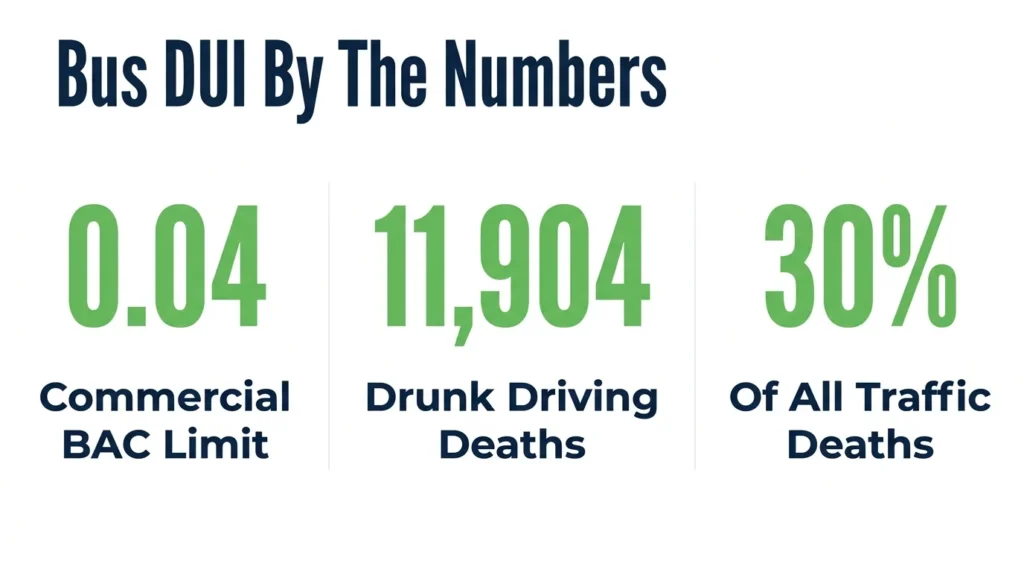
The stakes are high. According to National Highway Traffic Safety Administration drunk driving data, alcohol-impaired driving caused 11,904 deaths in 2024, about 30% of all traffic deaths. A single bus crash can multiply that danger, since one impaired driver puts a whole load of passengers at risk.
Talk to a Texas Bus Accident Attorney
A drunk bus driver crash can leave you with stacked bills and confused about who’s responsible. You deserve a clear path to recovery and someone who can pursue every party that owes you. Angel Reyes & Associates has recovered more than $1 billion for clients across Texas in commercial vehicle, drunk driving, and serious bus crash cases.
We handle bus DUI injury and wrongful death claims on contingency, which means there’s no fee unless we win. You can read our client reviews and testimonials or meet the attorneys who handle these claims before you decide. We also have extensive experience with drunk driving accident claims.
Schedule a free consultation with us to talk through your case today.
Past results do not guarantee future outcomes.
Frequently Asked Questions
Does knowing a bus driver was drunk before boarding reduce my compensation?
It can. Texas uses a modified comparative fault rule, so if a jury finds you partly at fault for boarding a bus with a driver you knew was impaired, your award is reduced by your share of fault. You cannot collect anything if your share of fault reaches 51% or more.
What happens to a bus driver's commercial license after getting a DUI in Texas?
If someone holding a commercial driver’s license gets a first DUI conviction, they’re disqualified from commercial driving for one year. If they get a second DUI conviction, they could be banned for life. Their violation is also reported to the FMCSA Drug and Alcohol Clearinghouse, which employers must check before hiring any commercial driver.
How long does the bus company have to test a driver for alcohol and drugs after a crash?
Under federal rules, the company must complete alcohol testing within eight hours of the crash and drug testing within 32 hours. If the company misses these windows without a documented reason, this failure is itself evidence of a federal safety violation.
How do I pay my medical bills while waiting for the bus accident case to settle?
Your own auto insurance’s Personal Injury Protection (PIP) can cover initial medical costs while your claim is pending, regardless of who caused the crash. If PIP runs out, many providers will also treat you under a medical lien and wait to be paid from your settlement proceeds.
What is the minimum insurance a private bus company must have in Texas?
Interstate buses carrying 16 or more passengers must hold at least $5 million in liability coverage under federal rules; buses carrying 15 or fewer passengers require at least $1.5 million. These minimums mean there’s typically a large insurance policy available to pay a serious injury claim.
About the Authors

Angel Reyes
Writer
Angel L. Reyes, III is the Founder and Managing Partner of Angel Reyes & Associates. A nationally recognized trial attorney and business leader, Angel has helped over 70,000 injury victims recover more than $1 billion since founding the firm in 1993. Named to the Texas Super Lawyers list annually since 2008, Angel brings Wall Street experience, Ivy League education, and a deep commitment to client advocacy. He is a frequent legal commentator and published author with extensive contributions to legal scholarship, trial strategy, and consumer protection.

Graham Griffin
Editor
Graham Griffin is the Web & Content Manager at Angel Reyes & Associates, where he oversees content strategy, AI-powered workflows, a...

Angel Reyes
Reviewer
Angel L. Reyes, III is the Founder and Managing Partner of Angel Reyes & Associates. A nationally recognized trial attorney and business...