How Comparative Fault Works in Texas Motorcycle Accident Cases


Every article on this site is researched by our internal team, reviewed for legal accuracy against current Texas law, and held to State Bar of Texas advertising standards before publication. We do not publish content that overstates outcomes or makes promises about results.
Learn more about our
editorial standards .
Key Takeaways
- Texas bars all recovery if your fault in a motorcycle accident exceeds 50 percent under CPRC Section 33.001.
- Insurers deliberately push rider fault percentages toward the 51% threshold to eliminate claims entirely.
- Evidence like EDR data, dashcam footage, and accident reconstruction can directly challenge an inflated fault finding.
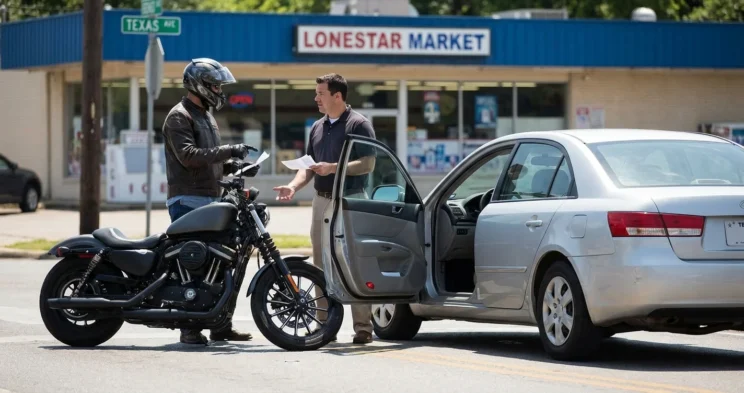
You were heading home on US-290 outside Houston when a pickup truck turned left across your path. You laid the bike down to avoid a direct hit and hit the pavement hard. The other driver says you were speeding.
Now the insurer is telling you that you were more than half at fault, and the offer on the table barely covers a week of medical bills. That number the insurer gave you is not final.
The 51% Rule & What It Means for Riders
Texas uses a proportionate responsibility system for personal injury claims, including motorcycle accidents. Under Texas Civil Practice and Remedies Code (CPRC) Section 33.001, a claimant cannot recover any damages if their share of responsibility is greater than 50 percent. If your fault is 50 percent or below, you can still recover, but your compensation is reduced by your fault percentage.
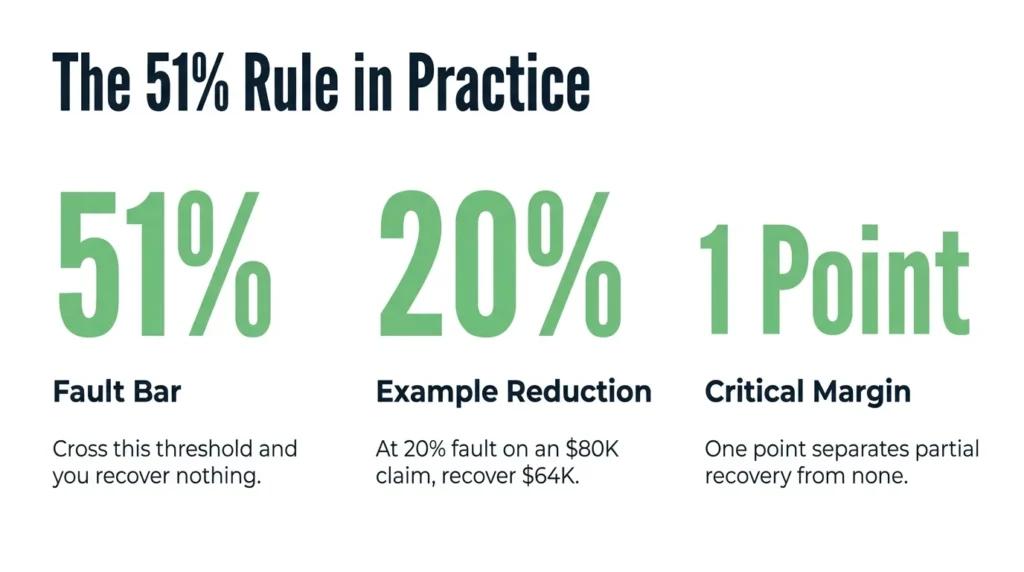
The math is straightforward. If your damages total $80,000 and you are found 20% at fault, you recover $64,000. If you are found 51% at fault, you recover nothing.
That single percentage point is the difference between a check and no compensation. It is also why insurers focus so intensely on pushing a rider’s fault number across that threshold.
Why Insurers Target the 51% Threshold in Motorcycle Cases
Insurers are businesses. Every percentage point of fault they can shift onto you reduces what they owe, and at 51%, they owe you nothing at all. That is not cynicism. It is how the math works, and adjusters know it.
Motorcycle riders face a specific problem: biker bias. Adjusters and jurors sometimes treat motorcyclists as inherently reckless, even when the evidence does not support that view. That assumption makes it easier to assign disproportionate blame to a rider before anyone has reviewed the facts carefully.
Common arguments insurers use to inflate rider fault include claims of excessive speed, lane positioning issues, lack of protective gear, and reduced visibility. Some of these arguments have factual support. Others are based on stereotypes rather than evidence. Knowing which is which depends on what the evidence actually shows.
If an adjuster is pushing your fault percentage toward that threshold, understanding how fault is actually determined in Texas gives you a clearer picture of what the process is supposed to look like.
Evidence That Challenges an Inflated Fault Finding
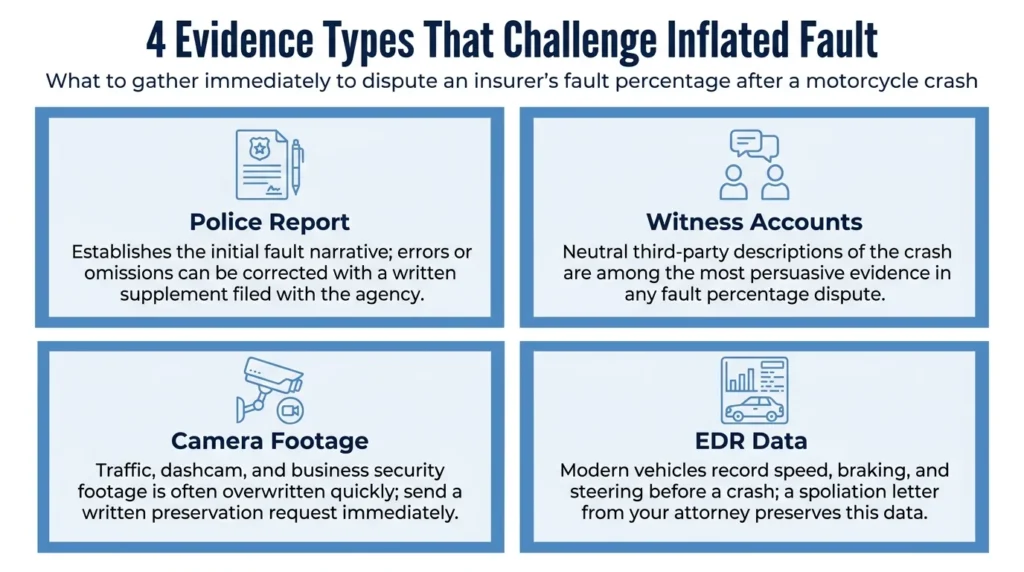
You can push back on the insurer’s number. The key is having evidence that shows the claims against you are wrong. The following types of evidence carry real weight:
- The police report. The official report establishes the initial fault narrative. If the report contains errors or omissions, a written supplement can correct the record. Get a copy as soon as the report is filed.
- Witness contact information. Neutral third-party accounts are among the most persuasive evidence in a fault dispute. Collect names and phone numbers from anyone who saw the crash.
- Preserved camera footage. Traffic cameras, dashcams, and nearby business security systems may have captured the collision. Footage is often overwritten, or deleted, on short cycles. A written preservation request sent promptly to the relevant parties or properties can prevent loss of this evidence.
- Event Data Recorder (EDR) data from the other vehicle. Modern vehicles record speed, braking input, and steering in the seconds before a crash. An attorney can send a spoliation or preservation letter to the other party’s insurer or fleet operator to prevent that data from being erased or overwritten.
- Accident reconstruction. A reconstruction specialist uses physical evidence, crash physics, and roadway data to determine pre-impact speeds, travel paths, and point of contact. This type of analysis can directly contradict an insurer’s version of what happened.
- Injury documentation. Medical records showing the location and severity of your injuries can disprove claims that you were performing a dangerous maneuver at the time of the crash. Impact direction and injury pattern often tell a consistent story that is hard to argue with.
For more on how settlements factor in fault percentages and other variables, review how motorcycle accident settlements work in Texas.
How Fault Gets Assigned & Who Decides
The insurer’s fault number is a negotiating position, not a legal judgment. Adjusters assign a preliminary percentage based on their review of available information. That review is one-sided by nature. Their job is to close claims for as little as possible.
If the claim moves to litigation, fault percentages are decided by a jury under CPRC Chapter 33. Juries weigh all the evidence presented, not just what the insurer gathered.
Between the initial adjuster assignment and a jury verdict, there is significant room to challenge the number. Mediation, formal demand letters backed by evidence, and pre-trial negotiations have all moved fault percentages in ways that changed claim outcomes.
Talk to an Attorney Before Accepting a Fault Number
Accepting a settlement locks in the fault percentage and waives your right to any additional compensation. Before you agree to anything, it is worth having an experienced attorney review the evidence and the insurer’s fault assignment.
Angel Reyes & Associates has guided injured Texans through fault disputes for over 30 years. We offer free initial consultations, and we work on a contingency basis, meaning there is no fee unless we win. Our attorneys handle motorcycle accident claims across Texas and know the specific tactics insurers use to push riders past the 51% threshold. Reach out today for a free consultation.
Past results do not guarantee future outcomes.
Motorcycle Accident Comparative Fault FAQs
Does riding without a helmet in Texas affect my fault percentage?
Texas riders 21 and older may legally ride without a helmet if they meet specific insurance or training requirements. However, insurers often argue that riding helmetless increases the severity of head injuries, and a jury can use that argument to assign a portion of fault for those specific injuries rather than for the crash itself.
What is negligence per se and how does it help a motorcycle rider's case?
Negligence per se applies when the other driver broke a traffic law, such as running a red light or failing to yield. That violation is treated as automatic negligence, which can anchor a high fault percentage on the other driver and reduce pressure on the rider’s share.
How long do I have to file a motorcycle accident lawsuit in Texas?
Texas gives most injury victims two years from the date of the accident to file a lawsuit. Missing that deadline will almost always end the case before it begins, regardless of how strong the evidence is.
Can I dispute the insurer's fault percentage after I have already given a recorded statement?
Yes. A recorded statement is not a legal admission of fault, and the insurer’s preliminary fault assignment can still be challenged with new evidence, a formal demand response, or litigation. Speak with an attorney before giving any additional statements.
What happens to my claim if the other driver was also partly at fault but has no insurance?
Your own uninsured motorist (UM) coverage may cover the gap. UM coverage can pay for your damages up to your policy limits when the at-fault driver has no insurance, and the same proportionate responsibility rules apply to determine how much you can collect.
About the Authors

Angel Reyes
Writer
Angel L. Reyes, III is the Founder and Managing Partner of Angel Reyes & Associates. A nationally recognized trial attorney and business leader, Angel has helped over 70,000 injury victims recover more than $1 billion since founding the firm in 1993. Named to the Texas Super Lawyers list annually since 2008, Angel brings Wall Street experience, Ivy League education, and a deep commitment to client advocacy. He is a frequent legal commentator and published author with extensive contributions to legal scholarship, trial strategy, and consumer protection.

Kyle Nicolas
Editor
Kyle Nicolas is the Web Content & SEO Manager at Angel Reyes & Associates. He has more than 10 years of experience as a marketing co...

Angel Reyes
Reviewer
Angel L. Reyes, III is the Founder and Managing Partner of Angel Reyes & Associates. A nationally recognized trial attorney and business...