How Texas Damage Caps Affect Medical Debt After Bus Accidents


Every article on this site is researched by our internal team, reviewed for legal accuracy against current Texas law, and held to State Bar of Texas advertising standards before publication. We do not publish content that overstates outcomes or makes promises about results.
Learn more about our
editorial standards .
Key Takeaways
- Texas caps government bus payouts at $250,000 or $100,000 per person, depending on the agency.
- Hospital liens and insurer subrogation can reduce your recovery, but Texas law limits what can be taken out of your compensation.
- Use PIP, Med-Pay, and health insurance to cover your hospital bills and treatment while your claim is still pending.
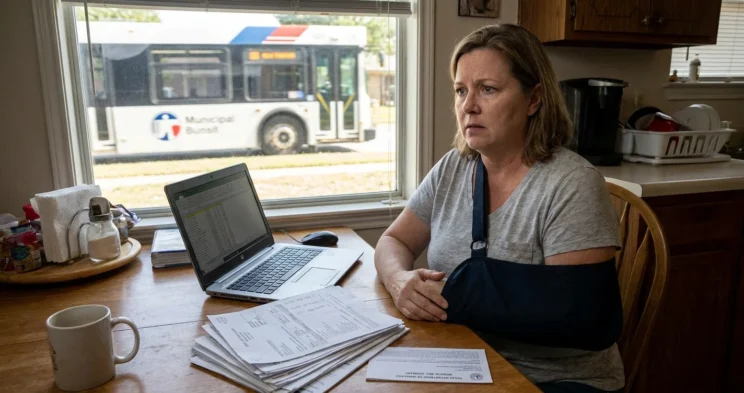
You were riding the bus down Westheimer Road in Houston when the driver ran a red light, and a hard crash threw you into the seat ahead of you. Weeks later, you are home from the hospital recovering from surgery, and there’s already a stack of bills on the table.
Now, you hear from a friend that the transit agency only has to pay so much in damages, no matter how severe your injuries are, and you’re left wondering who covers the rest.
How Statutory Damage Caps Leave Gaps in Medical Debt Recovery
When a government bus injures you, Texas law limits how much the agency has to pay in damages. The Texas Civil Practice and Remedies Code (CPRC) § 101.023 sets fixed dollar amounts on what a government unit owes for your injuries, no matter how much your bills cost.
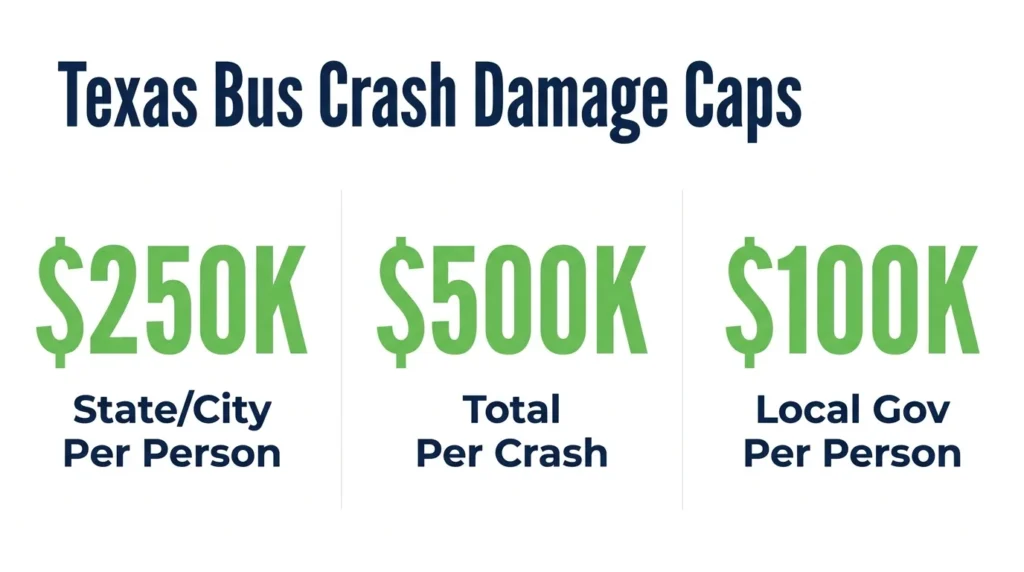
The limit depends on which government runs the bus company. For the state and city, the limit is $250,000 per person and $500,000 for the whole crash. For other units of local government, the limit drops to $100,000 per person.
However, injuries from a serious bus crash can cost much more than that. One surgery, an ICU stay, and months of rehab can easily cost $250,000 or more. When your care costs more than the limit provides, you’ll have to find another way to cover the difference.
This is what makes a government bus crash different from a normal car wreck. Even if the driver was at fault, there is still a legal limit on the agency’s payout. To see how these limits work in detail, our breakdown of the Tort Claims Act caps on bus claims can walk you through each tier.
When Medical Costs Outpace the Damage Cap
Medical bills from a serious bus crash add up fast, and they keep coming long before any settlement arrives. A hospital stay plus surgery can eat through the entire settlement in the first few weeks, and there are other costs to consider, such as physical therapy, follow-up scans, prescriptions, and time spent away from work. Each new bill means the limited damages awarded will pay for less, and you’ll be responsible for more.
Additionally, these claims typically take months or even longer to resolve. Your bills don’t stop coming while you wait for your settlement, which means you’ll need to figure out who pays for your immediate care, and who covers the amount left to pay after the settlement limit is reached. Our guide on who pays medical bills after a crash can shed some light on this issue.
Hospital Liens & Subrogation During a Pending Claim
While your claim is pending, two different parties may try to take money from your future compensation:
- A hospital can file a lien.
- Your health insurer can ask to be reimbursed for medical expenses.
Each party is governed by different laws and have different limits, so it’s easy to get them confused.
How Texas Hospital Liens Work
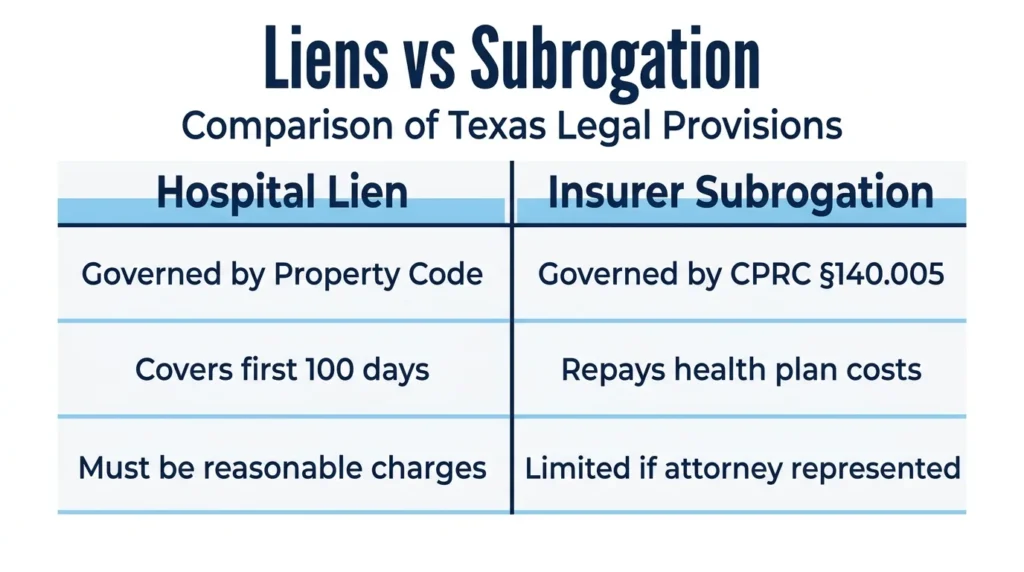
A Texas hospital can attach a lien to your injury claim for the care it gave you right after the crash. Under the Texas Property Code § 55.002, a lien covers charges from the first 100 days of treatment, provided you were admitted within 72 hours of the accident.
A lien is not unlimited. The Texas Property Code § 55.004 requires the charges to be reasonable and limits how much the hospital can take out of your compensation. If a lien contains inflated charges, it can be challenged and reduced.
How Health Insurer Subrogation Works
If your health plan paid your bills, it may ask to be repaid out of your compensation. This is called “subrogation,” which simply means the insurer claims back what it paid upfront. This can take a large bite out of limited compensation.
However, Texas law limits the amount that can be claimed by your insurer. The Texas Civil Practice and Remedies Code § 140.005 limits how much a health benefit plan can recover from you, provided you are represented by an attorney. This rule differs for some plans, so it’s beneficial to read up on Texas subrogation reimbursement rules to see how these claims are often resolved.
Remember, these numbers are not set in stone. An attorney can often negotiate a hospital lien and a subrogation claim to get them reduced and leave more of your limited compensation in your pocket.
Options to Stay Afloat While Your Claim Is Pending
You do not have to wait for your claim to be settled before your hospital bills and treatment are paid for. Several payment sources kick in immediately, but they generally pay in a set order:
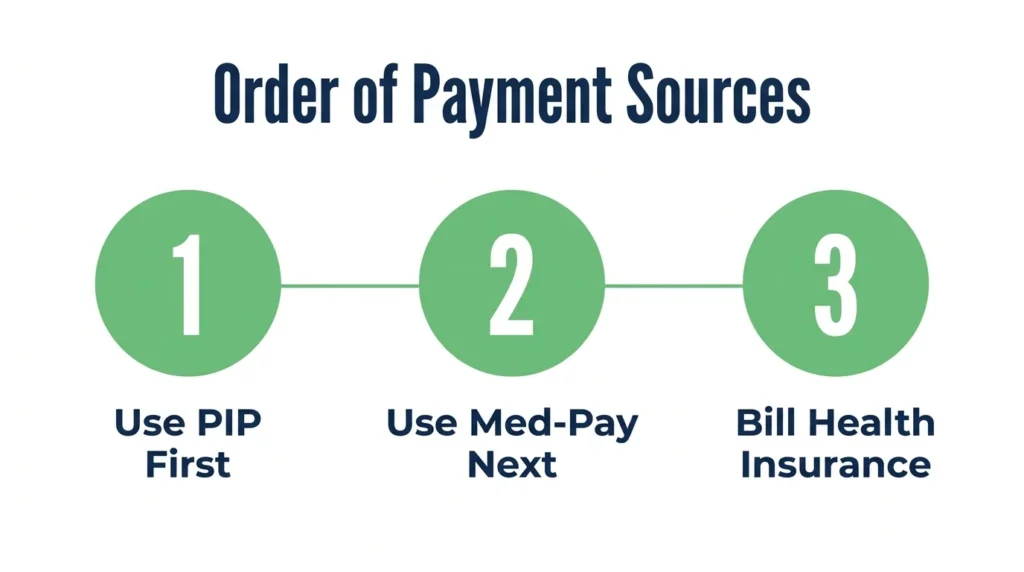
Step 1: Use Personal Injury Protection (PIP) first. If you carry PIP on your own auto policy, it pays your medical bills and some of your lost wages, no matter who caused the crash. It does not have to be paid back.
Step 2: Use Medical Payments Coverage (Med-Pay) next. This optional auto coverage pays medical bills only (usually in smaller amounts) after PIP runs out.
Step 3: Bill your health insurance. Your regular health plan covers ongoing care immediately, but it may seek repayment from your compensation later through subrogation.
Texas Government Claim Deadline
Finally, it’s important to remember that a claim against a government entity has a strict deadline under the Texas Civil Practice and Remedies Code § 101.101. Miss that deadline, and the claim can be dismissed entirely.
Talk with an Attorney About Your Bus Accident in Texas
A capped claim does not necessarily mean you’ll have to pay all your medical bills yourself. Angel Reyes & Associates has spent over 30 years helping injured Texans find every source of recovery, from insurance coverage to claims against private parties that are not subject to the cap. We are experienced in bus accident representation. Our team can review your bills, push back on inflated liens, and map out a plan to keep you afloat while your case moves forward.
We have recovered more than $1 billion for clients across the state, and we work on contingency, so there is no fee unless we win. Your first consultation is free. Take a look at our past case results and reach out to us for a free consultation today.
Past results do not guarantee future outcomes.
Frequently Asked Questions
Can a hospital still bill me for the balance after its lien is paid?
Yes, a hospital can sometimes pursue the unpaid balance. However, billing it to your health plan first often reduces or eliminates what you personally owe.
Does Med-Pay have to be repaid from my settlement?
Often, yes. Unlike PIP, Med-Pay coverage usually gives your auto insurer a right to be reimbursed from your compensation.
Will filing a government bus claim hurt my credit while bills go unpaid?
Yes, unpaid medical bills can affect your credit if they go to collections. Use insurance to keep your accounts current while your claim is pending.
Do I have to repay PIP benefits from my bus accident settlement?
Generally, no. If the required insurance was in place, then your PIP carrier has no right to take back what it paid from your settlement.
Are multiple injured riders forced to share one government cap?
Yes. The per-occurrence limit caps the total amount of compensation that a government unit can pay for one crash, so if there are several injured riders, then they may have to share the compensation.
About the Authors

Angel Reyes
Writer
Angel L. Reyes, III is the Founder and Managing Partner of Angel Reyes & Associates. A nationally recognized trial attorney and business leader, Angel has helped over 70,000 injury victims recover more than $1 billion since founding the firm in 1993. Named to the Texas Super Lawyers list annually since 2008, Angel brings Wall Street experience, Ivy League education, and a deep commitment to client advocacy. He is a frequent legal commentator and published author with extensive contributions to legal scholarship, trial strategy, and consumer protection.

Graham Griffin
Editor
Graham Griffin is the Web & Content Manager at Angel Reyes & Associates, where he oversees content strategy, AI-powered workflows, a...

Spencer Browne
Reviewer
Spencer Browne is a partner at Angel Reyes & Associates and a Board Certified personal injury trial lawyer with nearly 100 jury trials a...