Motorcycle Accident Recovery Timeline


Every article on this site is researched by our internal team, reviewed for legal accuracy against current Texas law, and held to State Bar of Texas advertising standards before publication. We do not publish content that overstates outcomes or makes promises about results.
Learn more about our
editorial standards .
Key Takeaways
- Settling your motorcycle accident claim before reaching MMI can permanently undervalue your injuries and future costs.
- Texas law gives most injured riders two years to file, so you have time to let your medical picture develop fully.
- The legal claim process starts at the crash scene, not after you finish recovering, so early action protects your evidence.
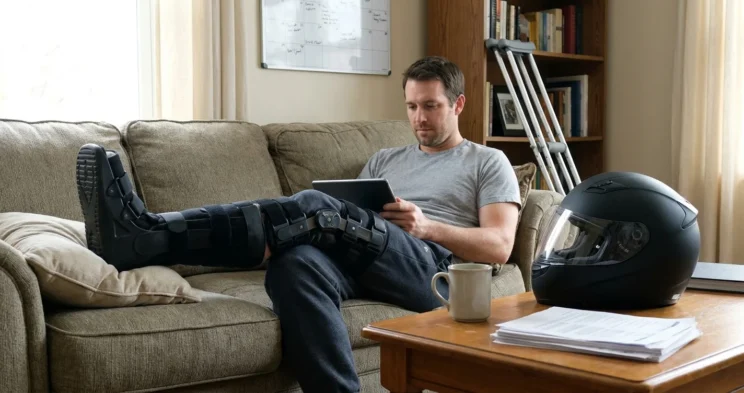
You were heading home on I-35 when another driver crossed into your lane. One second you were upright. Next, you were on the asphalt.
The days after a serious motorcycle crash move fast. Medical appointments, missed work, phone calls from an insurance adjuster asking you to sign something. Most riders have never been through this before, and the pressure to close things out quickly can feel relentless.
The First 48 Hours After the Crash
The trauma center is where the medical record that anchors your entire injury claim gets created. In those first 48 hours, doctors are running imaging, diagnosing fractures, checking for traumatic brain injury, evaluating internal injuries, and treating road rash.
Some injuries require immediate surgery. Internal bleeding, compound fractures, and spinal cord compression do not wait for planning. The decisions made during this time are medical, not legal, but they produce the records that will define your case for months.
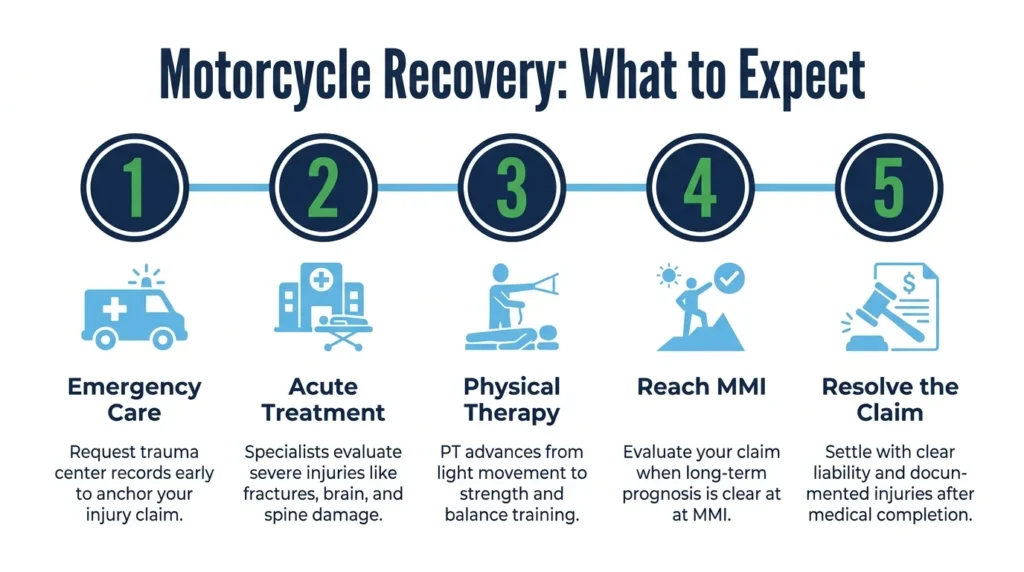
Two documents matter most in this period: the crash report filed by the responding officer, and the medical records generated during your emergency evaluation. Both document the facts while they are still fresh. Protecting both means requesting copies early.
You can review what common injuries in motorcycle accidents look like and how they affect recovery, which helps you understand what your treating physicians are working through.
There is no dollar figure on what you are dealing with in the ER. The full cost of your injuries will not be known for weeks or months. The adjuster calling you does not know it either, even if the offer sounds specific.
Acute Treatment & the Road to Diagnosis
After emergency stabilization, the focus shifts to treatment planning. Orthopedic surgeons evaluate fractures. Neurologists assess brain injuries. Wound care teams manage road rash. Spinal specialists map the damage.
The timelines for physical recovery from motorcycle crash injuries vary significantly by injury type. Simple fractures typically heal in 6 to 8 weeks. Complex fractures can take 3 to 6 months. A tibial fracture can take up to 20 weeks. Traumatic brain injuries and spinal cord injuries are measured in months to years, and some symptoms do not fully heal.
Physical therapy usually begins when pain levels allow. The early phase involves light movement, stretching, and manual therapy to restore range of motion and manage inflammation. The active rehabilitation phase introduces strength work, balance exercises, and progressive loading. A maintenance phase follows, focused on preventing regression.
Psychological recovery is part of physical recovery. Anxiety, depression, and post-traumatic stress are common after serious crashes. Mental health treatment is part of the medical record too, and it reflects the full scope of what the accident cost you. Documenting every appointment, specialist visit, and therapy session from day one strengthens your injury claim and makes sure nothing is missed when your losses are calculated.
Riders dealing with the full scope of motorcycle accident injuries can review a detailed breakdown of our motorcycle accident settlements guide, which covers how different injury types affect what a claim is worth.
Maximum Medical Improvement & Why Claim Timing Depends on It
Maximum medical improvement, or MMI, is the point at which your treating physician determines your condition has stabilized and is unlikely to improve further with continued treatment. MMI does not mean you are fully healed. It means the medical picture is complete enough that your long-term prognosis is clear, including permanent impairment ratings and future care needs.
This is the moment that governs when you should seriously consider resolving your claim. Before MMI, the full cost of your injuries is an estimate. Future physical therapy, assistive devices, home modifications, lost earning capacity, and permanent disability ratings are all unknown. When you sign a settlement release, you give up the right to ask for more later. That release is permanent.
Under the Texas Civil Practice and Remedies Code § 16.003, most personal injury claims in Texas must be filed within two years of the injury. That two-year window is usually enough time to reach MMI before the filing deadline arrives. You do not need to rush.
The adjuster who contacts you in the days after the crash is not on your side. Insurers contact injured riders quickly because early settlement offers close claims before the full picture develops. The fact that an offer sounds specific does not mean it reflects your actual future costs.
The Legal Claim Running in Parallel
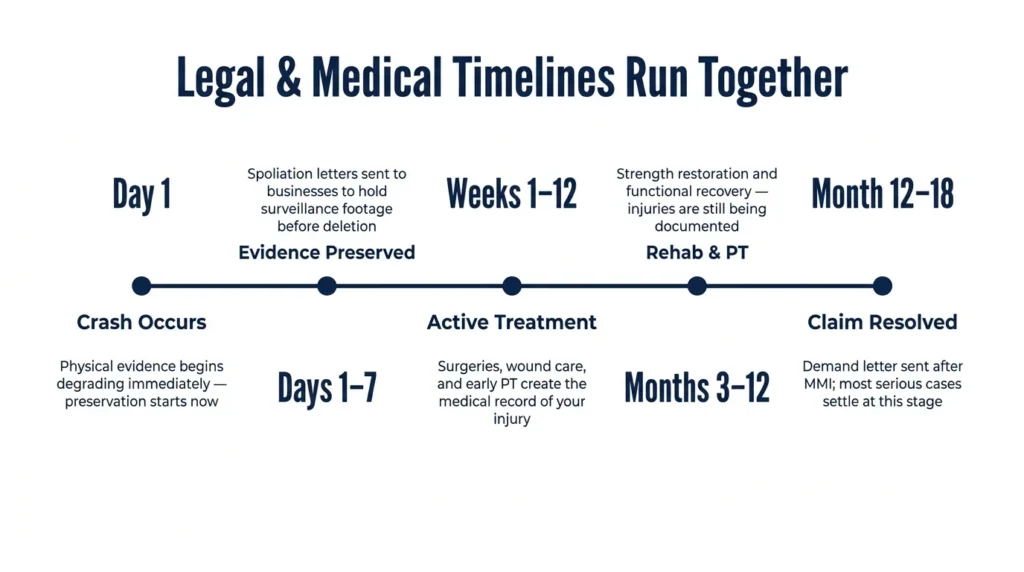
The legal process does not wait for you to finish recovering. It runs alongside your medical care from day one, and starting it early protects things you cannot get back later.
Physical evidence from the crash scene degrades fast. Surveillance footage gets deleted. Skid marks fade. Witnesses forget details. An attorney can send preservation letters to businesses and insurers within days to hold evidence that would otherwise disappear. You can see how Texas insurance settlement timelines work so you know what to expect at each stage.
Texas uses a proportionate responsibility system under the Texas Civil Practice and Remedies Code Chapter 33. If you are found more than 50% responsible for the crash, you cannot recover any damages. How the crash is documented during the investigation and treatment period matters to that fault analysis. A helmet, gear records, and a strong police report all affect how fault is assessed.
In Texas motorcycle accident cases, the legal timeline typically moves through a few stages: investigation and evidence preservation while you are still in treatment, a demand letter after MMI, negotiation with the insurer, and if no agreement is reached, litigation.
Most cases with clear liability and documented injuries settle without going to trial. Cases involving serious injuries often resolve 12 to 18 months after the crash once the medical picture is fully developed.
Reaching out to an attorney early does not mean rushing your claim. It means protecting your evidence and your options while you focus on getting better.
Get the Right Help From the Start
Recovery from a motorcycle crash is measured in months. The legal window is measured in years. Both timelines are important, and they are connected.
Angel Reyes & Associates has spent over 30 years helping injured Texans through exactly this situation: the medical bills piling up, the pressure from adjusters, the uncertainty about what comes next. We work on a contingency basis, which means you pay nothing unless we recover compensation for you.
Initial consultations are free, and we handle cases across the entire state of Texas.
If you were injured in a motorcycle crash and an adjuster has already called, do not settle anything before understanding the full picture. Contact us to review your situation and understand your options. Learn more about who we are and how we work before making any decisions about your claim.
Motorcycle Accident Recovery Timeline FAQs
Can I ride without a helmet in Texas if I am over 21?
Texas law allows riders 21 and older to ride without a helmet if they have completed a state-approved motorcycle safety course or carry health insurance with at least $10,000 in coverage for motorcycle injuries. Riders under 21 must wear a helmet with no exceptions.
What happens if my injuries get worse after I sign a settlement?
Once you sign a settlement release, you generally cannot reopen the claim or pursue additional compensation from the same at-fault party, even if your condition worsens. This is one of the primary reasons attorneys recommend waiting until you reach maximum medical improvement before settling.
Can I negotiate my motorcycle accident claim without an attorney?
You are not required to hire an attorney, and you can negotiate directly with an insurer. For serious injuries, disputed liability, or any case involving future medical costs, an attorney typically produces a better outcome because adjusters are trained to minimize what they pay.
Does Medicare or Medicaid have a claim on my settlement?
If Medicare or Medicaid paid for your medical treatment after the crash, those programs can place a lien on your settlement and must be reimbursed from the proceeds before you receive the remainder. An attorney familiar with medical liens can often negotiate a reduction of the lien amount.
How long does a Texas motorcycle accident claim typically take to resolve?
Cases with clear liability and documented injuries often settle within 12 to 18 months after the crash, once the injured rider has reached maximum medical improvement. Cases with disputed fault, catastrophic injuries, or multiple parties can take longer, and some proceed to trial, which extends the timeline further.
About the Authors

Angel Reyes
Writer
Angel L. Reyes, III is the Founder and Managing Partner of Angel Reyes & Associates. A nationally recognized trial attorney and business leader, Angel has helped over 70,000 injury victims recover more than $1 billion since founding the firm in 1993. Named to the Texas Super Lawyers list annually since 2008, Angel brings Wall Street experience, Ivy League education, and a deep commitment to client advocacy. He is a frequent legal commentator and published author with extensive contributions to legal scholarship, trial strategy, and consumer protection.

Kyle Nicolas
Editor
Kyle Nicolas is the Web Content & SEO Manager at Angel Reyes & Associates. He has more than 10 years of experience as a marketing co...

Angel Reyes
Reviewer
Angel L. Reyes, III is the Founder and Managing Partner of Angel Reyes & Associates. A nationally recognized trial attorney and business...