Who Pays When You Crash a Rental Car in Texas?


Every article on this site is researched by our internal team, reviewed for legal accuracy against current Texas law, and held to State Bar of Texas advertising standards before publication. We do not publish content that overstates outcomes or makes promises about results.
Learn more about our
editorial standards .
Key Takeaways
- Rental products, your auto policy, and credit cards may all apply in order.
- Loss-of-use and administrative fees can bill you after insurance pays the claim.
- Being 51% or more at fault bars recovery under Texas comparative fault law.
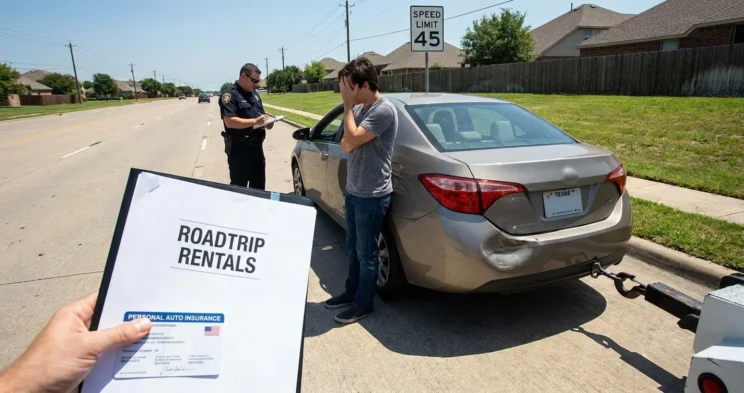
You picked up a rental car at Houston’s Hobby Airport. Then a fender-bender near the exit ramp turned a routine trip into an insurance nightmare. Now the rental counter, your own insurer, and the other driver’s insurance company all want to know who pays first. Here is the order that actually determines who pays.
Rental Car Accident Coverage in Texas
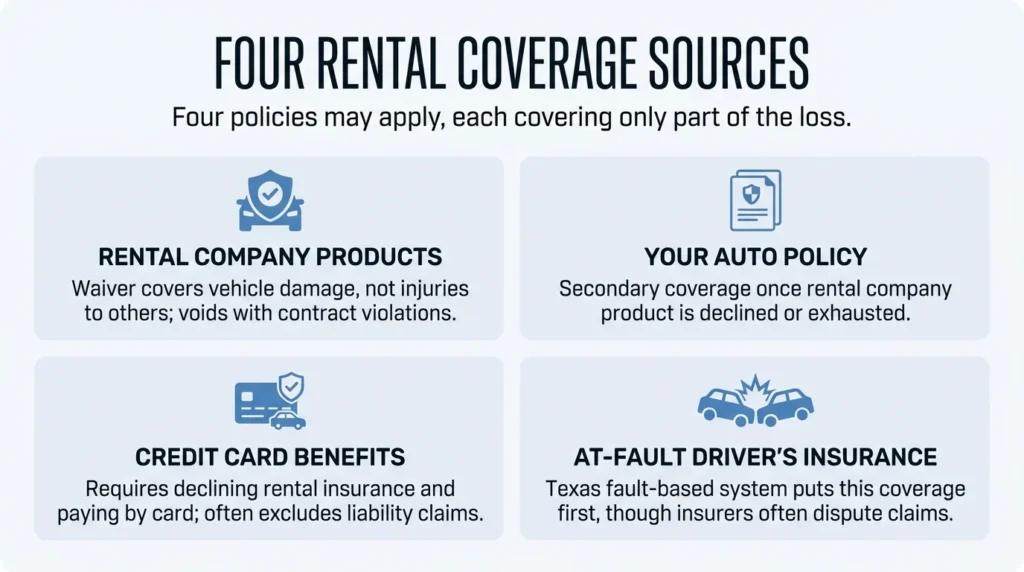
How rental car insurance works in Texas rarely comes down to one policy. Four different sources can apply, and each one covers only part of the loss:
- The Rental Company’s Own Products: The collision damage waiver and any supplemental liability protection sold at the counter are usually the first coverage in play. The waiver typically pays for damage to the rental vehicle itself, not injuries to other people. A contract violation, like letting an unauthorized driver take the wheel, can void it instantly.
- Your Own Auto Policy: Most personal auto policies extend some coverage to a rental car. Usually that protection is secondary once the rental company’s own product is declined or exhausted. Many drivers discover too late that their policy still leaves them responsible for damage to the rental vehicle itself.
- Credit Card Rental Benefits: Credit card coverage generally requires declining all rental company insurance and paying the entire rental with that card. Even then, most cards provide only secondary coverage that excludes liability claims, luxury vehicles, and commercial use, limits that only surface after a crash.
- The At-Fault Driver’s Liability Insurance: When another driver caused the crash, Texas’s fault-based system puts their liability insurance on the hook first. These insurers still dispute rental claims often, arguing about coverage gaps rather than paying quickly.
Loss-of-Use & Administrative Fees You Might Owe
Even after insurance pays for the crash itself, the rental company can still bill you directly. Two charges catch most renters off guard:
- Loss-of-use fees cover the rental company’s lost income while the damaged car sits in the shop. Insurers calculate this against the reasonable rental value of a comparable vehicle over the repair period.
- Administrative fees cover the paperwork and processing cost of getting the vehicle repaired and back into the rental fleet. These fees commonly range from $50 to $150 or more, according to industry reporting, and often apply even when a damage waiver covers the repair itself.
Both charges can show up as a separate invoice days or weeks after you return the car. That happens regardless of which of the four coverage sources ultimately pays for the crash.
Common Rental Car Accident Scenarios in Texas
Which policy responds first depends heavily on which situation you are in, much like fault plays out in any Texas car accident claim. Four scenarios cover most rental car crashes in Texas:
- You Caused the Crash in a Rental Car: Your personal liability insurance may cover damage to others, but Texas’s minimum coverage often falls short in a serious crash. Skipping the rental company’s damage waiver can leave you owing thousands directly for repairs neither policy touches:
- Someone Else Hit You While Driving a Rental: The at-fault driver’s insurance should cover the damage, but rental companies often press you for immediate payment while that claim is still pending. Knowing how collision coverage works after a Texas crash helps you avoid paying out of pocket before the other insurer settles.
- You Loaned the Rental to Someone Not on the Contract: Letting a friend or spouse drive without adding them to the rental agreement can void all coverage the moment they take the wheel. The renter is then personally on the hook for the loss. Even so, PIP and other no-fault coverage may still apply to injuries regardless of who was driving.
- You Were a Passenger in a Rental Vehicle Crash: Passengers often have the clearest path to compensation, since both the driver’s policy and their own coverage may apply. The same UM/UIM logic that applies when riding in someone else’s vehicle carries over directly to a rental car crash. Confirming which policy pays first is worth doing carefully before accepting any settlement.
Texas Laws That Shape Rental Car Claims
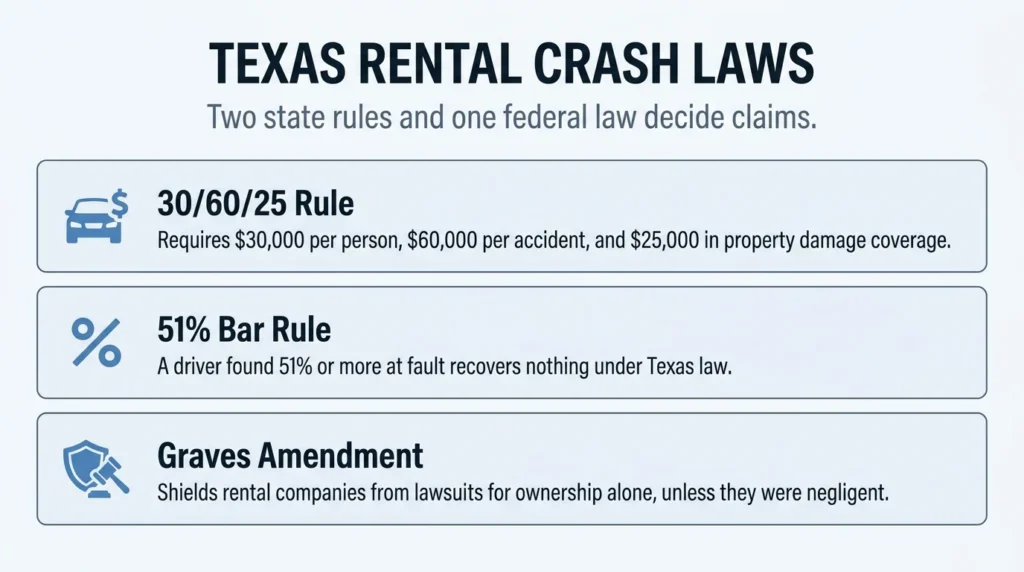
Two Texas rules and one federal law decide how much a claim is worth and who can be sued:
- Minimum Liability Coverage (the 30/60/25 Rule)
Texas Transportation Code § 601.072 requires $30,000 per person and $60,000 per accident in bodily injury coverage, plus $25,000 in property damage coverage. These are the same Texas minimum insurance requirements that apply to any driver, and a serious rental car crash can exceed them quickly.
- Modified Comparative Fault (the 51% Bar)
Under Texas Civil Practice and Remedies Code § 33.001, a driver found 51% or more at fault recovers nothing. Insurers know this, which is why fault percentage gets contested hardest in rental car claims.
- The Graves Amendment
49 U.S.C. § 30106 generally shields rental companies from being sued just for owning the vehicle involved in a crash. The exception: if the company itself was negligent, for example in maintaining the vehicle, or committed criminal wrongdoing, the shield does not apply.
What to Do After a Rental Car Crash
Ensure everyone’s safety first, then call 911 so police and medical response create an official record. Document the scene thoroughly with photos of all vehicles, the rental agreement, insurance cards, and witness information.
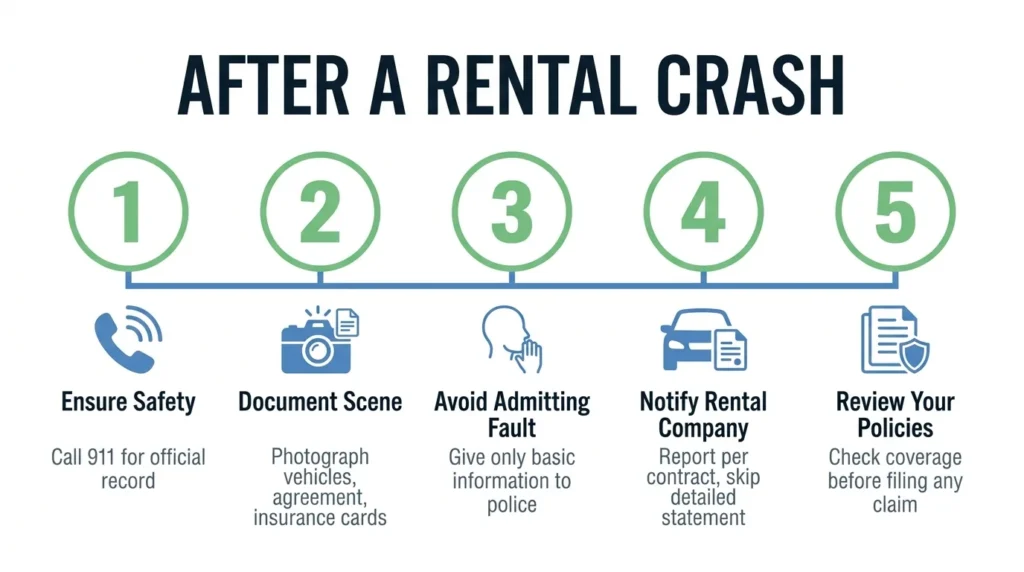
Avoid admitting fault or discussing details beyond basic information with police or any insurer. Notify the rental company as your contract requires, but hold off on a detailed statement until you have reviewed your coverage.
Review every policy and credit card benefit that might apply before you file any claim. The order and method you use to file can change how much of the loss each policy actually covers.
Talk to an Experienced Attorney About Your Rental Car Accident
Multiple insurance companies pointing fingers is not a sign you have no case. It usually means you need someone who can force each insurer to acknowledge its share.
Angel Reyes & Associates has spent more than 30 years fighting these exact insurance disputes for Texas drivers. That work includes more than $1 billion recovered for clients, with outcomes documented in our case results.
You pay nothing unless we win your case. If a rental company, your own insurer, or the other driver’s insurer is disputing who pays, contact us for a free case review.
Past results do not guarantee future outcomes.
FAQs About Rental Car Accidents and Insurance in Texas
Does travel insurance cover a rental car accident in Texas?
Travel insurance can reimburse damage to the rental vehicle itself, but it generally will not cover liability for injuries or damage you cause to someone else. You still need a separate liability source, like your own auto policy or the rental company’s supplemental product, for that kind of claim.
How long do I have to report a rental car accident to the rental company?
Most rental agreements require notice within 24 to 48 hours, and waiting longer to notify your own insurer can provide grounds to dispute your claim too.
Will my personal auto insurance still cover a rental car crash if I was renting for work?
Often not automatically. Many personal auto policies carry a business-use exclusion that can leave a work-related rental crash uncovered unless you confirm coverage before you drive.
Is a diminished value charge different from a loss-of-use fee?
Yes. Diminished value is the permanent drop in the rental vehicle’s resale value even after a full repair, while loss-of-use covers only the rental income lost during that repair, and a rental company can bill for both separately.
Does my out-of-state car insurance still cover me if I crash a rental car in Texas?
Usually yes. Most personal auto policies extend their liability coverage to a rental car regardless of which state issued the policy, though Texas law governs how the claim itself gets resolved.
About the Authors

Spencer Browne
Writer
Spencer Browne is a partner at Angel Reyes & Associates and a Board Certified personal injury trial lawyer with nearly 100 jury trials across Texas. He focuses on car, truck, and wrongful death cases, with notable verdicts including a landmark win in the Choctaw Casino bus crash case. A recognized speaker and legal educator, Spencer is a member of the American Board of Trial Advocates and has been honored as a Texas Super Lawyer and one of D Magazine’s Best Lawyers in Dallas. He brings deep trial experience and relentless advocacy to every client he represents.

Kyle Nicolas
Editor
Kyle Nicolas is the Web Content & SEO Manager at Angel Reyes & Associates. He has more than 10 years of experience as a marketing co...

Angel Reyes
Reviewer
Angel L. Reyes, III is the Founder and Managing Partner of Angel Reyes & Associates. A nationally recognized trial attorney and business...