Road Rash From a Motorcycle Accident in Texas


Every article on this site is researched by our internal team, reviewed for legal accuracy against current Texas law, and held to State Bar of Texas advertising standards before publication. We do not publish content that overstates outcomes or makes promises about results.
Learn more about our
editorial standards .
Key Takeaways
- Road rash ranges from a minor scrape to a deep wound needing skin grafts.
- Texas treats permanent scarring as recoverable disfigurement and impairment damages.
- Fault above 50% bars recovery, so gear documentation protects your claim.
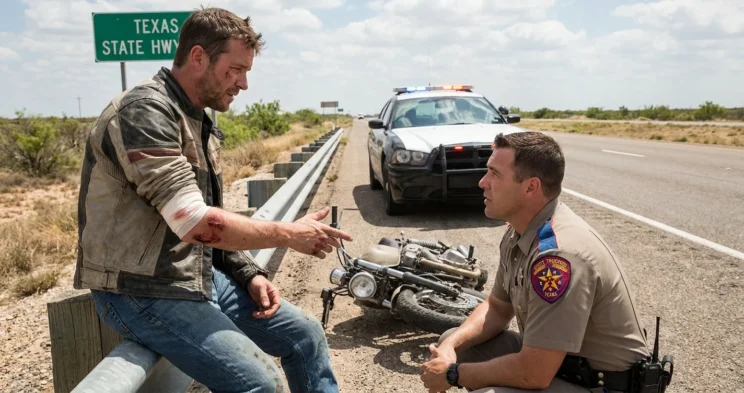
You went down on your bike heading out toward Plano on a clear afternoon, sliding across the pavement before you could stop. Now the skin on your arm and hip is raw, weeping, and burning with every movement. The other driver caused the crash, but the insurance adjuster is already asking what gear you had on.
What Road Rash Is After a Motorcycle Crash
Road rash is skin scraped away when your body slides across pavement at speed. It can be a minor scrape or a deep wound that strips skin down to muscle. Riders sometimes treat it as a scrape that will heal on its own. That assumption can cost you both your health and your claim.
The real danger is not always the first wound. Infection, nerve damage, and permanent scarring are what turn a motorcycle road rash injury into a long-term problem.
Getting medical care early does two things:
- It protects your recovery.
- It creates a record that ties the injury to the crash.
A documented medical record from the start protects your ability to recover compensation through a motorcycle accident claim later.
The Degrees of Road Rash Severity
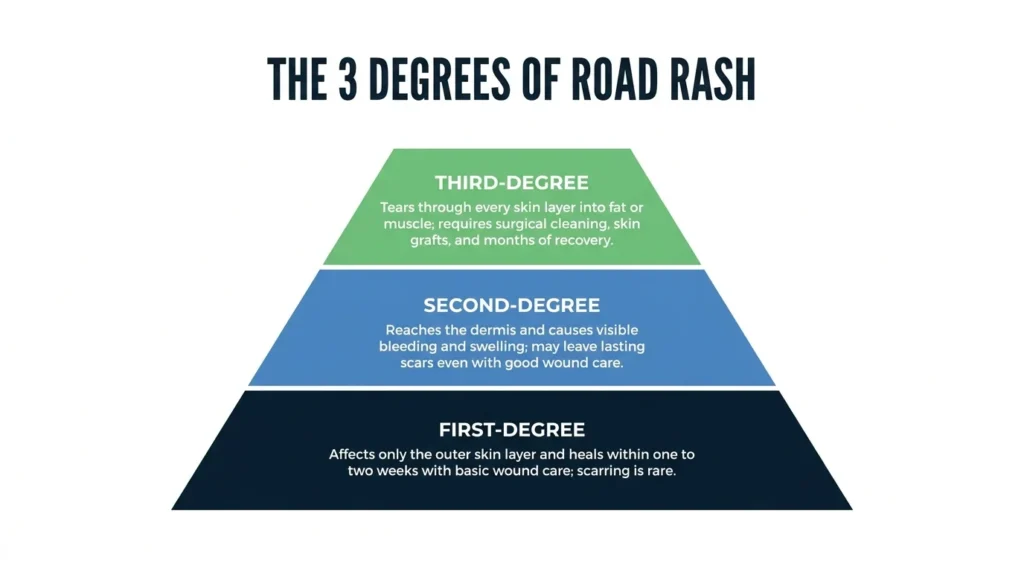
Doctors grade road rash by depth, much like burns, from a surface scrape to a wound through every layer of skin. Road rash is a common motorcycle accident injury, and knowing your degree helps you understand your recovery and what your injury is worth.
The most severe cases involve degloving, where skin tears fully away from the tissue beneath it. These wounds often need a skin graft, where surgeons move healthy skin to cover the damage.
Protective gear changes the outcome here. Federal safety data on motorcycle injuries shows gear reduces how deep and how widespread these wounds become.
First-Degree Road Rash
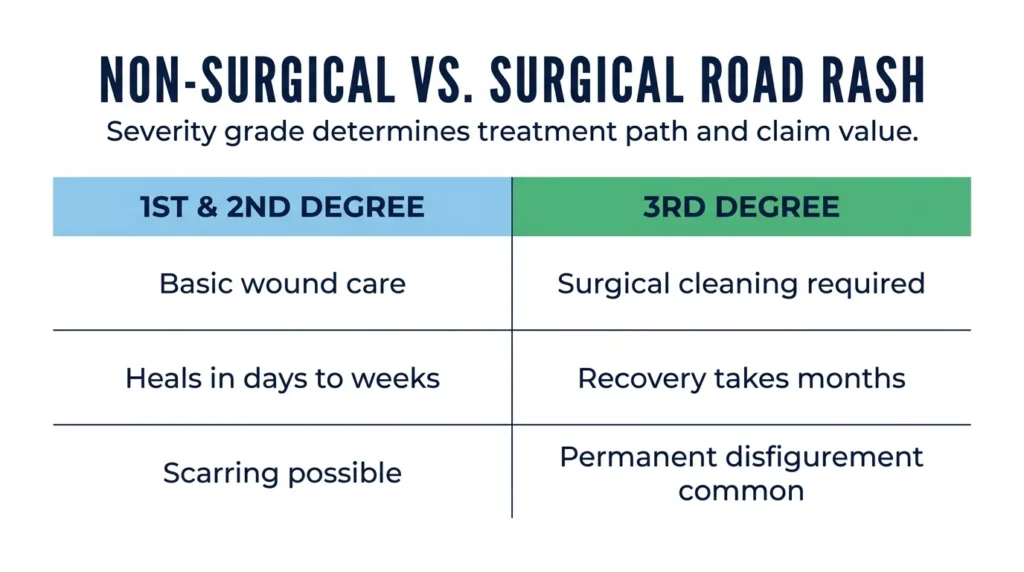
First-degree road rash affects only the outer layer of skin. You will see redness, tenderness, and maybe slight bleeding. These scrapes usually heal in a week or two with basic wound care. Scarring is rare at this level.
Second-Degree Road Rash
Second-degree road rash reaches the dermis, the layer beneath the surface. Expect visible bleeding, swelling, and more intense pain. Healing often takes several weeks. Larger wounds at this level can leave a lasting scar even with good care.
Third-Degree Road Rash
Third-degree road rash tears through every skin layer into the fat, muscle, or bone below. This is the most serious form, and it changes everything about your recovery.
These wounds usually need surgical cleaning and a skin graft. Recovery stretches across months, and permanent disfigurement is common.
Disfigurement & Scarring Damages in Texas
Texas law lets you recover for permanent scarring as a separate harm, in addition to compensation for your medical bills. Disfigurement and physical impairment count as non-economic damages under the Texas Civil Practice and Remedies Code (CPRC) § 41.001.
This means a scar can be worth money on top of what you paid your doctors. A deep wound that leaves a visible mark on your face, arm, or leg carries real value.
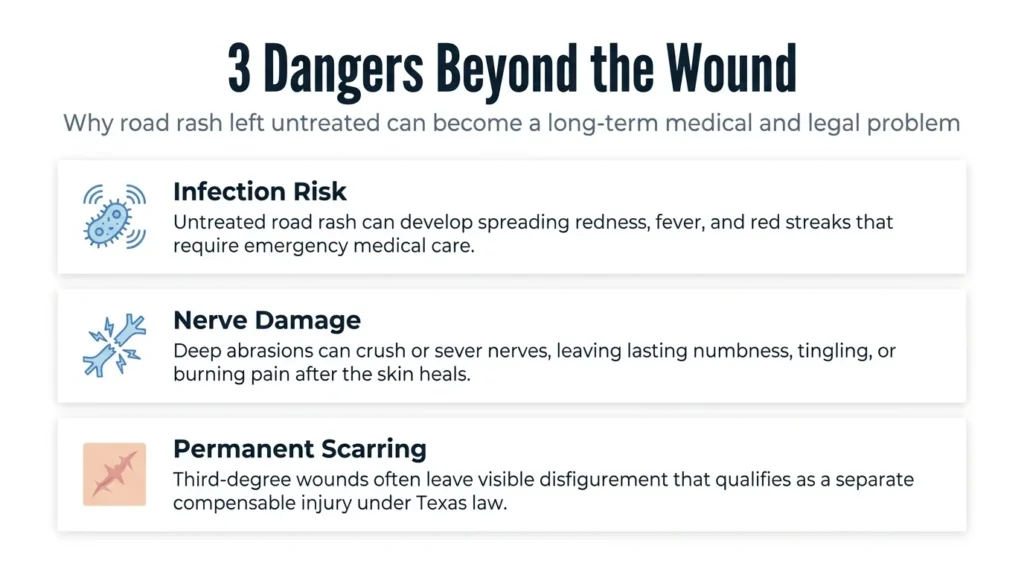
Third-degree road rash and skin grafts tend to support the strongest disfigurement claims. The scar is permanent, visible, and tied directly to the crash. How that value turns into a settlement depends on the facts, so it’s important to understand how motorcycle accident settlements work in Texas.
You also have a deadline. Texas gives you two years from the date of the crash to file under CPRC § 16.003. That two-year window makes early documentation worth the effort. Photographing the wound through every stage of healing preserves proof of the disfigurement before the scar settles.
Protective Gear & Comparative Fault
Your gear choices can become a weapon the insurer uses against you. An adjuster may argue that lighter clothing made your injuries worse, then try to shift part of the blame onto you.
Texas uses a fault-sharing system called proportionate responsibility. If you are found more than 50% at fault, you recover nothing under CPRC § 33.001. Any fault below that line still cuts your recovery. A finding that you were 20% responsible reduces your compensation by 20%.
This is why a gear argument and an understanding of the Texas 51% rule matters to your wallet.
You can push back. Documenting what you actually wore, and following the Texas helmet requirement under Transportation Code § 661.003, helps counter a gear-based blame argument.
The fault-sharing rule is the single biggest reason riders lose money they were owed. Knowing Texas’s modified comparative negligence laws helps you understand how adjusters push fault higher than the evidence supports.
Get Help From an Attorney
A road rash injury can be more serious and more valuable than it first looks, and the insurance company knows it. Angel Reyes & Associates has spent over 30 years helping injured Texans hold negligent drivers accountable.
We work on a no fee unless we win basis, though you may still owe court costs and expenses even if we do not collect attorney fees. Our consultations are always free, and we serve riders across the entire state of Texas from more than 20 office locations.
If a crash left you with road rash, reach out to us for a free consultation, and we’ll review your options.
Motorcycle Road Rash FAQs
What are the warning signs that road rash has become infected?
Watch for spreading redness, swelling that worsens, pus or a bad smell, and fever. Red streaks running from the wound need emergency care, since they can signal a serious infection.
Can road rash cause permanent nerve damage?
Yes. Deep road rash can crush or sever nerves, leaving lasting numbness, tingling, or burning pain even after the skin heals.
Will my health insurance pay for road rash treatment?
Most health plans cover medically necessary care, including wound treatment and surgery, no matter how you were hurt. You may still owe deductibles or copays, and your insurer may seek repayment from any settlement.
Can a passenger hurt on a motorcycle file a road rash claim?
Yes. A passenger can pursue compensation from the at-fault driver, and sometimes from the motorcycle operator if that operator also shared fault for the crash.
Does road rash ever need more than one surgery?
It can. Severe wounds may require repeated cleaning, more than one skin graft, and later scar revision procedures to improve appearance and function.
About the Authors

Angel Reyes
Writer
Angel L. Reyes, III is the Founder and Managing Partner of Angel Reyes & Associates. A nationally recognized trial attorney and business leader, Angel has helped over 70,000 injury victims recover more than $1 billion since founding the firm in 1993. Named to the Texas Super Lawyers list annually since 2008, Angel brings Wall Street experience, Ivy League education, and a deep commitment to client advocacy. He is a frequent legal commentator and published author with extensive contributions to legal scholarship, trial strategy, and consumer protection.

Kyle Nicolas
Editor
Kyle Nicolas is the Web Content & SEO Manager at Angel Reyes & Associates. He has more than 10 years of experience as a marketing co...

Angel Reyes
Reviewer
Angel L. Reyes, III is the Founder and Managing Partner of Angel Reyes & Associates. A nationally recognized trial attorney and business...