Subrogation in Bus Accident Claims in Texas


Every article on this site is researched by our internal team, reviewed for legal accuracy against current Texas law, and held to State Bar of Texas advertising standards before publication. We do not publish content that overstates outcomes or makes promises about results.
Learn more about our
editorial standards .
Key Takeaways
- Health insurers, Medicare, Medicaid, and workers' comp can all claim part of your settlement.
- The Made Whole Doctrine can prevent subrogation if your recovery does not cover your total losses.
- ERISA self-funded plans can demand full repayment, regardless of the Made Whole Doctrine.
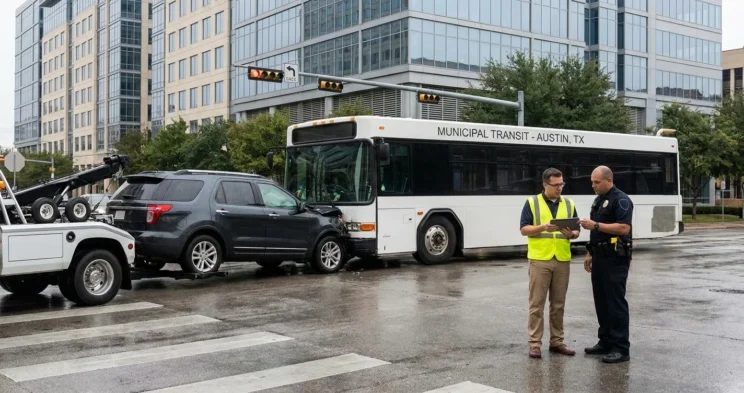
You were riding the Metro bus home through Midtown when the driver ran a light, and a pickup slammed into the side of the bus. Weeks later, your settlement is finally coming together, but then your health insurer sends a letter demanding to be paid back from it. You’re starting to wonder how much of the settlement money you will actually get to keep.
Texas Bus Accident Subrogation Explained
Subrogation is the legal right of an insurer or government program to recover what it already paid out on your behalf from the person who caused the accident. When a health insurer, Medicare, Medicaid, or a workers’ compensation carrier covers your treatment after a bus crash, it usually reserves the right to be repaid from any settlement you collect.
This is not a penalty aimed at you. Instead, it reflects the simple idea that the party who caused the crash should pay for your damages, not the insurer who stepped in to pay your bills first.
Subrogation is different from a hospital lien, though both can reduce your recovery. A hospital lien under the Texas Property Code Chapter 55 is a claim that lets the hospital collect unpaid medical bills from your settlement, while subrogation is the insurer’s right to recover the money it spent on your medical bills out of the settlement you receive from the person who caused the accident.
On your end, the result is the same either way. A slice of your settlement may go to someone other than you. Read our guide on Texas auto insurance subrogation rules to see more about how subrogation works.
Who Holds Subrogation Rights After a Bus Crash?
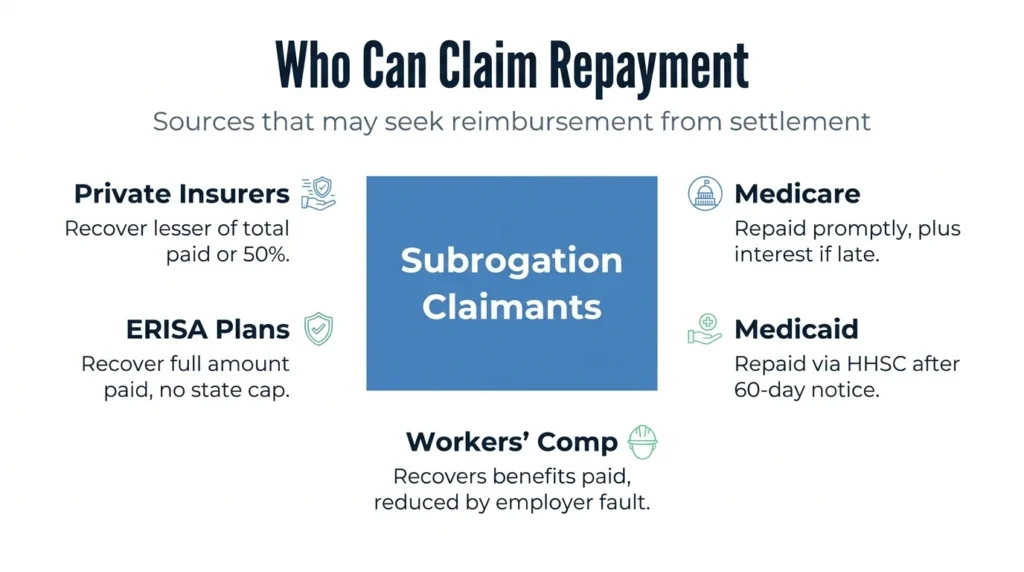
Several different sources can claim reimbursement against your recovery, and each plays by its own rules. The source itself will determine how much it can take and whether you have any protection at all.
Private Health Insurers & ERISA Plans
A private health insurer that seeks subrogation in Texas usually falls under the Texas Civil Practice and Remedies Code (CPRC) Chapter 140. This law limits recovery to the lesser of total benefits paid for your medical care or 50% of your total recovery, minus attorney fees. For plan agreements entered into after January 1, 2014, the law also allows the insurance company to seek repayment even if your settlement does not cover all of your damages.
A self-funded employer health plan governed by the Employee Retirement Income Security Act (ERISA) does not follow the Chapter 140 limits. Instead, federal law allows these plans to recover the full amount they paid for your medical bills, even if Texas law would have placed a cap on the amount.
Here is the important part: An insured plan must follow Texas regulations, while a self-funded plan answers only to ERISA and the plan itself. The difference does not show up on your insurance card, so you must review the plan documents to know which framework applies to you.
Medicare & Medicaid
Medicare has the right to be paid back for your bus crash injuries from your settlement, according to the Medicare Secondary Payer Act, with interest on unpaid balances if they are not repaid on time. Once you receive settlement funds, Medicare must be repaid promptly. Your attorney should confirm the final payment amount before the settlement money is distributed to ensure that nothing is missed.
If Texas Medicaid pays for your medical care after a bus crash, they have the right to be paid back from your settlement, according to Texas Human Resources Code § 32.033. You must notify the Health and Human Services Commission within 60 days if you file a claim.
If your bus crash happened while you were on the job, workers’ compensation insurance also has the right to be paid back from your settlement. Under Texas Labor Code Chapter 417, the insurance carrier can only claim the total amount of the benefits it paid out. If your employer is found partially responsible for the crash, the workers’ compensation recovery amount will be reduced by their share of fault. The first step is knowing who is legally responsible for the crash, which our guide on how to file a bus accident claim explains.
The Made Whole Doctrine & ERISA in Bus Accident Cases
Two legal doctrines decide whether an insurer can recover from your settlement. One doctrine protects your recovery, and the other doctrine may eliminate your protection entirely.
The Made Whole Doctrine
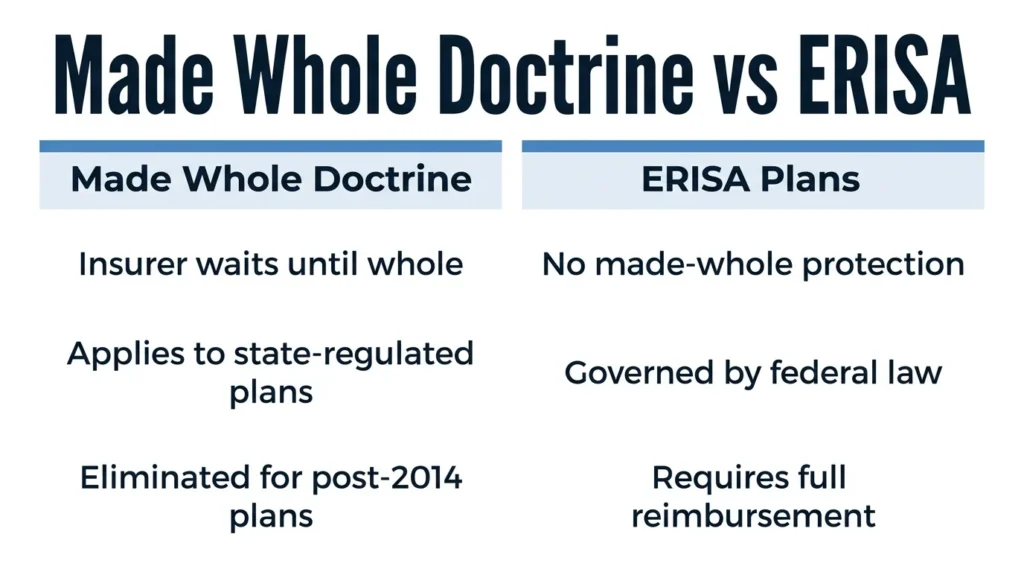
The Made Whole Doctrine states that an insurer cannot be paid back until you have been fully compensated first. If your total recovery does not cover your total losses (including medical bills, lost wages, and pain and suffering), then the insurer’s claim must either wait to receive payment or may be denied the right to recover all the money it laid out upfront.
This doctrine is especially important in government bus cases. The Texas Tort Claims Act limits how much money government entities are required to pay after an accident.
There is a $250,000 per-person recovery limit for city and municipal transit operators, and a $100,000 per-person recovery limit for counties and other non-municipal governmental units. If you’ve suffered catastrophic injuries, these limits will not cover all your losses.
In that situation, a private insurer may have no right to recover anything from your settlement. Our breakdown of Tort Claims Act caps in bus cases examines this outcome in detail.
There is an important exception. Health benefit agreements signed after 2014 eliminated the Made Whole Doctrine for claims under CPRC Chapter 140. For those plans, the statutory formula controls, not the older equitable rule. An attorney can review whether the made-whole doctrine applies to your specific case.
ERISA
If you have an ERISA self-funded plan, the Made Whole Doctrine does not apply at all. In this case, the plan uses its own reimbursement terms to decide whether or not you have been made whole. Federal courts have upheld this process for years.
This issue is often overlooked. People assume state protections apply, but when the settlement is distributed, they learn that the ERISA plan must be paid in full before they receive any of their money.
That’s why it’s important to request the Summary Plan Description, which explains whether your employer pays for your health benefits directly or buys coverage from an insurance company. An attorney should review this document before you finalize anything.
How Subrogation Affects Your Bus Accident Settlement
Your settlement money is paid out in a specific order, and you keep whatever is left over. Attorney fees are paid first, then subrogation claims and hospital liens are resolved. Finally, you receive the money that is left over. In a government-owned bus case, the statutory cap limits the total settlement amount before anyone gets paid.
Before settlement, an attorney identifies everyone who has a legal claim to your payout, so there are no surprises when the money is distributed.
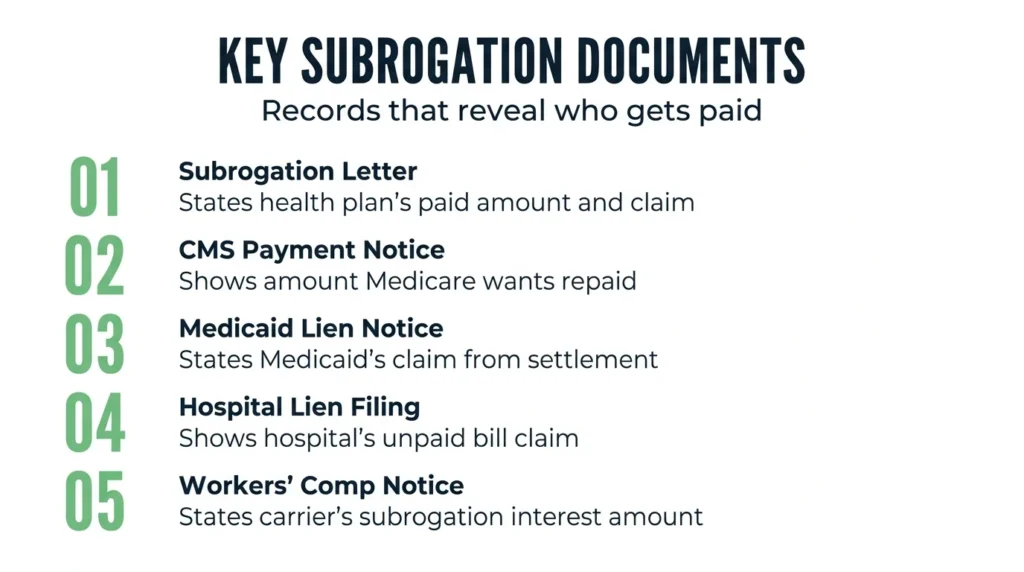
The documents that help identify these claimants include:
- The insurer’s subrogation letter, which states what the health plan paid out, and how much it intends to recover from your settlement
- The CMS conditional payment notice, which states the amount that Medicare wants back
- The Medicaid lien notice, issued through the Texas Medicaid third party liability program, which explains the amount that Medicaid may claim from your settlement
- Hospital lien filings recorded under Property Code Chapter 55, which determine whether the hospital has a legal claim for unpaid medical bills
- The workers’ comp carrier’s notice of its subrogation interest, which determines whether the workers’ compensation insurer is seeking to be repaid from your settlement
Most of these claims can be reduced through negotiation. Private insurer claims under Chapter 140 are often flexible because the law sets a maximum amount that the insurer can recover, instead of a minimum. Medicare payments can be reduced, and Medicaid claims follow a specific formula that can be verified and challenged if the agency got it wrong.
Timing is also a major factor. The Texas Civil Practice and Remedies Code § 16.003 gives you two years to file a personal injury claim, so resolving medical liens and repayment claims must happen alongside your case, not after it’s settled. For context on who pays first, see our guide on who pays medical bills after an accident.
Handling multiple liens simultaneously while negotiating a settlement is one of the hardest parts of a bus accident case. See how we have helped people facing claims from multiple parties at once.
Past results do not guarantee future outcomes.
Work with an Attorney on Your Subrogation Claim in Texas
Subrogation can reduce the recovery that you worked hard to win, and government-owned bus cases with damage limits and multiple parties seeking repayment can be challenging to manage. Angel Reyes & Associates has guided injured Texans through bus accident cases for over 30 years, including crashes involving government-operated buses. We work on contingency, so there is no upfront cost to you, and you pay no fee unless we win.
We can identify which subrogation rules apply to your case, negotiate reduced claims from private insurers and government programs, and pursue the highest settlement available to you. Our team has recovered more than $1 billion for clients across Texas. Schedule a free consultation to find out how much of your settlement we can protect.
Past results do not guarantee future outcomes.
Subrogation in Bus Accident FAQs
Can my health insurer claim part of a wrongful death settlement?
Generally, no. A wrongful death claim belongs to the surviving family members, not the person who passed away, so a health insurer cannot seek subrogation for the victim’s medical bills through a wrongful death settlement.
Does subrogation cover my pain and suffering damages, or only my medical bills?
Health plan subrogation under Texas law is limited to the medical benefits that your plan actually paid for. Your pain and suffering award is not a reimbursement of costs for the insurer, so that portion of your recovery cannot be claimed by the insurer.
Can I challenge the dollar amount that my insurer says it is owed?
Yes. Insurers sometimes overstate what they paid, include charges unrelated to the accident, or apply the wrong formula under Texas law. An attorney can audit the insurer’s claimed amount and push back on any inflated or improper charges.
Does subrogation still apply if my case goes to trial, instead of settling?
Yes. A valid subrogation claim applies to any money you recover from the at-fault party, whether that money comes from a settlement or a court verdict.
About the Authors

Angel Reyes
Writer
Angel L. Reyes, III is the Founder and Managing Partner of Angel Reyes & Associates. A nationally recognized trial attorney and business leader, Angel has helped over 70,000 injury victims recover more than $1 billion since founding the firm in 1993. Named to the Texas Super Lawyers list annually since 2008, Angel brings Wall Street experience, Ivy League education, and a deep commitment to client advocacy. He is a frequent legal commentator and published author with extensive contributions to legal scholarship, trial strategy, and consumer protection.

Graham Griffin
Editor
Graham Griffin is the Web & Content Manager at Angel Reyes & Associates, where he oversees content strategy, AI-powered workflows, a...

Spencer Browne
Reviewer
Spencer Browne is a partner at Angel Reyes & Associates and a Board Certified personal injury trial lawyer with nearly 100 jury trials a...