What is a Summary Judgment Motion?


Every article on this site is researched by our internal team, reviewed for legal accuracy against current Texas law, and held to State Bar of Texas advertising standards before publication. We do not publish content that overstates outcomes or makes promises about results.
Learn more about our
editorial standards .
Key Takeaways
- A Texas summary judgment can end your injury case without a trial or jury.
- A no-evidence motion shifts the burden to you, so you must provide evidence that supports every element the defendant challenges.
- You generally must file your summary judgment response within 21 days after the motion is filed.
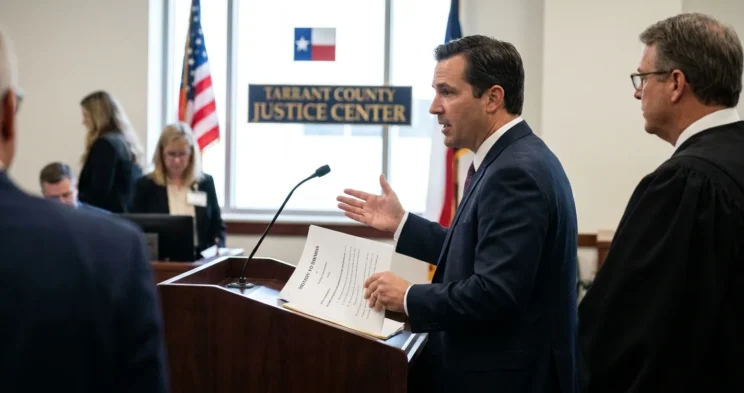
You thought your Texas personal injury case was headed for trial. Then the defense filed a motion asking the judge to end your case before a jury ever heard it.
That motion is called a “summary judgment motion,” and it can end all or part of a personal injury case without a trial. The defense may argue that the evidence proves you cannot win, or that you have no evidence to support an essential part of your claim.
You generally have 21 days after the motion is filed to respond, and important deadlines for developing your evidence may have passed months earlier. Missing the response deadline or failing to address every ground raised by the defense can put your case at serious risk. Understanding how summary judgment works, what evidence you need, and when you must act can make the difference between getting your case in front of a jury and losing your chance at trial.
How a Defendant Can End Your Case Before Trial

A Texas personal injury case can end before it reaches a jury if a party wins a motion for summary judgment under Texas Rule of Civil Procedure 166a.
A defendant may file one of the following:
- Traditional motion for summary judgment: The defendant presents evidence and argues that no genuine issue of material fact exists, and it is entitled to judgment as a matter of law. The defendant has the burden of proof.
- No-evidence motion: This motion challenges whether you have enough evidence to support your claim. The defendant must identify the specific elements for which it claims there is no evidence, but it does not need to present evidence of its own. You must point to evidence that raises a genuine issue of material fact on each challenged element that you would have to prove at trial. The court generally cannot grant summary judgment on a ground that the defendant did not raise in its motion.
In a personal injury case, a defendant may also raise both types in the same motion (called a “combined motion”).
The 21-Day Deadline for a Summary Judgment Response
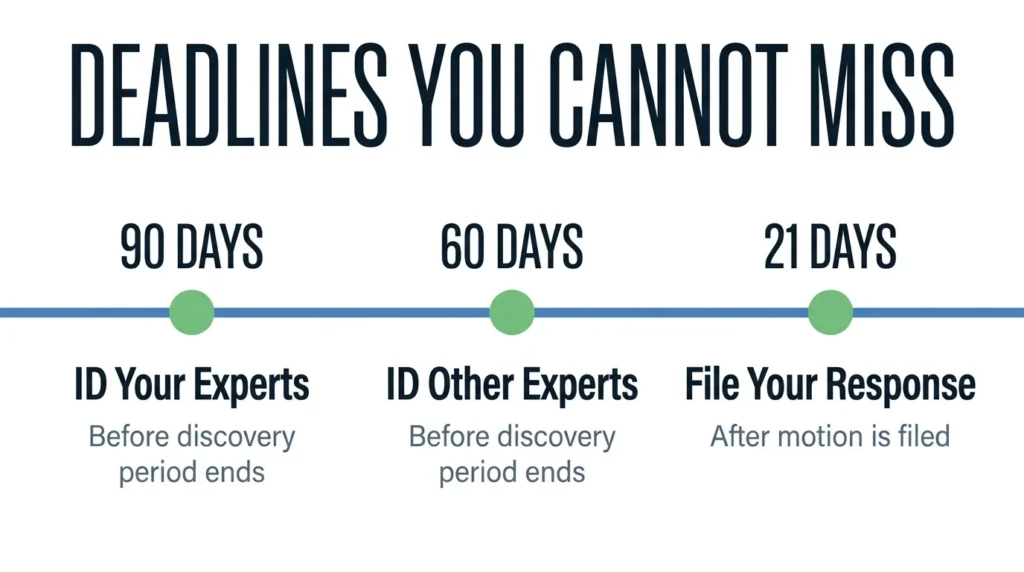
You generally have 21 days after the defendant files a motion for summary judgment to file your response, unless the court gives you more time or the parties agree otherwise. The clock starts when the defense files the motion, not when you receive the papers or when the court sets a hearing date.
If you file your response late, you generally need leave of court. A late response may not be considered unless the court grants the necessary relief.
If you do not have the evidence you need yet, then do not ignore the motion. A no-evidence motion may be filed only after you have had adequate time for discovery. If you need more time to obtain evidence, then you can tell the court why and ask for additional time.
How Evidence Can Defeat a No-Evidence Motion
To defeat a no-evidence motion, you must point to evidence that raises a genuine issue of material fact on each challenged element of your claim. You do not have to prove your entire case at this stage. Instead, you must show that the evidence creates a real dispute that should be decided at trial.
That evidence may come from sources such as deposition testimony, medical records, photographs, documents, affidavits, or other discovery materials. The evidence must also be properly presented to the court, so the judge can consider it.
If you cannot point to evidence supporting an element that the defense challenges, then the court may grant summary judgment on that claim.
How Expert Deadlines Affect Your Injury Claim
The Texas Supreme Court has distinguished between form defects and substantive defects:
- Substantive defect: This can be raised for the first time on appeal.
- Form defect: This generally must be objected to and ruled on by the trial court.
Under Rule 195.2, a party seeking affirmative relief generally must identify its experts 90 days before the discovery period ends. Other experts generally must be identified 60 days before the discovery period ends.
Expert deadlines are important if you need to defeat a summary judgment motion later. If you missed the deadline, you may not be able to rely on an expert to prove medical causation.
How Summary Judgment Rulings Affect Your Case
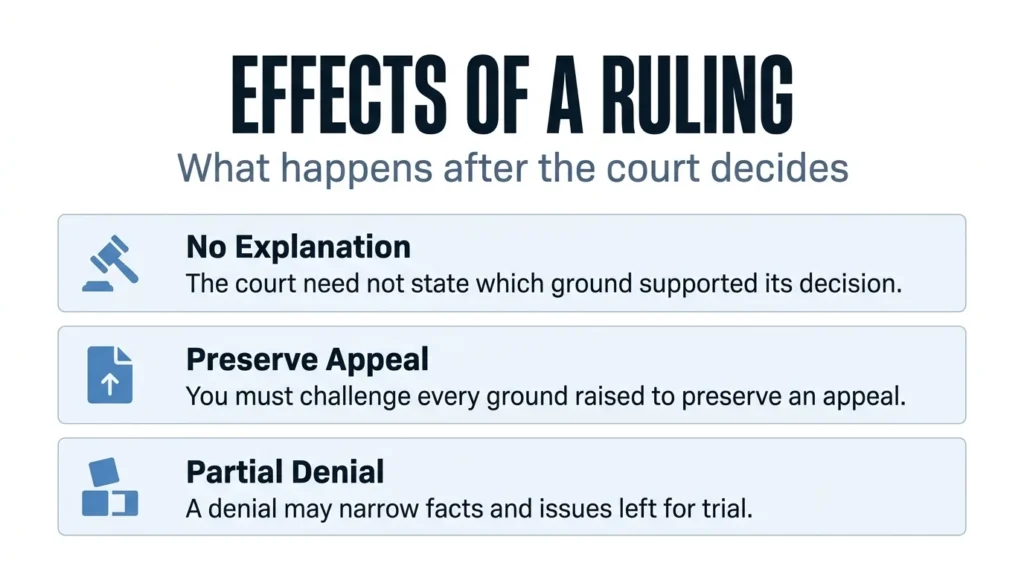
The court does not have to explain which ground supported its decision. In Texas, a summary judgment order may state that the motion is granted without identifying the specific reason.
If the defense raised multiple grounds, then you generally must challenge every ground that could support the judgment to preserve your appeal. The appeals court reviews the record from the trial court, so your response must build the evidence and arguments you may need later.
A denial is not always the end. If the court does not grant everything you requested, then it may specify the facts established as a matter of law and narrow down what is left for trial.
Ask Angel Reyes & Associates to Review Your Case in Texas
Successfully responding to a summary judgment motion often starts well before the motion is filed. Expert deadlines may come months earlier, and the evidence that supports each element of your claim must be developed while there is still time to address anything missing.
Angel Reyes & Associates has guided injured Texans through this process for over 30 years, and we have recovered more than $1 billion for our clients. We work on contingency, which means you pay no fee unless we win your case.
Contact Angel Reyes & Associates for a free consultation today to discuss your case, your evidence, and your legal options.
Past results do not guarantee future outcomes.
Summary Judgment FAQs
Does losing a summary judgment motion mean I cannot win my case?
Not necessarily. A summary judgment ruling may resolve some claims or issues without ending the entire case. Whether you can continue depends on what the court decided and the grounds supporting the ruling.
Can only part of my personal injury case be dismissed?
Yes. A judge does not always have to throw out the entire case. Some claims or parts of a case may be dismissed, while other claims continue toward trial.
What happens if my case ends before I get to testify?
You may never have the opportunity to testify at trial if the case is resolved through summary judgment beforehand. However, evidence such as medical records, photographs, witness statements, and other documents may be considered by the court.
Can a judge throw out my case because a witness will not testify?
It depends on the circumstances. A witness’s absence can make it harder to prove certain facts, but it does not automatically mean the case will be dismissed. Other evidence may still support your claim.
About the Authors

Angel Reyes
Writer
Angel L. Reyes, III is the Founder and Managing Partner of Angel Reyes & Associates. A nationally recognized trial attorney and business leader, Angel founded the firm in 1993, which has gone on to help over 70,000 injury victims recover more than $1 billion. Named to the Texas Super Lawyers list annually since 2008, Angel brings Wall Street experience, Ivy League education, and a deep commitment to client advocacy. He is a frequent legal commentator and published author with extensive contributions to legal scholarship, trial strategy, and consumer protection.

Graham Griffin
Editor
Graham Griffin is the Web & Content Manager at Angel Reyes & Associates, where he oversees content strategy, AI-powered workflows, a...

Angel Reyes
Reviewer
Angel L. Reyes, III is the Founder and Managing Partner of Angel Reyes & Associates. A nationally recognized trial attorney and business...