How Uber & Lyft Handle Accident Investigations Internally


Every article on this site is researched by our internal team, reviewed for legal accuracy against current Texas law, and held to State Bar of Texas advertising standards before publication. We do not publish content that overstates outcomes or makes promises about results.
Learn more about our
editorial standards .
Key Takeaways
- Uber and Lyft open an internal investigation immediately after a crash is reported through the app.
- The coverage period active at the moment of impact determines how much the company owes you.
- Act fast: trip records, GPS data, and app logs can be deleted before you realize you needed them.
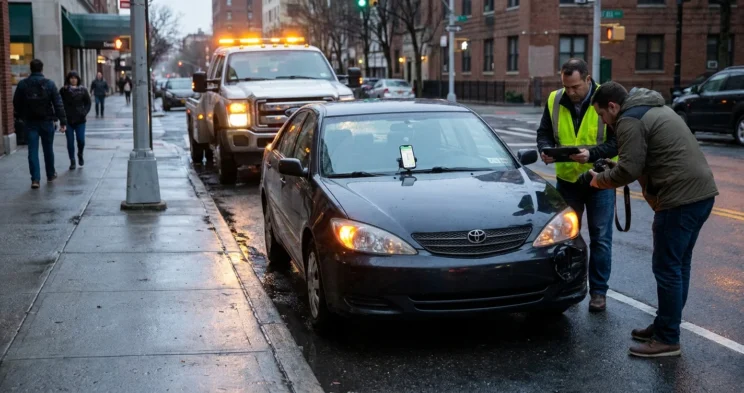
You were a passenger in an Uber heading home from dinner in Midtown Houston when another car ran a red light on Westheimer Road, hitting your ride broadside. Your driver reported the crash through the app immediately. Now, Lyft or Uber’s claims team is calling, and you are not sure what is actually happening behind the scenes.
Both companies have internal investigation processes that begin the moment a crash is reported. Understanding how those processes work, and whose interests they serve, can change how you respond.
What Triggers the Internal Investigation
When a crash is reported through the Uber or Lyft app, the company opens an internal file immediately. A dedicated safety team is assigned to review the incident, not to determine the truth on your behalf, but to assess the company’s exposure.
The review pulls trip data the moment the file opens. App logs, GPS records, and the driver’s account activity are all timestamped and captured automatically. The company knows exactly when the driver accepted the trip, where the vehicle was, and at what speed it was traveling during the period leading up to the crash.
The driver’s account status is placed on hold while the investigation is active. This is not a neutral step. It begins the process of determining which insurance policy applies, and the Uber and Lyft insurance coverage periods that were active at the moment of the crash control how much the company ultimately owes.
Driver Deactivation After an Accident
Both Uber and Lyft suspend driver accounts while a crash is under review. What happens next depends on the severity of the incident and what the internal investigation concludes.
A temporary hold typically lasts several days. If the driver is found to have caused the crash, if injuries were serious, or if the driver failed to report the incident at all, permanent deactivation follows. While drivers can appeal through the app’s Review Center by submitting dashcam footage or audio recordings, this process is run by the company with its own interests guiding the outcome.
For victims, the deactivation question matters for a different reason. The driver’s app status at the exact moment of the crash determines which coverage tier applies. Knowing what to do after a rideshare accident in Texas, before the company concludes its review, puts you in a far stronger position.
How the Investigation Protects the Company
The internal investigation is not a neutral fact-finding exercise. It is a structured process aimed at establishing the most favorable possible account of events for Uber or Lyft.
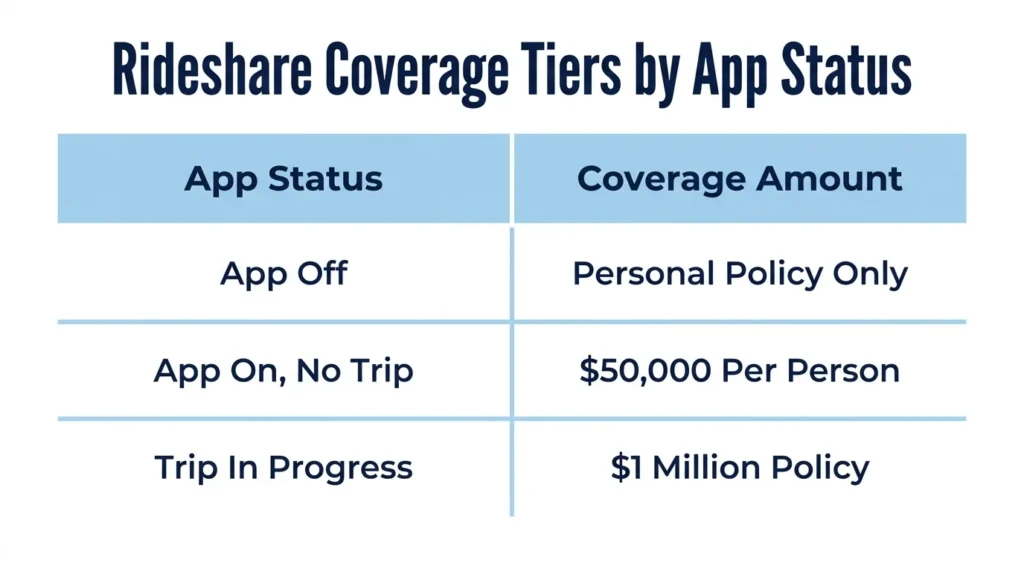
Under Texas Insurance Code Chapter 1954, insurance requirements for transportation network companies vary based on driver app status at the time of the crash, making the coverage dispute the clearest example of how this works. When the app is off, only the driver’s personal policy applies; when it is on with no active trip, minimum coverage drops to $50,000 per person; and when a trip is in progress, the $1 million commercial policy kicks in. The difference between those periods is not a technicality, but rather the difference between the company paying almost nothing and paying up to $1 million.
When app data and driver statements conflict, the company uses its own records to argue the lowest-coverage period was active. Victims rarely have access to those records at the point when the investigation is underway.
Companies also use admissions of vicarious liability as a deliberate strategy. By accepting responsibility for what the driver did, they block negligent hiring and retention claims that would open up their background check records, internal safety protocols, and driver history to scrutiny. Because that scrutiny could expose the company to punitive damages, limiting the investigation’s scope is how they prevent that.
An attorney can send evidence preservation letters to Uber or Lyft before trip records, GPS data, and app logs are overwritten or deleted. You can also review your legal options for suing Uber after an accident in Texas to understand what path makes sense for your situation.
What Evidence the Company Controls
Uber and Lyft hold most of the valuable evidence in a rideshare accident case. Victims rarely realize how much of it exists or how quickly it can be gone.
Trip receipts, GPS coordinates, app logs, and driver messaging records are all stored on company servers. The data is timestamped to the second and captures speed, route, and app status throughout the trip. That same data can show whether a driver was distracted, whether they were logged into a competing app at the same time, or whether they were still in a coverage period when the crash occurred.
Surveillance footage from nearby buildings or businesses may be overwritten within 24 to 72 hours without a formal preservation request. Vehicle in-cab recording systems may follow similar cycles.
Texas’s proportionate responsibility law under the Texas Civil Practice and Remedies Code Chapter 33 means that fault percentages assigned during this investigation can directly reduce your recovery. A promptly sent preservation letter obligates the company to retain server-side data, including records they would otherwise delete through routine auto-deletion processes. Understanding what happens when your Uber gets in an accident in Texas gives you the broader context for why acting fast on evidence matters.
What to Do While the Investigation Is Open
The investigation being open does not mean you should wait. Uber or Lyft is actively building a record. You should be building one too.

Take these steps as soon as you can after the crash:
Step 1: Screenshot all in-app trip details immediately. Capture pickup and drop-off times, route, driver name, and any in-app communications before they are updated or removed from your view.
Step 2: Do not give a recorded statement. Do not speak on the record to Uber, Lyft, or their claims representatives before consulting an attorney. Statements made during the investigation can be used to minimize the company’s liability.
Step 3: Gather your own evidence. Get the police report number at the scene and take photos of vehicle damage, road conditions, and any visible injuries. Finally, collect witness contact information and keep your ride receipt and any post-crash app notifications.
Step 4: Contact an attorney before responding to settlement outreach. The company’s first contact is not a courtesy call. It is the beginning of a process designed to close your claim for as little as possible.
Get Legal Help Before the Investigation Closes
The company’s investigation moves on its own timeline, and every day it continues is a day the record is being built without your input.
Angel Reyes & Associates has handled rideshare accident cases across Texas for over 30 years. With more than 20 offices statewide, we are always close by and available in English and Spanish to support you. Our proven track record includes more than $1 billion recovered for our clients, giving us the muscle to go toe-to-toe with major corporations.
We work on contingency, which means you pay nothing unless we win. Our Texas rideshare accident team can review your situation and send preservation letters to prevent Uber or Lyft from deleting trip records, GPS data, and app logs, the very evidence needed to secure your recovery. Contact us for a free consultation and expert guidance on how to handle the insurance company’s outreach.
Past results do not guarantee future outcomes.
How Uber & Lyft Investigate Crashes FAQs
How long does an Uber or Lyft accident investigation typically take?
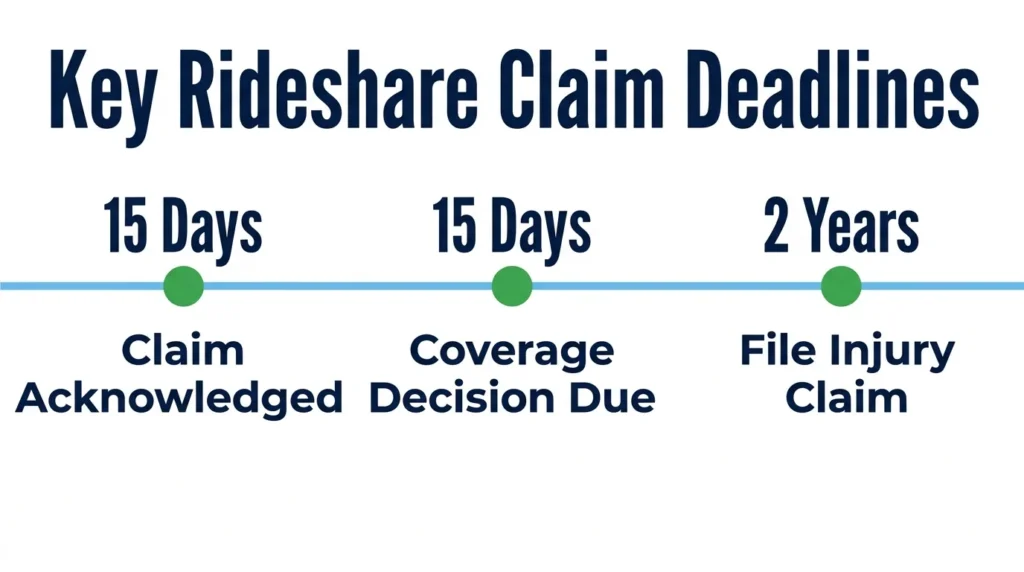
Most investigations close within a few days to several weeks, but cases involving disputed liability or serious injuries can extend for months. Texas law requires an insurer to acknowledge a claim within 15 days of receiving it and make a coverage decision within 15 business days after receiving all required items.
Does the two-year deadline apply even while Uber or Lyft's investigation is still open?
Yes. Under Texas law, your right to file a personal injury claim expires two years from the date of the crash, regardless of whether the company’s internal review is still ongoing. Waiting for the investigation to close before seeking legal advice can put you dangerously close to that deadline.
Can you file a claim against both the Uber or Lyft driver and the company at the same time?
Yes. You can bring claims against the driver and the company simultaneously. Because the driver is classified as an independent contractor, Uber and Lyft are not treated as employers, but they are obligated to provide insurance coverage during active trips, which is a separate legal obligation from the driver’s personal liability.
What happens if the other driver caused the crash, not the Uber or Lyft driver?
If a third party caused the accident, you would file a claim against that driver’s insurance. The rideshare company’s commercial policy may still come into play if the at-fault driver is underinsured or uninsured, but the claims process runs through a different track than when the rideshare driver is at fault.
Is a passenger treated the same way as a third-party driver during a rideshare accident investigation?
Not entirely. Passengers are rarely considered at fault and can file claims directly against every liable party at the same time. Third-party drivers whose car was struck by a rideshare vehicle must go through a process similar to a standard car accident claim, though the rideshare company’s $1 million commercial liability policy may be available when the rideshare driver was on an active trip.
About the Authors

Angel Reyes
Writer
Angel L. Reyes, III is the Founder and Managing Partner of Angel Reyes & Associates. A nationally recognized trial attorney and business leader, Angel has helped over 70,000 injury victims recover more than $1 billion since founding the firm in 1993. Named to the Texas Super Lawyers list annually since 2008, Angel brings Wall Street experience, Ivy League education, and a deep commitment to client advocacy. He is a frequent legal commentator and published author with extensive contributions to legal scholarship, trial strategy, and consumer protection.

Kyle Nicolas
Editor
Kyle Nicolas is the Web Content & SEO Manager at Angel Reyes & Associates. He has more than 10 years of experience as a marketing co...

Angel Reyes
Reviewer
Angel L. Reyes, III is the Founder and Managing Partner of Angel Reyes & Associates. A nationally recognized trial attorney and business...