Bus Accident at a Bus Stop in Texas


Every article on this site is researched by our internal team, reviewed for legal accuracy against current Texas law, and held to State Bar of Texas advertising standards before publication. We do not publish content that overstates outcomes or makes promises about results.
Learn more about our
editorial standards .
Key Takeaways
- A transit agency can be liable when its bus strikes you at a stop under the Texas Tort Claims Act.
- You have only six months to send a government entity written notice of your claim.
- Being more than 50 percent at fault in Texas means you recover nothing for your injury.
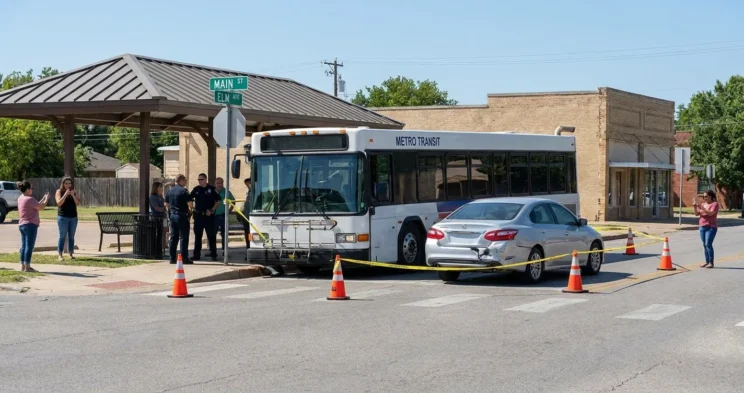
You were waiting for the bus near Mockingbird Station in Dallas, standing where you stand every morning, when the bus pulled in too fast and clipped you as it swung toward the curb. Now you are on the ground with a hurt shoulder, wondering who pays for this, and whether it was the driver, the transit agency, or the city that lets the curb crumble at that corner?
Bus Stop Accidents & Who Gets Hurt
A bus stop injury is different from a crash out on the open road, and that difference shapes who you can hold responsible. These injuries happen in the small zone where the bus meets the curb: the bus pulling in or out, a rider stepping on or off, or someone simply standing nearby when something goes wrong.
The scenarios are more varied than people expect:
- A bus can strike a pedestrian while swinging into the stop.
- A waiting rider can fall on a broken curb or a collapsing shelter.
- A passenger can get knocked down when the doors close too soon during boarding.
The people hurt at these stops fall into a few groups. Waiting riders, pedestrians passing through, and passengers in the middle of entering or exiting the bus all face real risk in that space.
This is where the question of fault gets complicated. The transit agency, the city, and sometimes a private property owner may each control a different piece of that stop, and each can carry part of the blame. We handle Texas bus accident claims and see this confusion in nearly every case.
Transit Authority Liability at the Stop
A transit agency can be held responsible when one of its buses injures you, even though it is a government body. Public bus systems in Texas are governmental entities created under the Texas Transportation Code. METRO in Houston and VIA in San Antonio operate under Chapter 451, while DART in Dallas operates under Chapter 452, which governs regional transportation authorities.
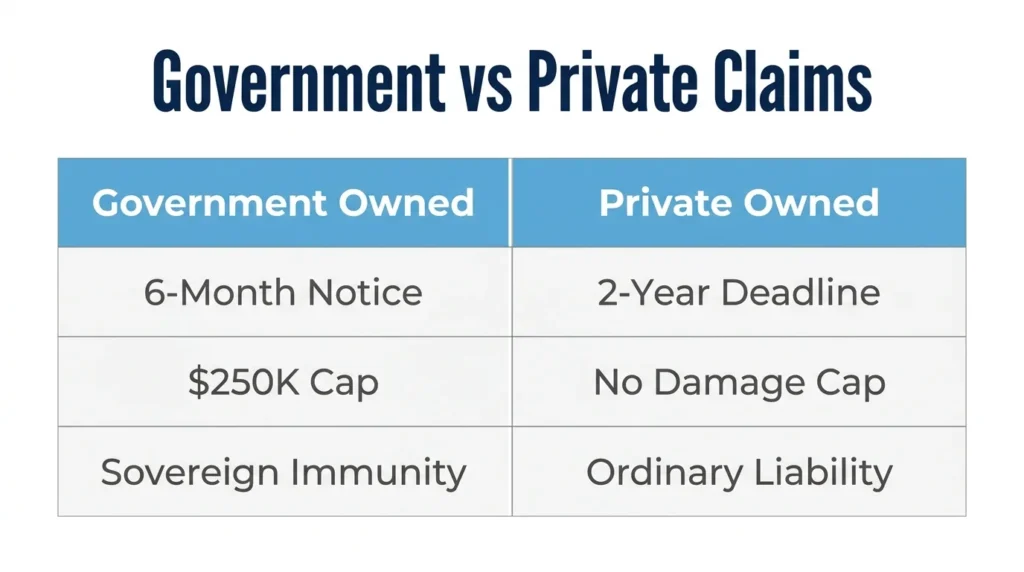
Government bodies usually enjoy sovereign immunity, which shields them from most lawsuits. The Texas Civil Practice and Remedies Code (CPRC) § 101.021 carves out a narrow exception to that shield.
That exception is your opening, though it comes with strict statutory limits and requirements that an attorney can help you navigate. Under § 101.021, a transit agency can be liable for injury caused by an employee’s negligent use or operation of a motor vehicle. A driver who strikes you while pulling into the stop fits squarely inside that rule.
Transit agencies also owe their riders a heightened duty called the common carrier standard. That duty follows you through the boarding and exit process at the stop, not just while the bus is moving.
Your path to recovery can depend on whether you were a rider or a bystander. The two situations follow different routes, but both can fall under the waiver when the bus itself causes the harm. Our breakdown of who is liable in a Texas bus accident walks through how these roles play out.
Premises Liability at Bus Stop Infrastructure
Sometimes the bus never touches you, and the stop itself causes the harm. A broken curb, a damaged shelter, or a dark corner can be the real source of injury, and that opens a second route to recovery built on the condition of the property.
Government-Owned Stop Infrastructure
When a city or transit agency owns the stop, it owes you a duty over the condition of that property. The CPRC § 101.022 covers premise defects on government land, things like broken curbs, failing shelters, missing signs, or poor lighting.
This route comes with a catch. Under § 101.022, the government unit must have had actual or constructive notice of the defect before you can recover, and your legal status at the stop shapes the exact duty owed to you.
There is also a hard ceiling on what you can collect. The CPRC § 101.023 caps recovery against a government unit at $250,000 per person, a number that can shape your entire strategy. We explain how these Texas Tort Claims Act limits affect bus claims in plain terms.
Private Property Bus Stops
When the stop sits on private land, a shopping center, or a commercial lot, the owner may owe you a separate duty as the landholder. That changes the players, and it changes the rules.
Under Texas premises liability law, the duty you are owed depends on your status: invitee, licensee, or trespasser. A person waiting at a publicly accessible stop on commercial property is usually an invitee, which triggers the highest level of care. Our premises liability page covers how these duties work.
A private owner is not a government body, so sovereign immunity never enters the picture. The standard civil filing deadline and discovery rules apply to your claim against the owner.
Deadlines & Notice Requirements in Texas
The clock on a bus stop claim is shorter than most people think, and missing it can end your case before it begins. A government claim and a private claim run on two separate timelines, and you may have to meet both.
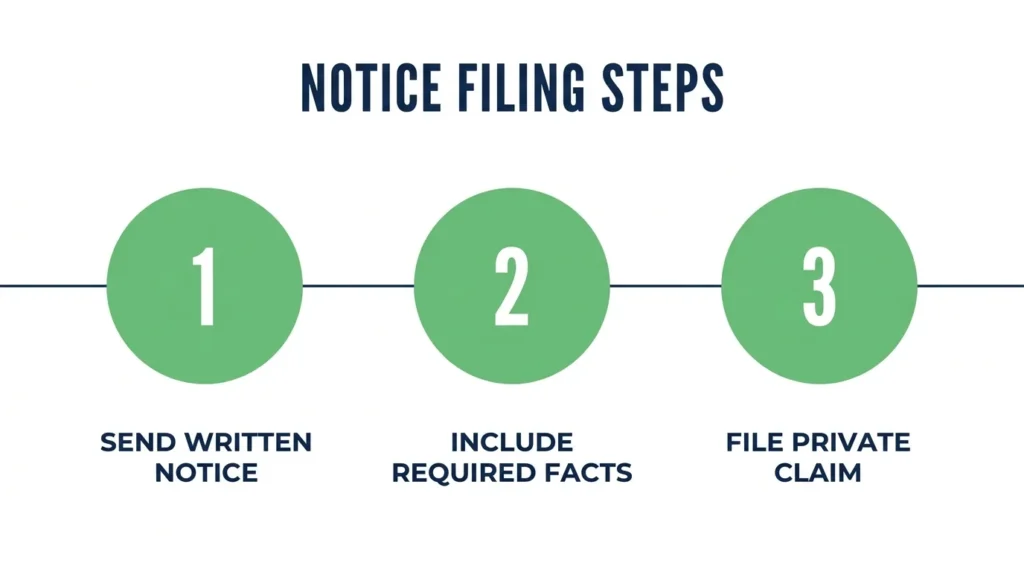
Step 1: Send written notice to the government entity within six months. The CPRC § 101.101 requires this notice before you can sue a transit agency or city. The deadline is just six months from the date you were hurt.
Step 2: Include the required facts in that notice. Your notice must describe the injury or damage you claim, the time and place of the incident, and the circumstances around it.
Step 3: File any private-party claim within two years. The CPRC § 16.003 sets a two-year deadline for personal injury claims against a property owner or private carrier, and it runs on its own track.
If you have both a government claim and a private claim, you must hit both deadlines. Missing the six-month notice window forfeits the government claim even when the two-year deadline is still far off. Because that notice window closes fast while you are still recovering, talking with an attorney early is the safest move, and our guide on how to file a Texas bus accident claim lays out the steps in order.
How Fault Is Shared among Multiple Parties
When more than one party caused your injury, Texas splits the blame by percentage. The CPRC § 33.001 governs how courts allocate fault among several defendants in a personal injury case.
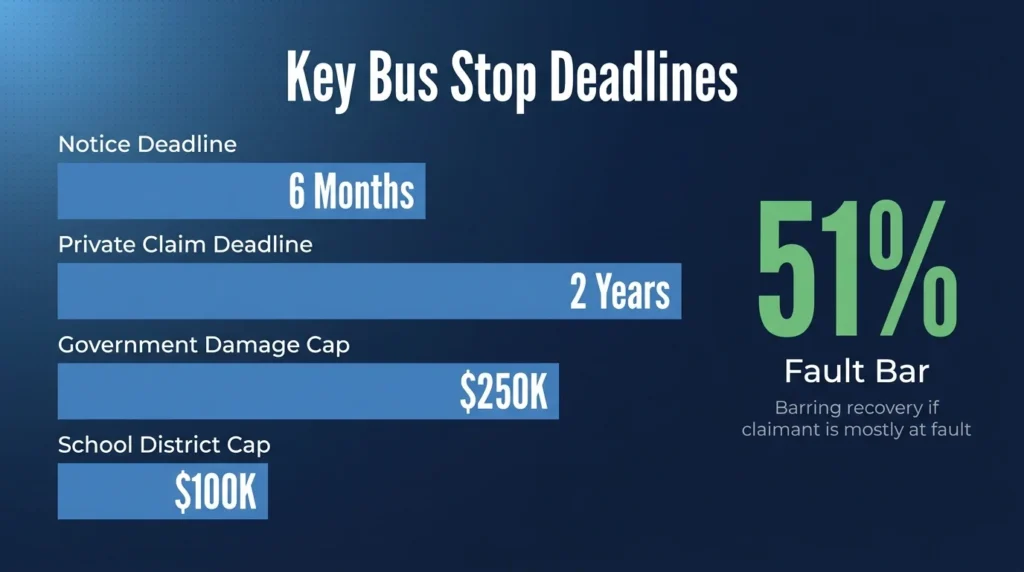
One rule can sink your recovery entirely. If you are found 51 percent or more at fault for your own injury, you collect nothing in Texas. Our explainer on the Texas 51 percent fault bar breaks down how that line works.
Fault can land on several shoulders in a single bus stop case. The transit agency carries it when the driver was careless; the city carries it when the stop was defective; the private owner carries it when a hazard on their land contributed; and, in rare cases of mechanical failure, a manufacturer can carry product liability fault.
Where the percentages land matters to your wallet. Government defendants face the damage cap while private defendants do not, so shifting fault toward a private party can raise what you actually recover. A fatal bus stop injury raises separate Texas wrongful death claim options for surviving family members.
Injured at a Texas Bus Stop? Talk to an Attorney
A bus stop injury can leave you facing medical bills you never planned for, against agencies and owners who have lawyers of their own. Angel Reyes & Associates has spent over 30 years helping injured Texans sort out exactly these multi-party claims, and you can read what clients say about working with us through our client reviews.
We work on contingency, which means no fee unless we win your case, and your first consultation is free. We serve all of Texas, with more than 20 offices statewide; we are available 24/7; and we have more than $1 billion recovered for clients. You can also learn about the people who would handle your case on our attorney profiles.
If a bus or a broken stop left you hurt, do not let the six-month notice window pass you by. Reach out for a free consultation so you understand your options before time runs out.
Past results do not guarantee future outcomes.
Bus Stop Accidents FAQs
What types of damages can you recover in a Texas bus stop injury claim?
You can seek economic damages such as medical bills, lost wages, and lost earning capacity, as well as non-economic damages such as pain and suffering. Against a private party, there is no cap, but claims against a government entity are limited to $250,000 per person under the Texas Tort Claims Act.
Can punitive damages be sought against a Texas transit authority?
No. Texas Civil Practice and Remedies Code § 101.024 expressly bars exemplary (punitive) damages against government entities covered by the Texas Tort Claims Act. No matter how reckless the driver’s conduct, you cannot pursue extra punishment money from a public transit agency.
What if a passing car, not the bus, caused your injury at a bus stop?
If a private driver strikes you at a bus stop, you have a standard negligence claim against that driver and their insurer, separate from any Texas Tort Claims Act claim. The transit authority and city may still share responsibility if the stop’s design or condition contributed to the accident.
Does the discovery rule apply if you did not realize your injuries were serious right away?
Texas courts allow the discovery rule to delay the start of the two-year deadline when an injury was latent and not reasonably discoverable at the time of the incident. Courts apply this exception narrowly, and it typically requires objective medical evidence to confirm the injury was not apparent earlier.
Are school bus accidents at bus stops handled differently from public transit accidents?
Yes. School districts are also government entities subject to the Texas Tort Claims Act, but the per-person damage cap for a school district claim is $100,000, not the $250,000 that applies to other governmental units. If the school district contracted with a private company to operate the bus, that company is not a government entity and faces no cap.
About the Authors

Angel Reyes
Writer
Angel L. Reyes, III is the Founder and Managing Partner of Angel Reyes & Associates. A nationally recognized trial attorney and business leader, Angel has helped over 70,000 injury victims recover more than $1 billion since founding the firm in 1993. Named to the Texas Super Lawyers list annually since 2008, Angel brings Wall Street experience, Ivy League education, and a deep commitment to client advocacy. He is a frequent legal commentator and published author with extensive contributions to legal scholarship, trial strategy, and consumer protection.

Kyle Nicolas
Editor
Kyle Nicolas is the Web Content & SEO Manager at Angel Reyes & Associates. He has more than 10 years of experience as a marketing co...

Spencer Browne
Reviewer
Spencer Browne is a partner at Angel Reyes & Associates and a Board Certified personal injury trial lawyer with nearly 100 jury trials a...