Can You Still Drive for Lyft After an Accident?


Every article on this site is researched by our internal team, reviewed for legal accuracy against current Texas law, and held to State Bar of Texas advertising standards before publication. We do not publish content that overstates outcomes or makes promises about results.
Learn more about our
editorial standards .
Key Takeaways
- Lyft places a temporary account hold after any reported accident while it investigates fault.
- Continuous MVR monitoring means a crash can trigger deactivation weeks after it occurred.
- Texas Insurance Code Chapter 1954 sets three coverage periods that determine which policy pays.
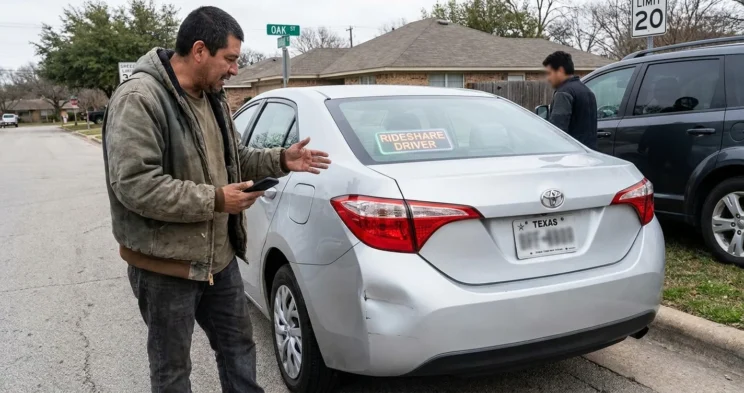
You were sitting in traffic on I-10 near Katy when another car cut across two lanes and clipped your rear bumper. The damage looked minor, you exchanged information, and you filed the report. Then came the email from Lyft: your account was on hold.
Losing access to your platform income, even temporarily, can put real pressure on your finances and cause other headaches.
What Happens to Your Lyft Account After an Accident?
Most drivers who report an accident face a temporary hold, not a permanent ban. Lyft places your account on hold while it investigates, regardless of who caused the crash. The hold is procedure, not a verdict.
For minor accidents without injuries, Lyft typically completes its initial review within a few days. More complex cases involving injuries or disputed fault for the accident can take longer.
Your account status during an investigation does not influence a personal injury claim you may have from the crash. Understanding how Lyft’s insurance coverage periods work can help you keep those two tracks separate in your mind.
Permanent Deactivation Triggers to Know

Permanent deactivation is not automatic, but certain factors push your account in that direction. Fault is the biggest one. If Lyft’s investigation concludes you caused the accident, the platform weighs the severity of what happened before deciding whether to reinstate you.
Crashes involving serious injuries, fatalities, or major property damage carry a higher risk of permanent removal. Your prior safety record also factors in. A history of complaints, low passenger ratings, or previous accidents tells the platform something about your “risk profile” before this crash even enters the picture.
Criminal charges connected to the accident change things entirely. A reckless driving charge or a DUI arising from the same incident is grounds for immediate permanent deactivation under both Lyft’s and Uber’s Terms of Service.
Drivers who work on both platforms should know that Texas rideshare accident claims can become complicated quickly when fault, insurance, and platform status all intersect.
How Background Checks Affect Your Driving Status
Deactivation does not always happen right after the accident. Lyft runs continuous driving record monitoring in addition to annual background checks, which means an accident that appears on your motor vehicle record (MVR) can surface at any monitoring cycle and trigger a new review.
Annual & Continuous MVR Monitoring
Lyft uses third-party services to screen your driving history on an ongoing basis. Under Texas Occupations Code Chapter 2402, which governs Transportation Network Companies (TNC) in Texas, platforms are required to conduct background checks on drivers. Lyft’s continuous monitoring goes further than the state minimum, flagging new events as they appear on your record.
A single at-fault accident may not disqualify you immediately. Four or more moving violations within three years is a standard disqualifier. The platform sees whatever the DMV records, so an accident that did not result in deactivation today can still affect your status months later.
When MVR Results Lead to Deactivation
If your updated driving record shows disqualifying violations after the accident, Lyft or Uber may deactivate your account at the next monitoring point, not necessarily the day the crash happened.
Ordering your own MVR from the Texas Department of Public Safety before submitting any appeal lets you see exactly what the platform is seeing.
Knowing what is on your record puts you in a stronger position to respond. Knowing what to do immediately after a rideshare accident in Texas also helps considerably.
Insurance Disclosure After an Accident
A crash while you were on-app creates an obligation most drivers overlook: you need to report the accident to your personal auto insurer. Skipping that step can cost you coverage later.
Texas Insurance Code Chapter 1954 establishes the insurance framework for TNC drivers in Texas.
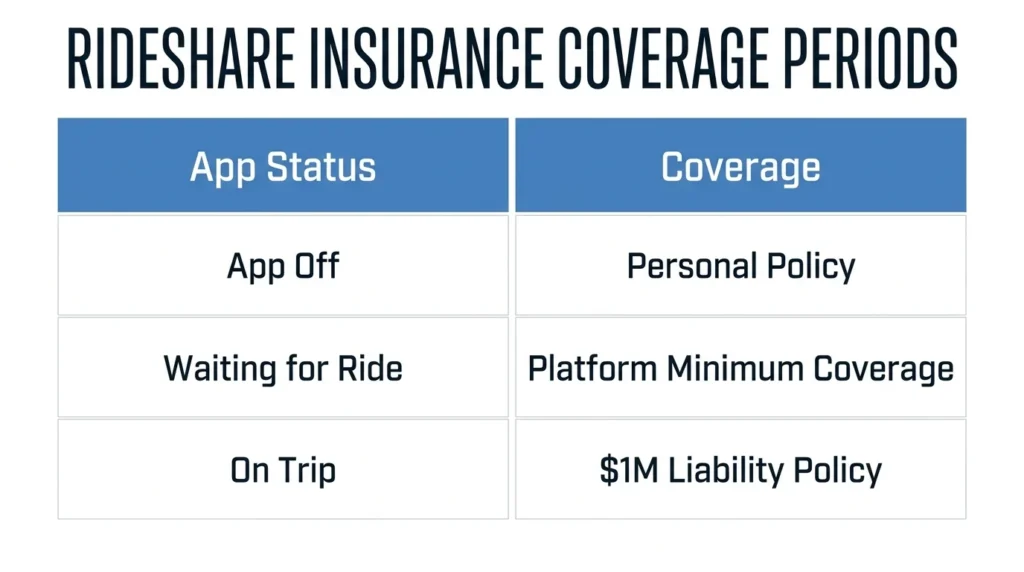
It sets three coverage periods based on your app status at the time of the crash. When your app is off, your personal policy applies. When the app is on and you are waiting for a ride request, Lyft provides minimum TNC coverage. Once you have accepted a ride or have a passenger, Lyft’s $1,000,000 liability policy activates.
Your personal insurer may exclude TNC-related incidents entirely. If you have not let your insurer know that you drive for Lyft, a claim arising from an on-app accident can be denied. Texas law requires drivers to carry proof of TNC insurance coverage while on-app, and your insurer has a legal basis to reject a claim you did not properly disclose.
If the accident raises questions about which coverage applies to your situation, speaking with a personal injury attorney can help you sort out the coverage picture before you say anything to an insurer that could hurt your claim.
Steps to Get Back on the Road
Getting reactivated after a deactivation requires documentation and a timely appeal. Here is what the process looks like:

Step 1: Order your motor vehicle record. Contact the Texas Department of Public Safety to get your current MVR. Review it carefully before you submit anything to the platform.
Step 2: Gather your documentation. Collect your police report, photos from the scene, dashcam footage if you have it, and contact information for any witnesses. If the other driver was at fault, include the insurance claim documentation and any correspondence establishing their liability.
Step 3: Contact platform support through the driver app. Both Lyft and Uber have in-app appeal processes triggered from the deactivation notice. Do not contact general customer support; use the driver-specific appeal channel tied to your deactivation.
Step 4: Submit your appeal with evidence attached. Lyft reviews most appeals and typically responds within five to fourteen business days, though complex cases can take longer. The Lyft deactivation appeal process is initiated directly from the deactivation notice in your driver app.
Step 5: If the appeal is denied, request a second review. Lyft Hub locations can connect you with a representative if one is available in your area. Uber’s review center in the app offers a second-look process for denied appeals.
If the platform’s decision has left you without income and you were not at fault in the crash, an attorney can help you evaluate whether you have additional options tied to your lost earnings.
Your Legal Options If the Accident Wasn’t Your Fault
When another driver causes the crash that triggers your deactivation, your situation involves more than a platform appeal. You may have a personal injury claim for medical expenses, lost income from your rideshare work, and other damages.
Angel Reyes & Associates has helped injured Texans work through rideshare accident situations for over 30 years. We offer free consultations, and you pay no fee unless we win. If you want to understand what your options look like, reach out to us for a free consultation.
You can also learn more about how we handle rideshare accident cases and what the process involves for drivers who have been hurt or had their income disrupted by someone else’s negligence.
Past results do not guarantee future outcomes.
FAQs About Driving for Lyft After an Accident
If Lyft permanently deactivates me, can I still drive for Uber?
Lyft and Uber run separate investigations and make independent deactivation decisions, so being removed from one platform does not automatically remove you from the other. Both platforms use the same background check provider, but each evaluates your account on its own criteria.
Can I create a new Lyft account after a permanent deactivation?
Lyft does not allow drivers to start fresh with a new account after a permanent deactivation. Your only path back is through the formal appeal process, where new evidence can be submitted for Lyft’s safety team to review.
What happens to my earnings from rides before the deactivation?
Lyft processes and pays out earnings from completed trips regardless of your account status at the time of payment. Deactivation stops future earnings but does not cancel what you already earned before the hold was placed.
Can a background check error trigger a wrongful deactivation?
Yes. If a background check vendor reports inaccurate information on your record, such as records that belong to someone else, you may have rights under the Fair Credit Reporting Act to dispute the error and seek correction. Disputing the underlying error is often the first step in getting an incorrect deactivation reversed.
How long does Lyft keep a deactivation on my record if I am later cleared?
Lyft does not publish a specific retention timeline for investigation records, but a deactivation that is overturned on appeal typically results in full reinstatement with no ongoing penalty. Your motor vehicle record at the Texas DMV is a separate matter and follows the DMV’s own retention rules for reported incidents.
About the Authors

Angel Reyes
Writer
Angel L. Reyes, III is the Founder and Managing Partner of Angel Reyes & Associates. A nationally recognized trial attorney and business leader, Angel has helped over 70,000 injury victims recover more than $1 billion since founding the firm in 1993. Named to the Texas Super Lawyers list annually since 2008, Angel brings Wall Street experience, Ivy League education, and a deep commitment to client advocacy. He is a frequent legal commentator and published author with extensive contributions to legal scholarship, trial strategy, and consumer protection.

Kyle Nicolas
Editor
Kyle Nicolas is the Web Content & SEO Manager at Angel Reyes & Associates. He has more than 10 years of experience as a marketing co...

Angel Reyes
Reviewer
Angel L. Reyes, III is the Founder and Managing Partner of Angel Reyes & Associates. A nationally recognized trial attorney and business...