Rideshare Accident Whiplash and Neck Injuries in Texas


Every article on this site is researched by our internal team, reviewed for legal accuracy against current Texas law, and held to State Bar of Texas advertising standards before publication. We do not publish content that overstates outcomes or makes promises about results.
Learn more about our
editorial standards .
Key Takeaways
- Whiplash symptoms often appear 24 to 72 hours after a low-speed rideshare crash.
- Period 2 and 3 rideshare claims can reach the $1 million commercial insurance policy.
- Texas gives you two years from your injury date to file a rideshare injury claim.
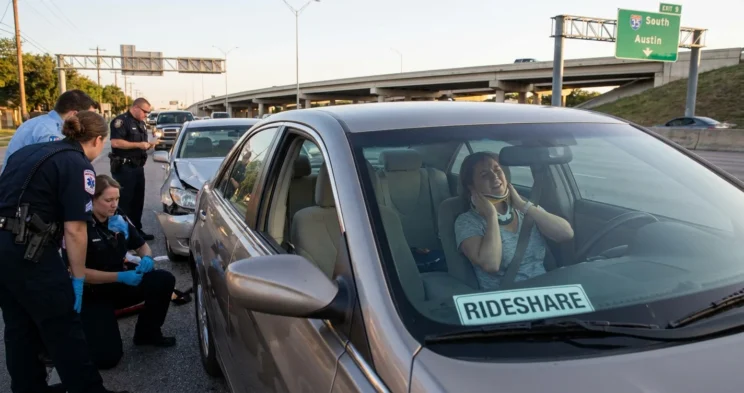
You took an Uber home from Deep Ellum late one night, and a driver rear-ended your car at a red light on Commerce Street. The hit felt minor, so you waved it off and went to bed. Now your neck is stiff, your head aches, and the insurance adjuster is already calling it a fender-bender.
That pain is real, and so is your right to do something about it.
Whiplash After a Rideshare Crash
Whiplash is a soft tissue neck injury caused when your head snaps forward and back faster than your body. It damages the muscles, ligaments, and discs in your cervical spine, or the neck portion of the spine, and it does not need a high-speed crash to happen.
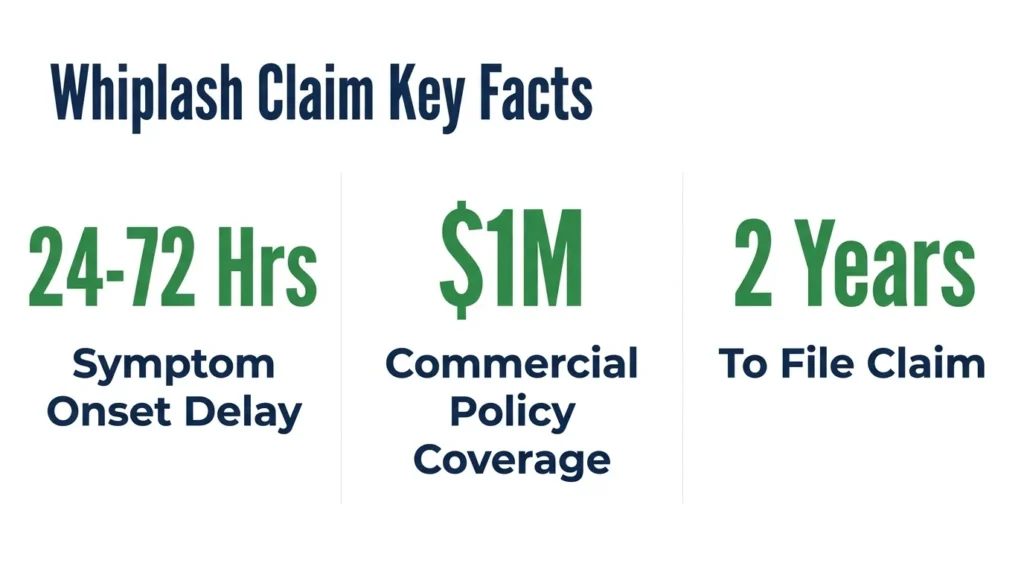
Neck pain after an Uber accident often shows up slowly. Symptoms like stiffness, headaches, and pain that radiates into your arm commonly appear 24 to 72 hours after impact. This delay is a documented clinical pattern, not a sign that you are exaggerating.
A normal scan can make you doubt yourself. MRI results are often clean in the first days after a crash even when a real soft tissue injury is present. A clear image does not mean nothing happened to your neck.
Low-speed rear-end collisions are the most common cause of whiplash. Your head lags behind the car as it lurches forward, and that lag stresses the neck regardless of how slow the vehicles were moving. Crash speed alone does not predict how badly you are hurt, a pattern reflected in federal crash data.
Passengers face an added risk. When you ride in the back seat, you cannot see the hit coming or brace the way a driver might. That lack of warning can increase the strain on your neck, which is one reason rideshare passengers report some of the more common car accident injuries after even a small collision.
Rideshare Insurance Periods & Your Claim
Texas splits a rideshare driver’s activity into three coverage periods, and the period active at the moment of impact decides which insurance policy pays your claim. The Texas Insurance Code Chapter 1954 sets the rules for each window.
In Period 1, the app is on but the driver has not accepted a ride. Uber and Lyft provide limited contingent coverage here, and the driver’s personal policy may apply if it allows rideshare use.
Periods 2 and 3 cover the moment a driver accepts your ride through the end of the trip. During these windows, the rideshare company’s $1 million commercial liability policy applies. This is the layer that covers most passenger whiplash claims, and understanding how the rideshare insurance coverage periods work helps you know what protection was active when you were hurt.
The Texas Occupations Code Chapter 2402 sets the statewide framework Uber and Lyft operate under, including their driver and insurance requirements. It is the reason these coverage layers exist at all.
You may also have a faster source of medical money. Personal injury protection under the Texas Insurance Code Chapter 1952 requires insurers to offer at least $2,500 in coverage. PIP pays your medical bills no matter who caused the crash, and it can reimburse you early while your larger claim is still pending.
State oversight backs all of this up. The Texas Department of Licensing and Regulation monitors rideshare compliance, and its guidance points back to the same Chapter 1954 coverage duties that govern Uber and Lyft.
The Low-Speed Impact Defense & How to Counter It
Adjusters love to argue that a slow crash cannot hurt anyone. This is the MIST defense, short for Minor Impact Soft Tissue, and insurers use it to shrink or deny your claim before your medical evidence is fully built.
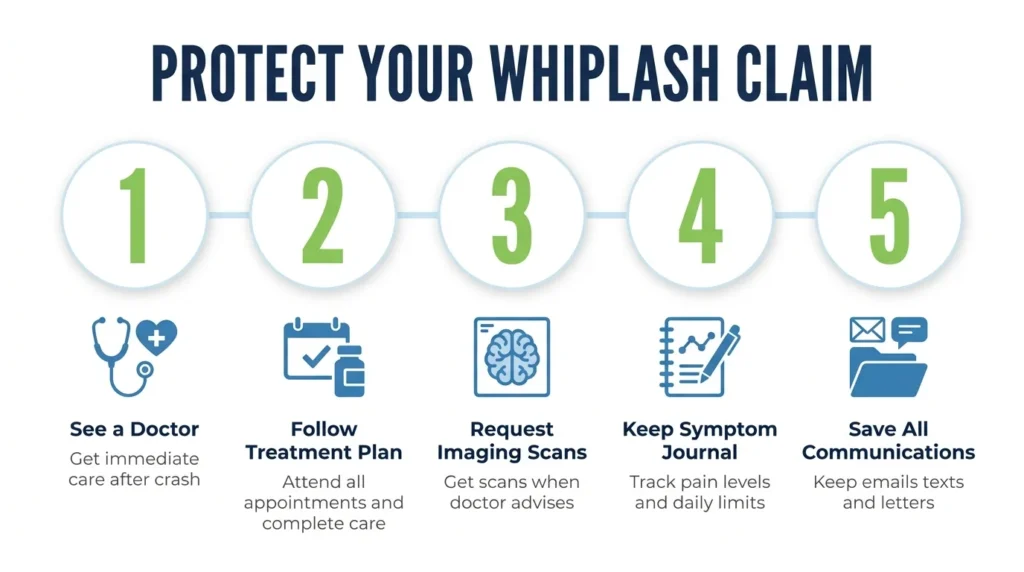
Your medical record is the strongest answer to it. Consistent treatment notes, a clear physician diagnosis, and imaging referrals build a paper trail the adjuster cannot wave away. To protect a low speed rear end whiplash claim, the following steps matter most:
- Step 1: See a doctor right away. Get medical care immediately after the crash, even if the pain feels minor. Early treatment links your injury to the collision on the record.
- Step 2: Follow every treatment recommendation. Attend your appointments and complete the care your physician orders. Gaps in treatment give the adjuster room to argue you healed or were never hurt.
- Step 3: Request imaging when your doctor advises it. Scans and referrals add objective weight to a soft tissue injury rideshare accident claim that an adjuster wants to call imaginary.
- Step 4: Keep a written symptom journal. Track your pain levels and the daily tasks you can no longer do. This record shows how the injury affects your real life.
- Step 5: Save every message from the rideshare company or insurer. Keep emails, texts, and letters so nothing said to you disappears later.
Delayed pain works in your favor more than you might think. Because medical literature treats a gap between crash and symptoms as normal, an attorney can show that your timeline follows a known pattern. If your neck pain surfaced days later, talk with a personal injury attorney before saying more to the adjuster, since early statements can quietly lower what your claim is worth.
Fault sharing is the other tool adjusters reach for. Under Texas Civil Practice and Remedies Code (CPRC) Chapter 33, you can still recover as long as your share of the blame is 50 percent or less. Insurers may try to pin part of the crash on you, so understanding how the Texas 51 percent fault rule works helps you protect your compensation.
Whiplash Settlement Value in Texas Rideshare Claims
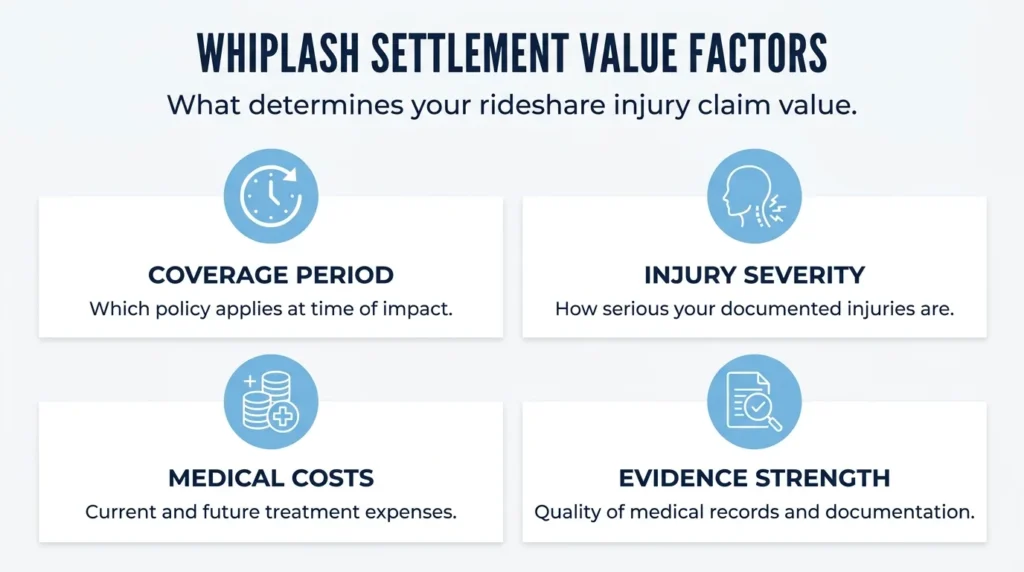
Your whiplash settlement amount in Texas depends on four things: the active coverage period, the severity of your documented injuries, your medical costs now and in the future, and the strength of your evidence. No two soft tissue cases are the same.
You can recover two kinds of damages. Economic damages cover your medical bills, future treatment, and lost wages. Non-economic damages cover pain, suffering, and the loss of daily quality of life. Both are on the table in a Texas rideshare neck injury claim.
The coverage period shapes the ceiling. Claims that fall in Period 2 or 3 reach the $1 million commercial policy, which leaves far more room to recover than a Period 1 claim. The window active at impact often becomes the single biggest factor in what you can collect.
The MIST defense pushes the other direction. It drives offers down, which is why a well-documented case with imaging and steady treatment records tends to settle higher than a claim with thin proof. Your documentation is what separates the two.
The clock also limits you. The Texas Civil Practice and Remedies Code (CPRC) § 16.003 gives you two years from the date of injury to file a personal injury claim. File after that window and you forfeit the right to recover at all.
General crash guidance only takes you so far. A broader look at whiplash injury compensation gives useful background, but it does not capture the rideshare insurance structure that drives your claim’s value.
Contact Angel Reyes & Associates
Before you accept any offer, talk with a personal injury attorney who understands how rideshare factors change your recovery.
A rideshare crash can leave you hurting and unsure who owes you anything, especially when the injury is soft tissue and the adjuster keeps calling it minor. You do not have to sort out the coverage periods or the MIST defense on your own.
Angel Reyes & Associates has handled Texas personal injury cases for over 30 years, including rideshare whiplash and neck injury claims. We work on contingency, so there is no fee unless we win, and your first consultation is free. We have more than $1 billion recovered for clients, and you can review our background and results before you decide anything.
We are available 24/7. Reach out for a free consultation and we will walk you through your options.
Past results do not guarantee future outcomes.
Rideshare Whiplash & Neck Injury FAQs
Can I still recover compensation if I had a pre-existing neck condition before the rideshare crash?
Yes. Texas follows the eggshell plaintiff rule, which holds the at-fault party responsible for worsening a condition that already existed. If the crash aggravated your neck injury, you can still pursue damages for the portion of harm the crash caused.
What if another driver, not my Uber or Lyft driver, caused the crash?
You would file a claim against the at-fault driver’s liability insurance first. If that driver is uninsured or their coverage is not enough, Uber and Lyft carry uninsured and underinsured motorist coverage that can apply to your remaining losses.
Do I need a police report to file a rideshare whiplash claim in Texas?
A police report is not required to file a claim, but it creates an official record that supports your version of the crash. Without one, your claim still moves forward, though the absence of an official report gives the insurer more room to dispute the facts.
How long does a rideshare whiplash claim typically take to settle in Texas?
Cases with clear liability and limited treatment often resolve within a few months, while claims involving disputed fault, ongoing care, or multiple insurers can take a year or longer. The insurer’s willingness to negotiate and how long your treatment lasts are the biggest factors.
Can I still collect damages if I was not wearing a seatbelt when the crash happened?
Texas uses a modified comparative fault system, so you can still recover as long as your share of responsibility stays at or below 50 percent. An insurer may argue that your injuries were worse because you were not buckled, but the burden is on them to show a direct link between seatbelt use and the severity of your specific injuries.
About the Authors

Angel Reyes
Writer
Angel L. Reyes, III is the Founder and Managing Partner of Angel Reyes & Associates. A nationally recognized trial attorney and business leader, Angel has helped over 70,000 injury victims recover more than $1 billion since founding the firm in 1993. Named to the Texas Super Lawyers list annually since 2008, Angel brings Wall Street experience, Ivy League education, and a deep commitment to client advocacy. He is a frequent legal commentator and published author with extensive contributions to legal scholarship, trial strategy, and consumer protection.

Kyle Nicolas
Editor
Kyle Nicolas is the Web Content & SEO Manager at Angel Reyes & Associates. He has more than 10 years of experience as a marketing co...

Angel Reyes
Reviewer
Angel L. Reyes, III is the Founder and Managing Partner of Angel Reyes & Associates. A nationally recognized trial attorney and business...