Should I Talk to the Other Driver’s Insurance Company?


Every article on this site is researched by our internal team, reviewed for legal accuracy against current Texas law, and held to State Bar of Texas advertising standards before publication. We do not publish content that overstates outcomes or makes promises about results.
Learn more about our
editorial standards .
Key Takeaways
- Texas law never requires you to give the other driver's insurer a recorded statement.
- Under the 51 percent rule, one leading answer can eliminate your right to recover.
- An attorney can manage every adjuster call, negotiation, and record request for you.
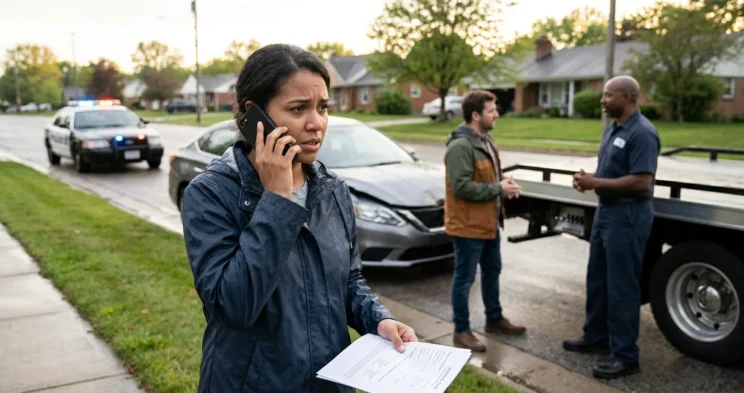
You’re still icing your neck from a vehicle crash near downtown Fort Worth when your phone rings.
An unfamiliar number turns out to be the other driver’s insurance adjuster. She wants a recorded statement before you’ve even seen a doctor. Before you answer her questions, you need to know what Texas law actually requires you to share.
Must You Talk to the Insurer?
Texas law does not require you to talk to the other driver’s insurance company. You have no duty to give that insurer a recorded statement, a written statement, or any statement at all.
This duty is separate from what you exchange at the crash scene. It is also separate from any cooperation duty you owe your own insurer under your policy.
Declining to speak with the other driver’s adjuster will not hurt your right to pursue a claim. You can still recover compensation without ever giving that company a statement.
Mandatory vs. Optional Information
Some information after a collision is required by law. Everything else an adjuster asks for later is optional, and knowing the difference protects your claim.
Information You Must Share
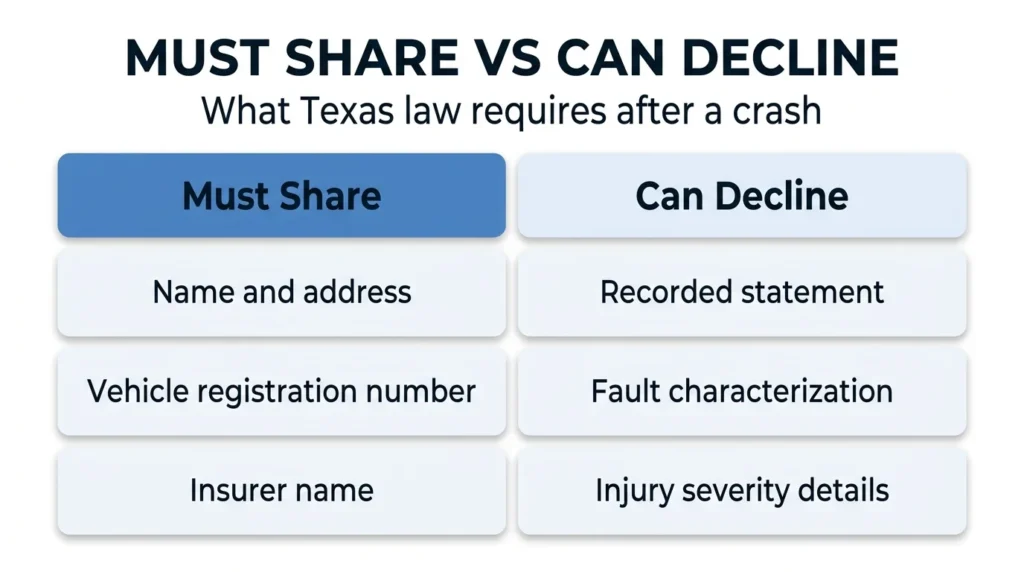
Texas Transportation Code Chapter 550 sets out what drivers must exchange at the scene of a collision. Under Texas Transportation Code § 550.023, you must give your name, address, vehicle registration number, and the name of your motor vehicle liability insurer to anyone involved.
This duty applies at the scene, not on a later phone call. If police or the other driver ask directly, you can also share your basic policy number and carrier name.
Statements You Can Decline
A recorded statement to an insurance company is optional. So are fault characterization and details about your injury severity, and you can decline all three without breaching any duty.
Declining the other driver’s insurer does not conflict with the cooperation duty you owe your own carrier after a car accident. Those are two separate relationships.
The state of Texas also provides guidance on documenting a wreck.
Texas Comparative Negligence 51% Rule
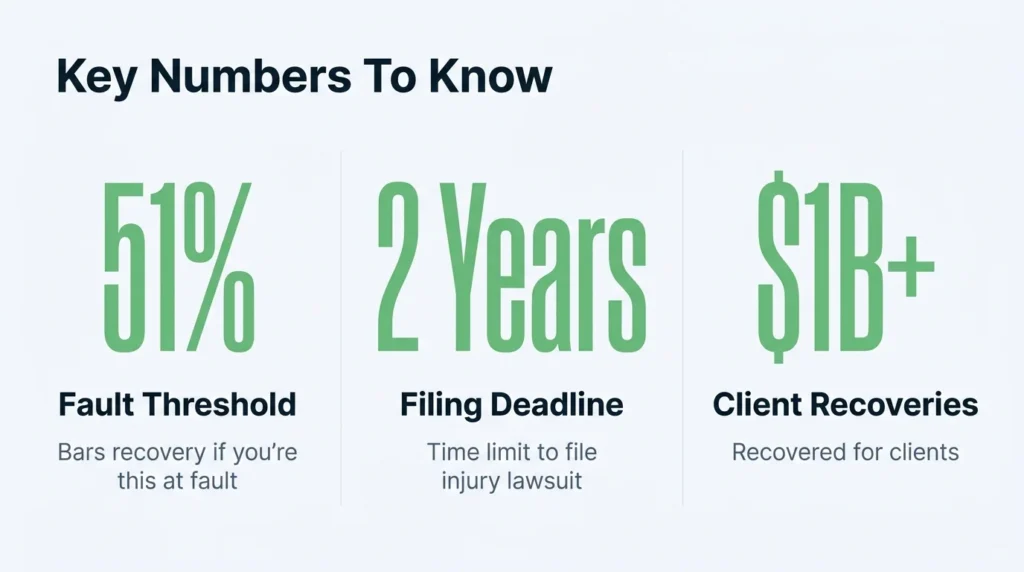
Texas follows a modified comparative negligence rule, and it is a major reason recorded statements are risky. Under Texas Civil Practice and Remedies Code § 33.001, you cannot recover any damages if you are found 51 percent or more at fault.
Adjusters know this rule well, and it shapes how they build a claim file. They ask leading questions about the order of events and when your pain or symptoms started. They then use your exact wording to shift fault onto you, or to suggest your injuries came from something else.
Even a small shift in fault percentage can reduce or eliminate your recovery. That is why the exact phrasing of a recorded statement matters so much.
What to Say When the Insurer Calls
You do not need a script memorized word for word, but a few ready responses protect you in the moment. Here are six situations you are likely to face and a simple way to handle each one:
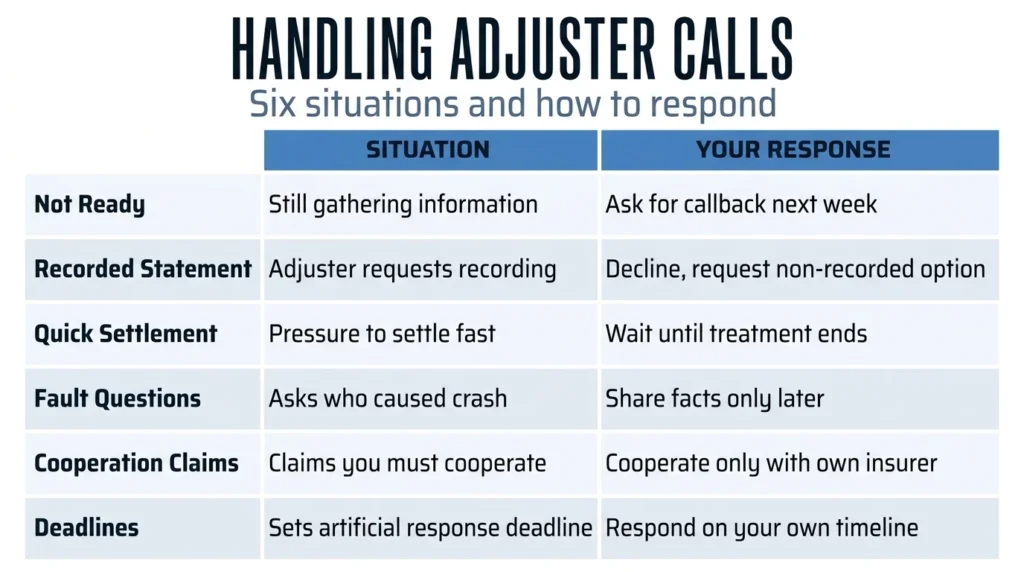
- Not ready to talk. Say you are still gathering information and ask the adjuster to call back at a specific time next week.
- Recorded statement request. Say you are not comfortable giving a recorded statement right now and ask if there is a non-recorded way to proceed.
- Pressure to settle quickly. Say you cannot evaluate any offer until your medical treatment is complete.
- Fault questions. Say you are not able to characterize how the collision happened and that you will share facts once you have reviewed them.
- Cooperation claims. Say you are not required to cooperate with their investigation, only with your own insurer under your own policy.
- Artificial deadlines. Say you understand there is urgency on their end, but you will respond on your own timeline. You are not bound by a deadline the other side invents; the Texas Department of Insurance’s claim tips offer more general guidance on protecting your claim.
Get Legal Help Before You Respond
An attorney can take over every part of your dealings with the other driver’s insurer. Once you retain representation, your lawyer manages all adjuster calls and correspondence, responds to recorded-statement requests on your behalf, negotiates settlement value, and coordinates the release of your medical records.
Bringing in an attorney early does not slow down your claim. It often prevents early missteps, like an offhand comment about fault, that quietly reduce what money you recover later.
Collisions involving a commercial vehicle add extra layers of complexity. Multiple insurers, corporate defendants, and their own investigators may all get involved, which is why truck accident attorneys handle these claims differently from a standard two-car crash.
Work with an Experienced Attorney Today
Angel Reyes & Associates can review what you have already told the insurance company and help you decide what comes next. We work on contingency, so you pay no fee unless we win, with more than $1 billion recovered for clients.
Once you retain our firm, we handle all communication with the other driver’s insurer so you can focus on recovering. Contact us today for a free consultation about your crash.
Past results do not guarantee future outcomes.
Other Driver’s Insurance Company FAQs
What happens if I already gave a recorded statement to the insurance company?
Giving a recorded statement does not end your claim or stop you from hiring a lawyer. An attorney can still review what you said and address any inconsistencies before you agree to a settlement.
Can I hang up if an adjuster calls and I do not want to keep talking?
Yes. You can end the call at any point and are not required to explain your decision or continue the conversation.
Do I have to cooperate with my own insurance company after a crash?
Yes. Most auto policies require you to cooperate with your own insurer’s investigation, and refusing to do so can allow the company to deny your coverage.
How long do I have to file an injury claim after a car accident in Texas?
Texas law generally gives you two years from the date of the crash to file a personal injury lawsuit, under Civil Practice and Remedies Code Section 16.003.
What if the other driver did not have insurance?
Texas does not require drivers to carry uninsured motorist coverage, but insurers must offer it to every policyholder, so many policies already include this protection for crashes caused by an uninsured driver.
About the Authors

Spencer Browne
Writer
Spencer Browne is a partner at Angel Reyes & Associates and a Board Certified personal injury trial lawyer with nearly 100 jury trials across Texas. He focuses on car, truck, and wrongful death cases, with notable verdicts including a landmark win in the Choctaw Casino bus crash case. A recognized speaker and legal educator, Spencer is a member of the American Board of Trial Advocates and has been honored as a Texas Super Lawyer and one of D Magazine’s Best Lawyers in Dallas. He brings deep trial experience and relentless advocacy to every client he represents.

Graham Griffin
Editor
Graham Griffin is the Web & Content Manager at Angel Reyes & Associates, where he oversees content strategy, AI-powered workflows, a...

Angel Reyes
Reviewer
Angel L. Reyes, III is the Founder and Managing Partner of Angel Reyes & Associates. A nationally recognized trial attorney and business...