Hit by an Unlicensed or Suspended License Driver in Texas


Every article on this site is researched by our internal team, reviewed for legal accuracy against current Texas law, and held to State Bar of Texas advertising standards before publication. We do not publish content that overstates outcomes or makes promises about results.
Learn more about our
editorial standards .
Key Takeaways
- A crash with an unlicensed driver does not stop you from recovering damages.
- 2. UM/UIM coverage is often the only real path to payment when the driver has no insurance.
- 3. Driving with a suspended, revoked, or otherwise invalid license is a Class C misdemeanor by default.
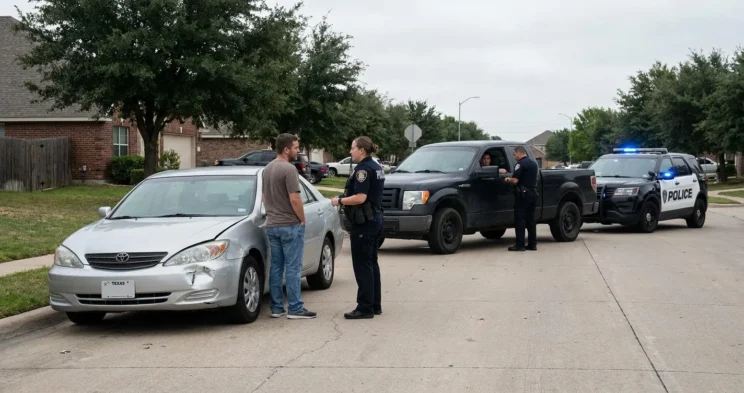
You’re driving home on the Gulf Freeway in Houston when another car slams into your rear bumper. The other driver tells you their name, but they have no valid license.
Now, you’re facing medical bills and a wrecked car, and you’re wondering if your claim is even worth pursuing. The good news is that license status may change the shape of your case, but it does not decide the outcome.
Can You Recover Compensation After an Unlicensed Driver Crash?
Getting into a crash with an unlicensed driver does not prevent you from recovering compensation. All it usually means is that there is no liability insurance, which means you must pursue compensation from your own uninsured and underinsured motorist coverage.
Collecting compensation directly from an unlicensed driver is also possible, but it is rare. Most unlicensed drivers carry little to no insurance. If the other driver has no insurance, then your own coverage is typically the only realistic path to payment.
First Steps to Take After an Unlicensed Driver Crash
Call 911 before you do anything else, even if the crash felt like it was minor. It’s important to do this because a police report creates an official record of the other driver’s license status.
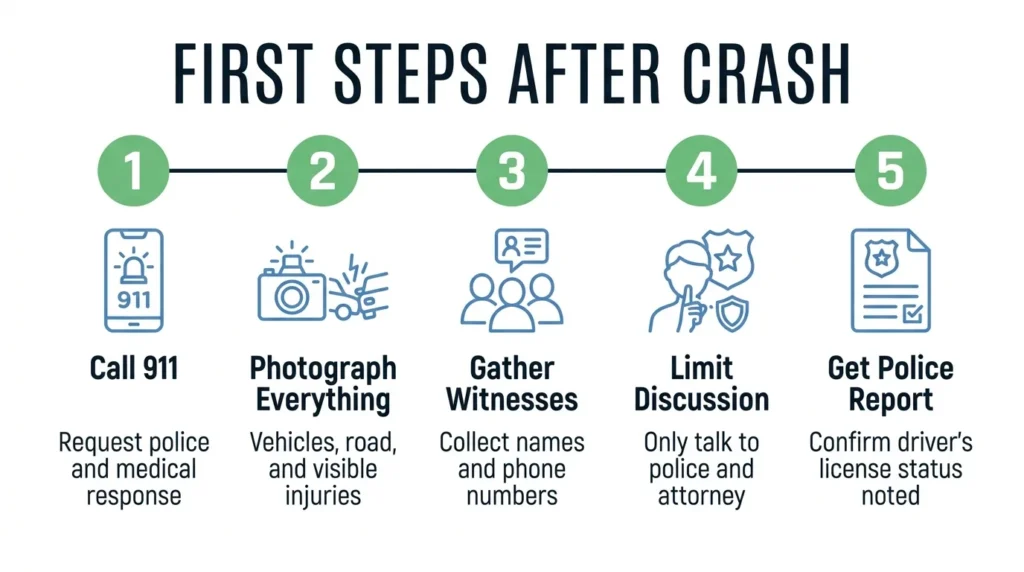
Take these first steps at the scene:
- Call 911 and request police and medical response.
- Photograph the vehicles, the road, and any visible injuries.
- Collect names and phone numbers from witnesses before they leave.
- Limit discussion of the crash to police and your car accident attorney, as casual conversations with the other driver or their insurer can be used against you later.
- If the responding officer notes the other driver’s license status on the crash report, that detail can support your claim later. Ask for a copy of the report once it becomes available.
Unlicensed vs Suspended License Penalties
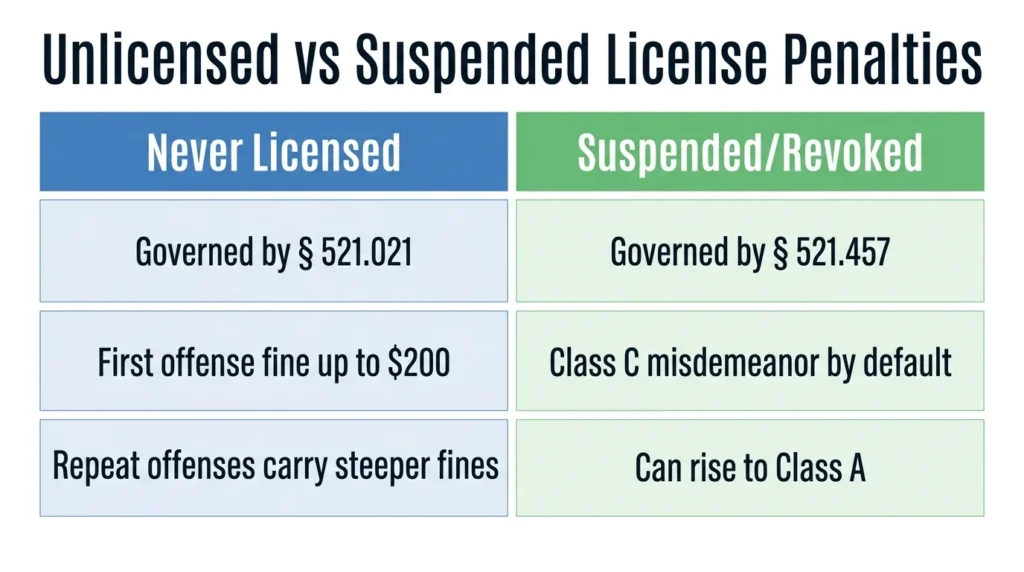
Texas treats a driver who never had a license differently from one who was driving with a suspended or revoked license. Each violation corresponds to its own law and range of possible fines.
Never Held a Texas Driver’s License
Texas Transportation Code § 521.021 requires every driver to have a valid license before operating a vehicle on a public highway. A first offense for drivers who have never had a license is a fine of up to $200 under Section 521.461. Repeat offenses carry steeper fines.
Driving With a Suspended, Revoked, or Invalid License
Driving with a suspended, revoked, or otherwise invalid license falls under a separate law, Texas Transportation Code § 521.457. This offense is a Class C misdemeanor by default. It can rise to a Class B or Class A misdemeanor, depending on prior convictions, insurance status, and whether the crash caused any injuries.
These are two different laws with two different ranges of possible fines. Do not assume that a single fine will apply to every unlicensed driver you encounter.
UM/UIM Coverage
Uninsured and underinsured motorist coverage (often called UM/UIM) is usually the strongest path to payment when the at-fault driver has no insurance. Under Texas Insurance Code § 1952.101, Texas insurers must offer this coverage on every auto policy, unless the policyholder rejects it in writing.
If you carry UM/UIM coverage, you can file a claim against your own policy for medical bills, lost wages, and vehicle damage. Our [guide to uninsured motorist claims in Texas](https://www.reyeslaw.com/blog/uninsured-motorist-accident-guide/) explains the filing process in detail.
Insurance companies do not always pay UM/UIM claims quickly or fairly. Expect denial attempts, low settlement offers, and arguments that your policy does not cover the crash. Insurers may try to challenge your coverage or reduce your payout, so review any early settlement offer carefully before accepting it.
Claims involving your own insurer and the at-fault driver’s lack of sufficient coverage can become complicated fast. Reviewing how an experienced law firm handles these claims can help you decide when to get legal help.
Additional Sources of Liability Under Texas Law
An unlicensed driver is not always the only party who can be held responsible. Texas law may allow you to pursue claims against other parties under different legal theories:
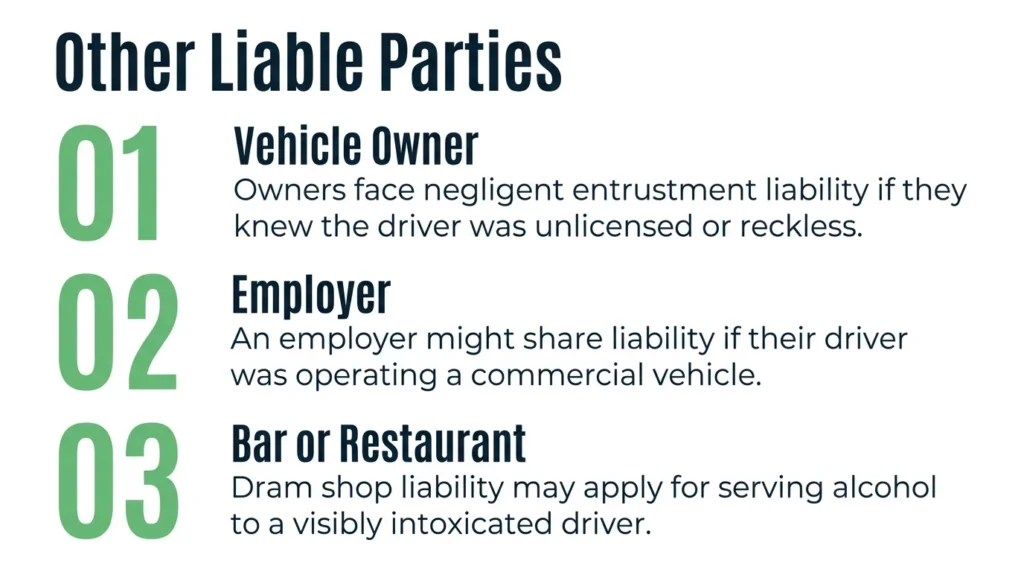
- If the vehicle owner knowingly lent a car to a driver who they knew was unlicensed, incompetent, or reckless, you may have a negligent entrustment claim against the vehicle owner.
- If the unlicensed driver was working in a commercial or company vehicle at the time of the crash, their employer may share liability. Businesses have a duty to verify that their employees have a valid license.
- If a bar or restaurant served a visibly intoxicated driver who got behind the wheel and caused a crash, Texas dram shop law may allow you to file a claim against that business. Our breakdown of how the dram shop act affects car accident cases explains the evidence you need to prove the establishment served an obviously intoxicated patron. For a closer look at how these claims apply to impaired driving crashes, see our page on drunk driving accident claims.
Talk to an Attorney About Your Unlicensed Driver Crash in Texas
The above theories require an experienced attorney to investigate and prove. Fortunately, you do not have to sort through UM/UIM coverage, comparative fault, and negligent entrustment claims on your own.
Angel Reyes & Associates has been representing injury victims across Texas for over 30 years, with $1 billion recovered for our clients. We work on contingency, which means you pay no fees unless we win your case. Contact us today for a free consultation.
Past results do not guarantee future outcomes.
Unlicensed Driver Crash FAQs
What happens if the unlicensed driver who hit me flees the scene?
Texas requires either physical contact with the fleeing vehicle or independent evidence (such as a witness or police report) before uninsured motorist coverage will pay a hit-and-run claim. Without one of these, an insurer can deny the claim, even if you are certain another car caused the crash.
What if I do not have uninsured or underinsured motorist coverage?
You can still turn to personal injury protection (PIP) or medical payments coverage if you have them, since both pay medical bills, regardless of fault. Without any of these coverages, your remaining option is a direct claim against the driver personally, but collecting will be difficult if they have no income or assets.
Do I have to wait for the unlicensed driver's criminal case to be resolved before I can sue them?
No. Your civil injury claim is separate and does not depend on the outcome of any criminal charges against the other driver, but it’s worth noting that a conviction can sometimes strengthen your case.
Does the driver count as unlicensed if they had a valid license from another state or country?
No. Texas recognizes a valid license from other states for new residents, and many foreign licenses are honored for a period of time, so a driver who is licensed elsewhere is not the same thing as an unlicensed driver.
Does it matter if the unlicensed driver who hit me was a minor?
Texas law can hold a minor driver’s parents liable for any property damage that the child causes through negligent driving if it happened because of a lack of proper supervision. However, the parental liability rule covers property damage only, not injury claims, and recovery for a child’s willful misconduct is capped at $25,000.
About the Authors

Angel Reyes
Writer
Angel L. Reyes, III is the Founder and Managing Partner of Angel Reyes & Associates. A nationally recognized trial attorney and business leader, Angel has helped over 70,000 injury victims recover more than $1 billion since founding the firm in 1993. Named to the Texas Super Lawyers list annually since 2008, Angel brings Wall Street experience, Ivy League education, and a deep commitment to client advocacy. He is a frequent legal commentator and published author with extensive contributions to legal scholarship, trial strategy, and consumer protection.

Kyle Nicolas
Editor
Kyle Nicolas is the Web Content & SEO Manager at Angel Reyes & Associates. He has more than 10 years of experience as a marketing co...

Spencer Browne
Reviewer
Spencer Browne is a partner at Angel Reyes & Associates and a Board Certified personal injury trial lawyer with nearly 100 jury trials a...