Rideshare Accident with the App Off in Texas


Every article on this site is researched by our internal team, reviewed for legal accuracy against current Texas law, and held to State Bar of Texas advertising standards before publication. We do not publish content that overstates outcomes or makes promises about results.
Learn more about our
editorial standards .
Key Takeaways
- When a rideshare driver's app is off, Uber and Lyft owe injured victims nothing in Texas.
- In Period 0, only the driver's personal auto policy applies, and it may exclude rideshare use.
- You have two years to file a Texas injury claim, and UM/UIM coverage can be your fallback.
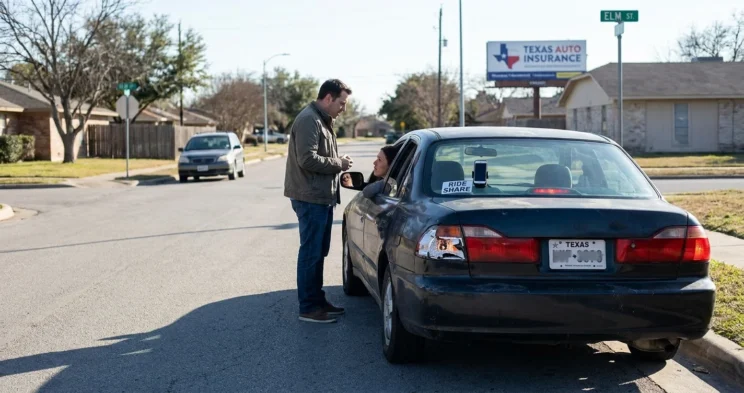
You were stopped at a light on Westheimer Road when another driver rolled into you from behind. He mentions he drives for Uber, and your first thought is that a billion-dollar company now stands behind your claim. Then you learn his app was completely off when he hit you.
Suddenly you are not sure who, if anyone, will pay for your injuries.
What “App Off” Means for Your Claim
When the driver’s app is off, Uber and Lyft owe you nothing. The crash is treated like any other private car accident, and you pursue the driver’s personal insurance, not the rideshare company.

The industry calls this Period 0. The driver’s app is closed, not logged in, and not waiting for a ride request. He or she is driving as a private individual with no active connection to the rideshare network. A period 0 rideshare accident carries none of the company coverage that kicks in once a driver goes online.
This is governed by Texas Occupations Code Chapter 2402, which defines the insurance duties tied to a driver’s app status. Those duties begin only when the app is active. With the app off, no rideshare policy applies at all.
Many victims assume the company shares the blame because the driver works for Uber or Lyft. That assumption is wrong in a rideshare driver off duty accident.
Texas Law & the Period 0 Insurance Gap
In Period 0, only the driver’s personal auto policy applies. No rideshare insurance requirement exists until the app turns on and the driver becomes available for a match. Texas Insurance Code Chapter 1954 sets the mandatory coverage minimums for rideshare drivers.
Those minimums start in Period 1, when the app is on. Period 0 carries no such requirement, so the company policy never enters the picture.
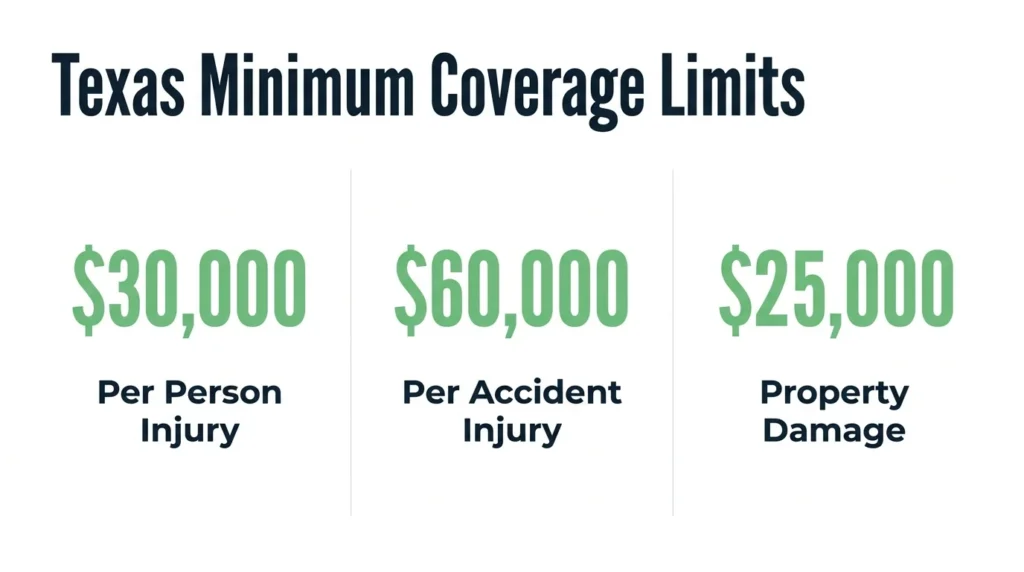
That leaves the driver’s personal policy as your only source. Texas requires personal auto minimums of $30,000 per person and $60,000 per accident for bodily injury, plus $25,000 for property damage, under Texas Transportation Code § 601.072. If the driver carries only those limits, that is your worst-case compensation ceiling.
The problem can get worse. Many Texas personal policies contain commercial-use or rideshare exclusions. If the insurer decides the driver regularly used the car for rideshare work, it may deny the claim outright, even in Period 0. This is the uber accident no coverage trap that catches victims off guard, and it applies just as easily to a lyft driver personal time accident.
The Texas Department of Insurance offers consumer guidance on these rideshare coverage gaps. Pinning down which period applies to your crash is the first thing an attorney will assess.
How to Prove the App Was Off
App status at the moment of impact is a factual question, and the records exist to answer it. Uber and Lyft keep timestamped logs of driver login, logout, trip acceptance, and GPS activity that confirm Period 0 status precisely.
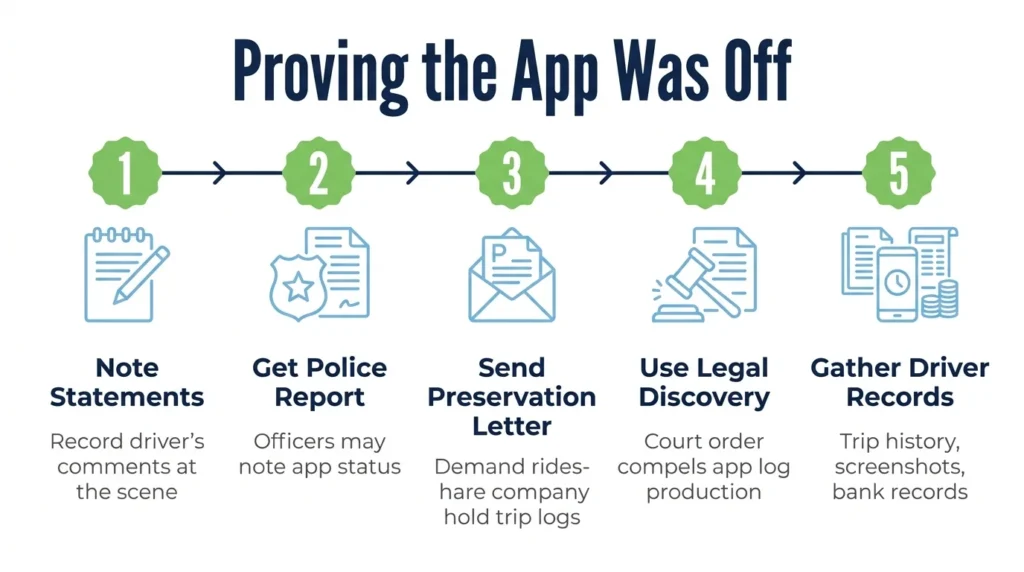
The challenge is getting those records before they fade or get deleted. These steps protect the proof you need.
Step 1: Note what the driver says at the scene. Listen for any mention of an active trip, a pending request, or an admission that the app was off. Write it down or record it by audio if Texas law permits.
Step 2: Request the police report right away. Officers sometimes note whether a rideshare app was open and active on the driver’s phone, which can lock in the app status early.
Step 3: Send a preservation letter to Uber or Lyft. This letter demands that the company hold all trip logs, GPS data, and login and logout timestamps for the driver’s account on the crash date. An attorney can send this for you.
Step 4: Use formal legal discovery if a lawsuit follows. A court order can compel Uber or Lyft to produce the driver’s app logs. This is the most reliable method.
Step 5: Gather the driver’s own records. Trip history in the driver’s app, screenshots, and bank records showing ride earnings around the crash time can corroborate that the app was off.
Recovery Options After an App-Off Crash
When the app is off and the rideshare companies are out of the picture, your recovery starts with the driver’s personal policy and may shift to your own coverage. Two sources matter most, and they work in very different ways.
The Driver’s Personal Auto Policy
Your first move is a third-party claim against the at-fault driver’s personal auto policy. The insurer will investigate whether the driver was using the vehicle for rideshare work at the time before it accepts or denies the claim.
If the policy covers the crash, your recovery is capped by the driver’s limits. Since many rideshare drivers carry only state-minimum coverage, that can mean as little as $30,000 per person for bodily injury.
If the insurer denies the claim citing a commercial-use exclusion, you may face an at-fault driver with no effective coverage at all. That gap is what makes app-off crashes so difficult, and it is why a standard car accident claim process becomes your starting framework here.
UM/UIM Coverage as a Fallback
Uninsured and underinsured motorist coverage sits on your own auto policy, and it is your backup when the driver’s insurance falls short. It steps in when the at-fault driver has no effective coverage or carries limits too low to cover your damages.
Texas insurers must offer this coverage, though you can reject it in writing. If you keep it, you file directly with your own insurer without chasing the at-fault driver separately. Personal Injury Protection on your policy may also pay, regardless of who was at fault, and it serves a different purpose than UM/UIM.
If your own insurer disputes a UM/UIM claim, knowing how Uber accident claims unfold in Texas can help you understand your next steps.
One deadline controls all of this. You must file a personal injury claim against the at-fault driver within two years of the crash under Texas Civil Practice and Remedies Code § 16.003. Miss it, and you forfeit the claim entirely.
Talk to an Experienced Attorney About Your Claim
Finding out the app was off can feel like the door just closed on your case. It has not. You still have real paths to recovery, and you do not have to sort them out alone.
Angel Reyes & Associates has spent over 30 years helping injured Texans hold the right party accountable. We work on a contingency basis, so you pay no fee unless we win, with more than $1 billion recovered for clients across the state. You can see how clients describe working with us or meet the attorneys who would handle your claim.
Your first consultation is free. Reach out to us for a free consultation and let us help you find every source of coverage available to you.
Past results do not guarantee future outcomes.
FAQs About Rideshare Accidents With the App Off
What happens if the driver had no personal auto insurance at all?
If the driver carried no policy, your own uninsured motorist coverage becomes the only direct source of compensation. Without UM/UIM on your policy, you would need to pursue the driver personally through a lawsuit and attempt to collect from their assets.
Does my own insurer have a deadline separate from the two-year filing window?
Yes. Most Texas auto policies require you to give prompt notice of a UM/UIM claim, sometimes within 30 days of the accident. Missing that contractual deadline can result in a denial even if you file suit within the two-year limit.
I was a passenger in the driver's personal car, not another driver he hit. Does the app-off rule still apply?
Yes. Period 0 status applies regardless of who was injured. As a passenger in the driver’s car when the app was off, you are limited to the driver’s personal auto policy, and the rideshare company owes you nothing.
Does the rideshare company have to preserve driver records even if no lawsuit has been filed?
Uber and Lyft are not legally required to hold records simply because you request it informally. A formal written preservation letter puts the company on notice, which can create legal exposure if they destroy records afterward. In litigation, a court order is the most reliable tool to compel production.
About the Authors

Angel Reyes
Writer
Angel L. Reyes, III is the Founder and Managing Partner of Angel Reyes & Associates. A nationally recognized trial attorney and business leader, Angel has helped over 70,000 injury victims recover more than $1 billion since founding the firm in 1993. Named to the Texas Super Lawyers list annually since 2008, Angel brings Wall Street experience, Ivy League education, and a deep commitment to client advocacy. He is a frequent legal commentator and published author with extensive contributions to legal scholarship, trial strategy, and consumer protection.

Graham Griffin
Editor
Graham Griffin is the Web & Content Manager at Angel Reyes & Associates, where he oversees content strategy, AI-powered workflows, a...

Angel Reyes
Reviewer
Angel L. Reyes, III is the Founder and Managing Partner of Angel Reyes & Associates. A nationally recognized trial attorney and business...